Vegetables with Fiber

Vegetables with Fiber

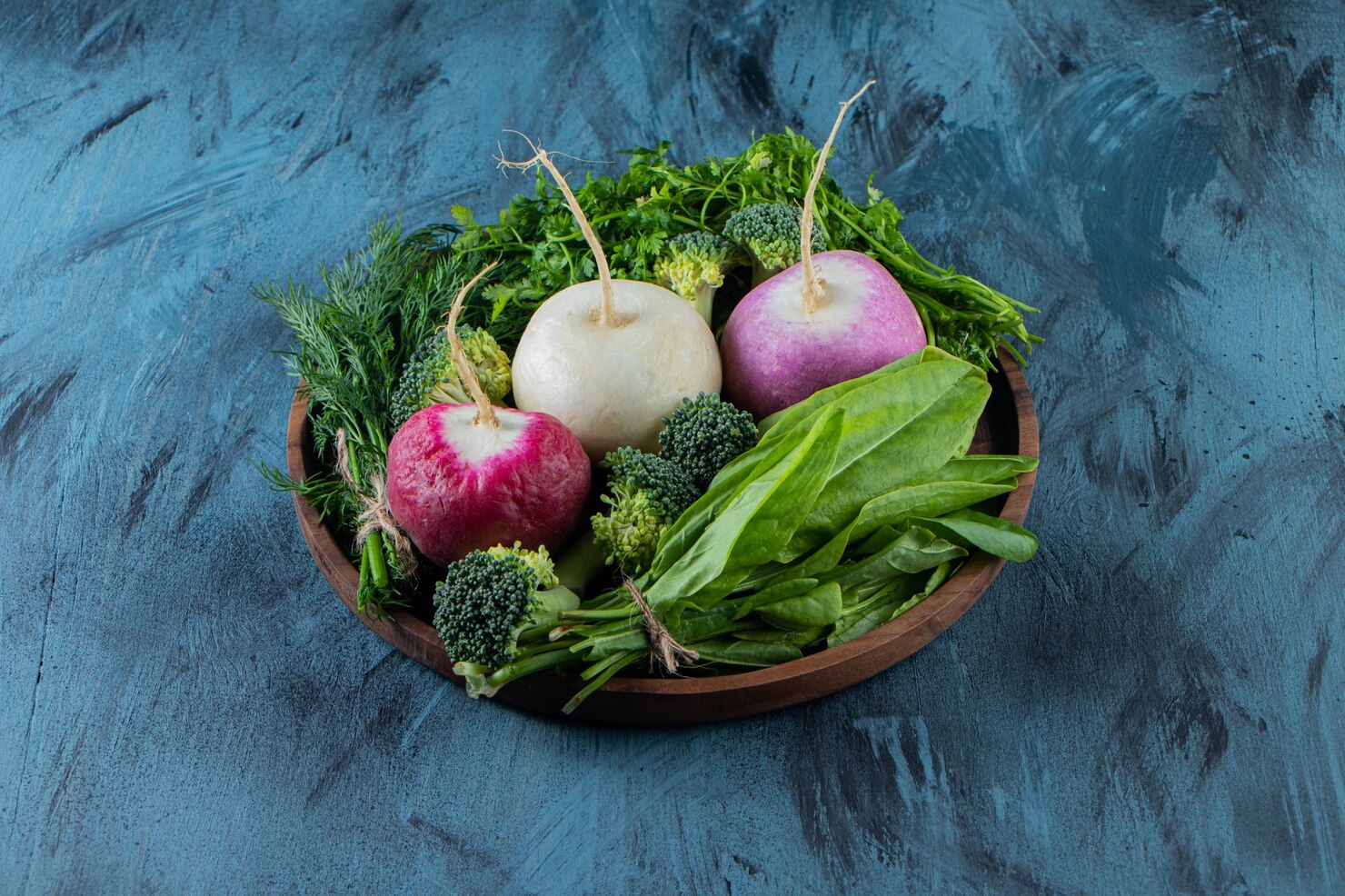
Vegetables are the backbone of any high-fiber diet. They’re low in calories, high in micronutrients, and — when you choose the right ones — absolutely loaded with fiber.

The Fiber Champions

These vegetables deliver the most fiber per serving:

  • Artichokes: 7g per medium artichoke
  • Green peas: 7g per cup
  • Brussels sprouts: 4g per cup (cooked)
  • Broccoli: 5g per cup (cooked)
  • Carrots: 3.5g per cup
  • Sweet potatoes (with skin): 4g per medium
  • Cauliflower: 3g per cup
  • Kale: 2.5g per cup (cooked)
  • Spinach: 4g per cup (cooked)
  • Corn: 3.5g per cup

Why Vegetables Are a Fiber Powerhouse

Vegetables provide both soluble and insoluble fiber, plus a wide range of polyphenols that feed your gut microbiome. The more colorful your plate, the more diverse your fiber intake — and the more diverse your gut bacteria.

How to Eat More High-Fiber Vegetables

  • Roast them: Brussels sprouts, broccoli, and sweet potatoes become naturally sweet and caramelized when roasted.
  • Add to soups: Lentil soup with carrots and spinach is a fiber bomb.
  • Go raw: Carrot sticks, cauliflower florets, and snap peas make great dips.
  • Blend into sauces: Pureed cauliflower or roasted red peppers add fiber and creaminess to pasta sauces.
  • Swap starches: Mashed cauliflower or roasted sweet potato can replace white rice or potatoes.

Frozen vs. Fresh

Frozen vegetables retain their fiber content and are often more affordable and convenient. Don’t hesitate to stock your freezer — just check that there’s no added sugar or sauce.

Facebook
Twitter
LinkedIn
WhatsApp

Most Popular This Week

1
2
3
4
5

The Best Fiber Supplements of 2026: 6 Top Picks, Tested & Ranked

How Much Fiber Is in an Apple?

The Best Fiber Supplements of 2026: 6 Top Picks, Tested & Ranked

How Much Fiber Is in a Banana?

How Fiber Actually Improves Your Gut Health (The Science)

“The 30-day reset finally gave me predictable digestion. I’d tried everything — this was the first thing that explained why.“

Sarah K.
Joined Mar 2026 · 2,840 students

The 30-Day Gut Reset Protocol

$49

$79

ADVERTISEMENT
300* 250
Recipe Book

60 High-Fiber Recipes Vol. 1

The Weekly Fiber Digest

New articles and research roundups, every Thursday.
No spam. Unsubscribe anytime.

You May Also Like

Yes. Poppy seeds fiber reaches 19.5 grams per 100 grams, which puts these tiny seeds third among common seeds behind chia and flax. A tablespoon gives you about 1.7 grams, but a poppy seed muffin can carry as little as 1 gram.
Yes. Whole sesame seeds fiber adds up to about 1.1 grams per tablespoon and 3.3 grams per ounce, and toasted seeds run a little higher. Hulled white seeds keep almost all of that fiber, but they lose most of their calcium.
Yes. Dry roasted sunflower seeds fiber comes to about 3.1 grams per ounce of kernels, similar to pistachios. The same ounce gives you about half your daily vitamin E, but salted in shell seeds can carry over 1,700 mg of sodium.
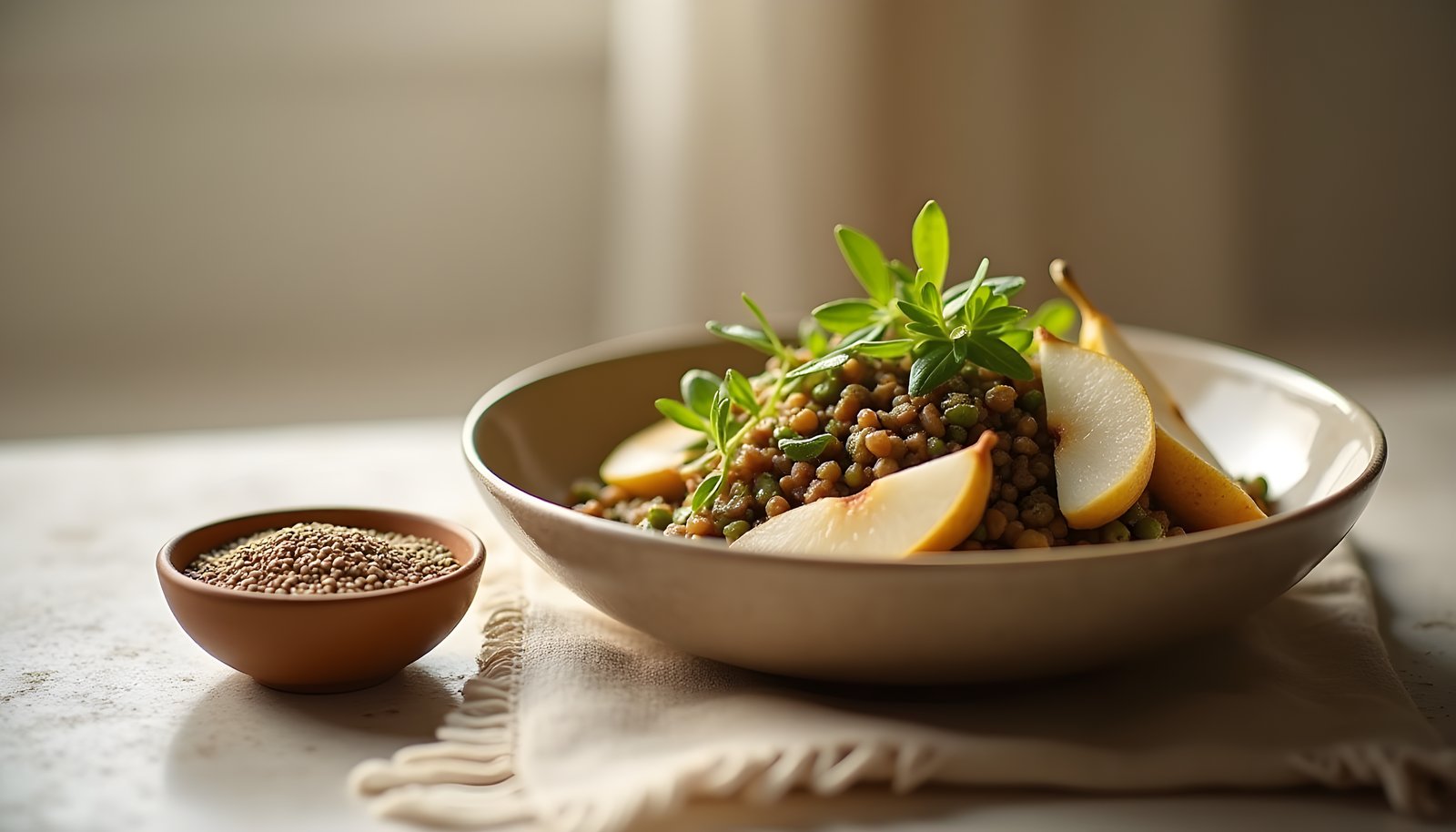
Hemp seed fiber shown with a small bowl of hemp seeds beside a bowl of lentil salad topped with sliced pear and herbs
It depends on the form. Shelled hemp seeds fiber is low, about 1.2 grams in 3 tablespoons, while toasted whole hemp seeds can list 4 grams in just 2 tablespoons. Either way, hemp seeds are best known for plant protein and omega fatty acids.
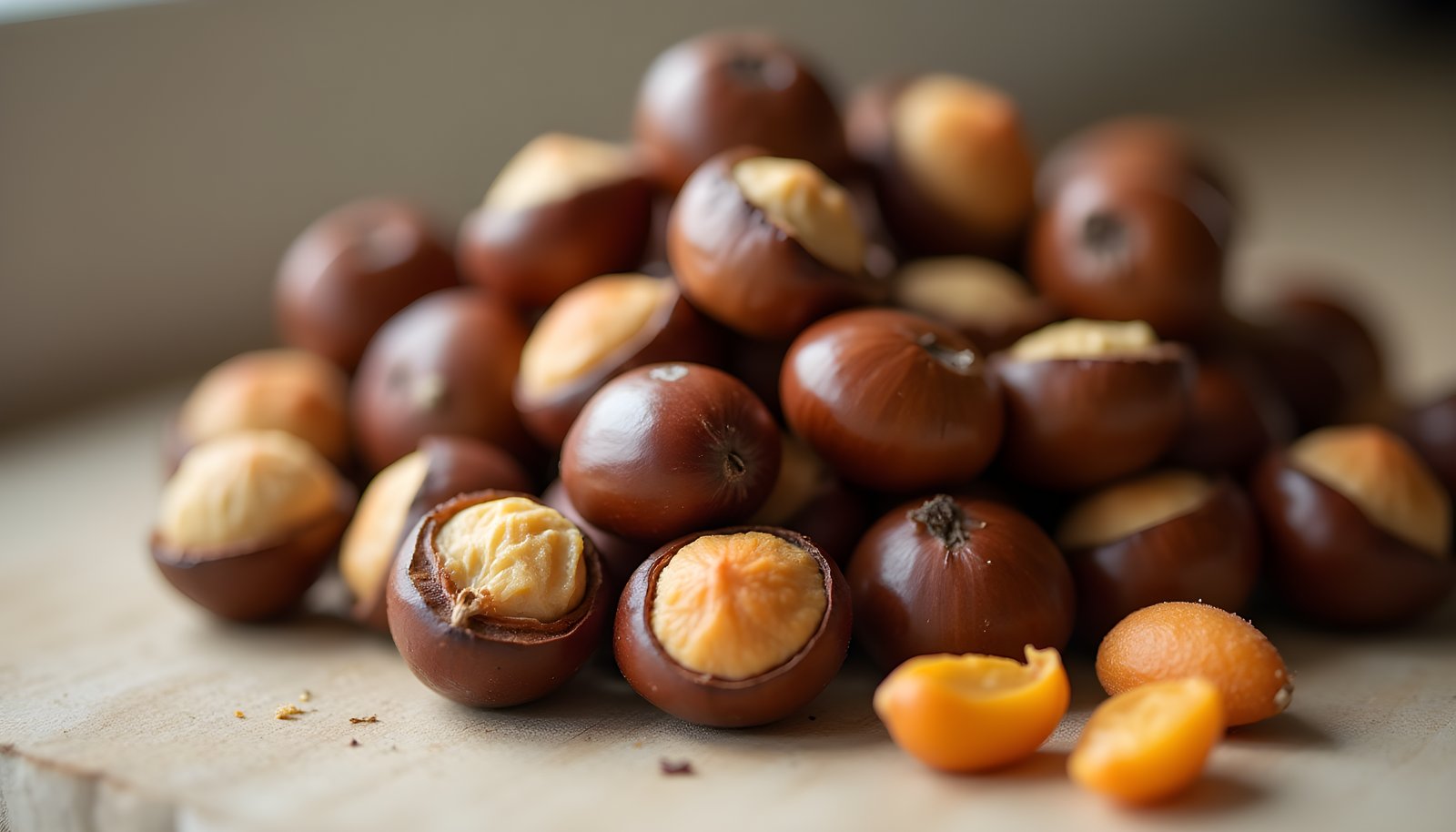
Chestnut fiber shown with a pile of roasted chestnuts with split shells and a few peeled golden kernels on a table
Yes. Roasted chestnuts fiber comes to about 5 grams per 100 grams, or roughly 4.3 grams in a 3 ounce serving, for only about 210 calories. Chestnuts are low in fat and starchy, so they behave more like a grain or potato than like other nuts.
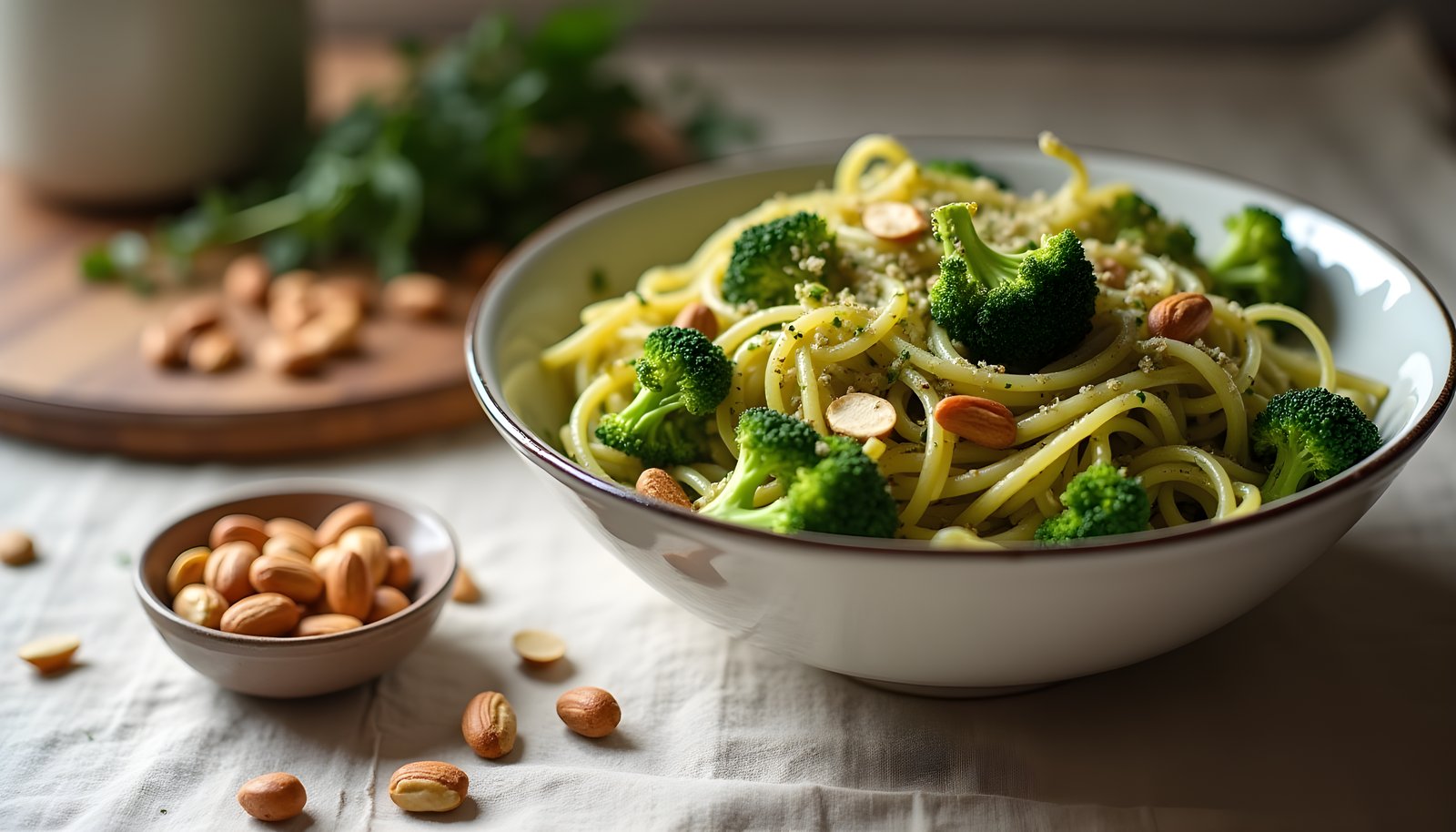
Pine nut fiber shown with a small dish of toasted pine nuts beside a bowl of pesto pasta tossed with broccoli florets
Yes, but less than most nuts. Common pine nuts fiber comes to about 1 gram per ounce, close to cashews at the bottom of the nut list, while American pinyon pine nuts carry about 3 grams. Their real strengths are manganese, magnesium and zinc.