
In this article
- Pine nuts fiber by the gram
- Where pine nuts land among nuts
- Pine nut nutrition: the mineral side
- Pine nuts as seeds: a little botany
- Pesto ingredients and where the fiber goes
- A pesto pasta dinner, counted
- Dishes where pine nuts earn their place
- A quick checklist for buying and using pine nuts
- The exception worth knowing: pinyon pine nuts
- Pine nuts and fiber: what people ask
- Sources
Pine nuts do have fiber, but only about 1 gram per ounce. That puts the common pine nuts fiber count near the very bottom of the nut list, next to cashews and well behind almonds at 3.5 grams.
The twist is that not all pine nuts are alike. USDA lists American pinyon pine nuts at 3 grams per ounce, roughly three times as much, so the kind in your jar can change the answer.
Below you’ll find the numbers for both kinds, how pine nuts compare with other nuts, what’s really in a jar of pesto, and how to use a small sprinkle so it does more for your plate.
Pine nuts fiber by the gram
USDA FoodData Central lists the common dried pine nuts sold in most stores at 3.7 grams of fiber per 100 grams. An ounce holds about 167 of the small kernels.
Because pine nuts are usually sprinkled rather than eaten by the handful, the table includes the small amounts most recipes call for.
| Amount | Fiber | % DV (28 g) | Calories |
|---|---|---|---|
| 5 grams (a light sprinkle) | 0.2 g | 1% | 34 |
| 15 grams (a generous topping) | 0.6 g | 2% | 101 |
| 1 ounce (28 g) | 1.0 g | 4% | 191 |
| 100 grams | 3.7 g | 13% | 673 |
A typical sprinkle over salad or pasta adds well under a gram of fiber. Pine nuts bring flavor, richness and minerals to a dish, but they won’t move your fiber total much on their own.
Carbs are low as well, at 3.7 grams per ounce with about a gram of sugar. Most of the calories come from fat.
Where pine nuts land among nuts
Lined up against other common nuts, standard pine nuts sit near the bottom on fiber, with only cashews lower.
| Nut (1 oz) | Fiber | Calories | Protein |
|---|---|---|---|
| Almonds | 3.5 g | 164 | 6.0 g |
| Pinyon pine nuts | 3.0 g | 178 | 3.3 g |
| Hazelnuts | 2.7 g | 178 | 4.2 g |
| Walnuts | 1.9 g | 185 | 4.3 g |
| Pine nuts (common) | 1.0 g | 191 | 3.9 g |
| Cashews | 0.9 g | 157 | 5.2 g |
Per 100 calories, common pine nuts give you about half a gram of fiber, the lowest figure of any nut in the table. Almonds deliver about four times as much for the same calories.
Pinyon pine nuts change the picture. With 10.7 grams of fiber per 100 grams, they edge past hazelnuts and clearly beat walnuts, though they’re harder to find and usually sold as a regional specialty.
Want to see how the rest of your day stacks up? Our fiber calculator gives you a personal daily target in seconds.
Pine nut nutrition: the mineral side
Where pine nuts fall short on fiber, they make up for it in minerals. An ounce of common pine nuts brings:
- Manganese: 2.5 mg, about 109% of the Daily Value
- Magnesium: 71 mg, about 17% DV
- Zinc: 1.8 mg, about 17% DV
- Vitamin E: 2.7 mg, about 18% DV
- Vitamin K: 15 mcg, about 13% DV
- Phosphorus: 163 mg, about 13% DV
- Iron: 1.6 mg, about 9% DV
That manganese figure is the headline. A single ounce covers more than a full day’s worth, higher than any other nut covered here.
The fat profile leans polyunsaturated. Of 19.4 grams of fat per ounce, 9.7 grams are polyunsaturated, 5.3 grams monounsaturated and only 1.4 grams saturated.
Magnesium and zinc are the other two to note. An ounce gives you about a sixth of the day’s need for each, which is a lot for a food usually eaten by the spoonful.
Protein is moderate at 3.9 grams per ounce. That’s more than pecans or macadamias, but less than almonds or cashews.
Pine nuts as seeds: a little botany
Pine nuts aren’t nuts in the botanical sense. They’re the edible seeds of pine trees, harvested from the cones of several species.
That seed nutrition varies by tree. USDA keeps separate records for general pine nuts and for pinyon pine nuts from American pines, and the pinyon record shows nearly three times the fiber.
If a label says pinyon or piñon, the higher figure is the better guide. For a jar that just says pine nuts, the general record, at about 1 gram per ounce, is the safer number to use.
Either way, pine nuts behave like other seeds in the kitchen. They toast in a minute or two, and an opened bag keeps best in the fridge or freezer.
Pesto ingredients and where the fiber goes
Most people eat pine nuts in pesto, so it helps to know what’s actually in the jar. The classic pesto ingredients are basil, olive oil, Parmesan, garlic and pine nuts, but store versions vary a lot.
One popular jarred pesto lists pine nuts eighth on its ingredient list, after almonds, water and salt. Another lists basil, canola oil, water, Parmesan, garlic and salt, with no pine nuts at all.
| Pesto (per label serving) | Serving | Fiber | Calories | Sodium |
|---|---|---|---|---|
| Jarred basil pesto with almonds and pine nuts | 2 Tbsp (30 g) | under 1 g | 160 | 310 mg |
| Refrigerated basil pesto, no pine nuts | 1/4 cup (57 g) | 0 g | 190 | 380 mg |
Sodium is worth a glance too. The jarred pesto lists 310 mg per 2 tablespoons, about 13% of the Daily Value, and the refrigerated one lists 380 mg per quarter cup, about 17%.
Either way, pesto adds very little fiber. Its value is flavor: a spoonful turns plain vegetables, beans or whole grains into something you want to eat, and those foods carry the fiber.
If you make pesto at home, you control the nuts. Swapping half the pine nuts for walnuts or almonds raises the fiber a little and lowers the cost.
Looking for pesto recipes and other sauces that pair with high fiber foods? Our recipe eBooks are full of easy ideas.
A pesto pasta dinner, counted
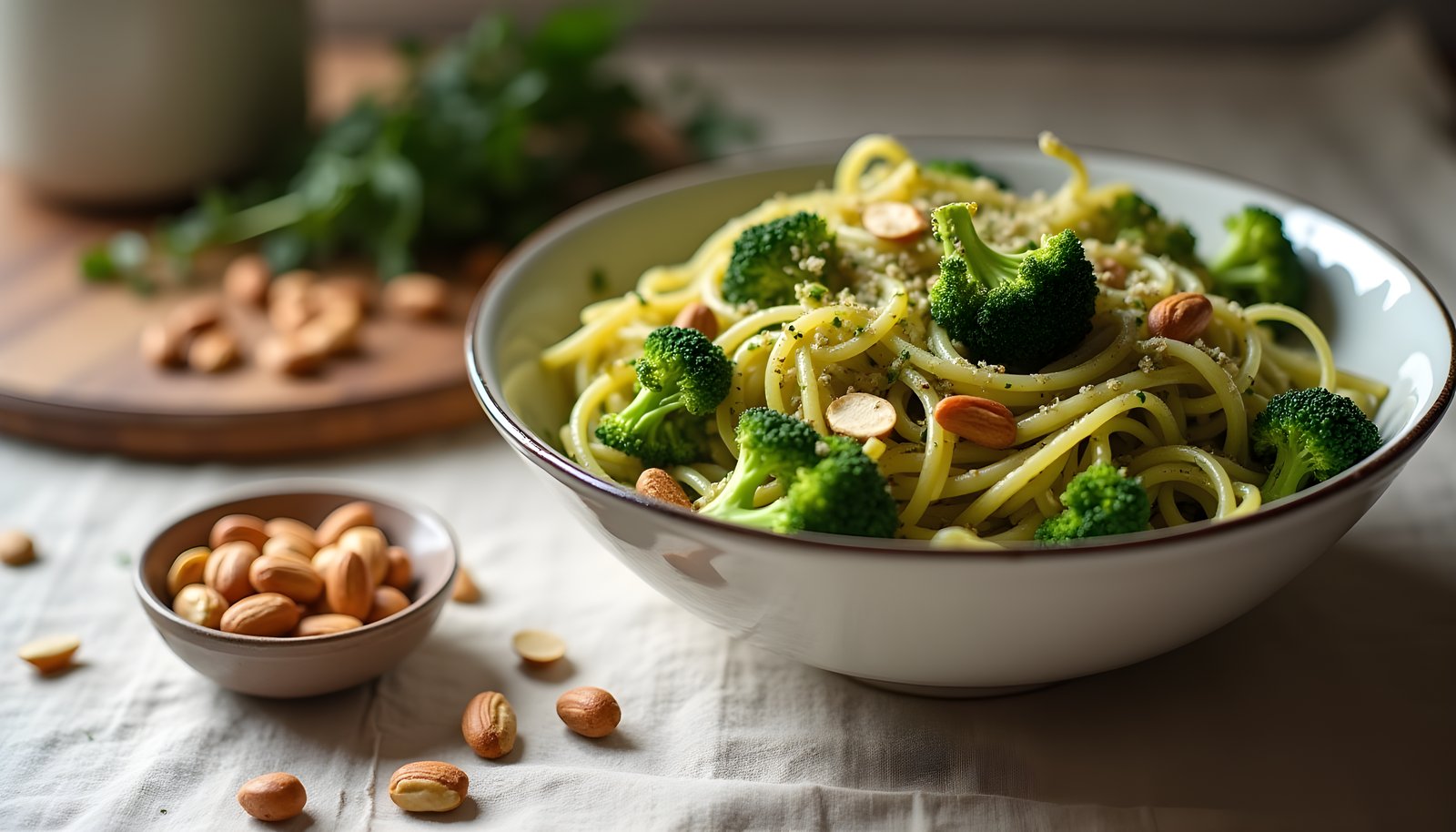
Imagine a bowl of pasta tossed with two tablespoons of jarred pesto and a sprinkle of toasted pine nuts. The pesto and pine nuts together add maybe a gram of fiber.
Now add a cup of cooked broccoli and half a cup of chickpeas to the same bowl. Broccoli brings 5.2 grams and chickpeas 6.3 grams, so the dinner gains about 11.5 grams of fiber, all coated in the same pesto.
The pine nuts didn’t change, but the bowl went from a low fiber meal to one that covers close to half the Daily Value, before you even count the pasta. That’s the best way to think about pine nuts: they make high fiber foods taste better.
Dishes where pine nuts earn their place
Since pine nuts work best as a finishing touch, the trick is to put them on foods that already carry fiber. A few combinations that work well:
- Lentil salad: half a cup of cooked lentils brings 7.8 grams of fiber, and toasted pine nuts add crunch.
- Black bean bowls: half a cup of black beans adds 7.5 grams, and pine nuts pair well with lime and herbs.
- Green peas with mint: a cup of cooked peas carries 8.8 grams, and a spoon of pine nuts makes a quick side dish.
- Roasted Brussels sprouts or broccoli: both are solid fiber vegetables, and pine nuts soften their bitterness.
In each case the pine nuts contribute well under a gram of fiber, while the base food provides 5 to 9 grams. That’s a fair trade for something that makes the dish taste much richer.
This approach also keeps calories in check. A 15 gram sprinkle adds about 100 calories, much less than the 191 in a full ounce.
A quick checklist for buying and using pine nuts
- Check the label for pinyon or piñon if you want the higher fiber kind.
- Toast in a dry pan over medium heat and watch closely, since they brown in a minute or two.
- Store opened bags in the fridge or freezer to keep the fats fresh.
- Read pesto labels: if pine nuts appear near the end of the list, the nuts are mostly for flavor.
- Pair them with vegetables, legumes or whole grains rather than relying on them for fiber.
- Mix with pumpkin seeds (5.2 g per ounce) in salads for a real fiber boost.
If you’re adding more fiber through beans and vegetables, Mayo Clinic suggests increasing it gradually and drinking plenty of fluids so your digestion can adjust.
The exception worth knowing: pinyon pine nuts
Most of what’s above applies to the common pine nuts in supermarket jars. American pinyon pine nuts are the strong exception, with 3 grams of fiber per ounce, closer to pistachios than to cashews.
If you live in the American Southwest or find pinyon nuts at a specialty shop, they’re worth trying for both flavor and fiber. Just keep the portion to about an ounce, since they still carry around 178 calories.
For everyday cooking with regular pine nuts, the plan stays the same. Use them for flavor, lean on beans, vegetables and whole grains for fiber, and enjoy the mineral boost that comes with every sprinkle. A spoonful of toasted pine nuts on a bowl of lentils is a better fiber move than a handful of pine nuts on their own.
Pine nuts and fiber: what people ask
How much fiber is in a sprinkle of pine nuts?
Roughly half a gram. Pine nuts carry 3.7 grams of fiber per 100 grams, so a small 15 gram sprinkle adds about 0.6 grams.
Are pine nuts high in fiber?
No. At about 1 gram per ounce, common pine nuts are among the lowest fiber nuts, just ahead of cashews at 0.9 grams.
Does pesto have fiber?
Very little. Store bought basil pesto lists 0 to under 1 gram of fiber per serving, and some brands contain no pine nuts at all.
Are pine nuts actually nuts?
No. They’re the edible seeds of pine trees, collected from pine cones, though they’re sold and cooked like nuts.
What are pine nuts a good source of?
Manganese, above all. An ounce provides about 109% of the Daily Value, along with 17% for magnesium and 17% for zinc.
Why do some pine nuts have more fiber?
Different pine species make different seeds. USDA lists American pinyon pine nuts at 10.7 grams of fiber per 100 grams, compared with 3.7 grams for common pine nuts.
Can I swap pine nuts for another nut in pesto?
Yes. Walnuts, almonds or pistachios all work, and each has more fiber per ounce than common pine nuts.
Sources
- USDA Agricultural Research Service. FoodData Central: SR Legacy Nuts, pine nuts, dried (170591) and Nuts, pine nuts, pinyon, dried (170592), per ounce records for almonds, hazelnuts, walnuts and cashews, and branded records for Mezzetta Basil Pesto (2021) and Armanino Pesto Basil (2022). fdc.nal.usda.gov
- U.S. Food and Drug Administration. “Daily Value on the Nutrition and Supplement Facts Labels.” 2024. fda.gov
- U.S. Department of Agriculture and U.S. Department of Health and Human Services. “Food Sources of Dietary Fiber.” Dietary Guidelines for Americans, 2020 to 2025. dietaryguidelines.gov
- Mayo Clinic Staff. “Dietary fiber: Essential for a healthy diet.” Mayo Clinic. 2025. mayoclinic.org