
In this article
- Falafel fiber by serving
- Where falafel gets its fiber
- How frying changes the numbers
- Chickpea fritters fiber vs other chickpea foods
- What else falafel brings
- Falafel as a high fiber snack or lunch
- A falafel bowl, counted
- Choosing a frozen or ready made falafel
- Falafel for meal prep
- Making falafel with more fiber at home
- Sodium and allergens to know
- Falafel and your digestion
- The edge case: restaurant falafel
- Falafel fiber FAQs
- Sources
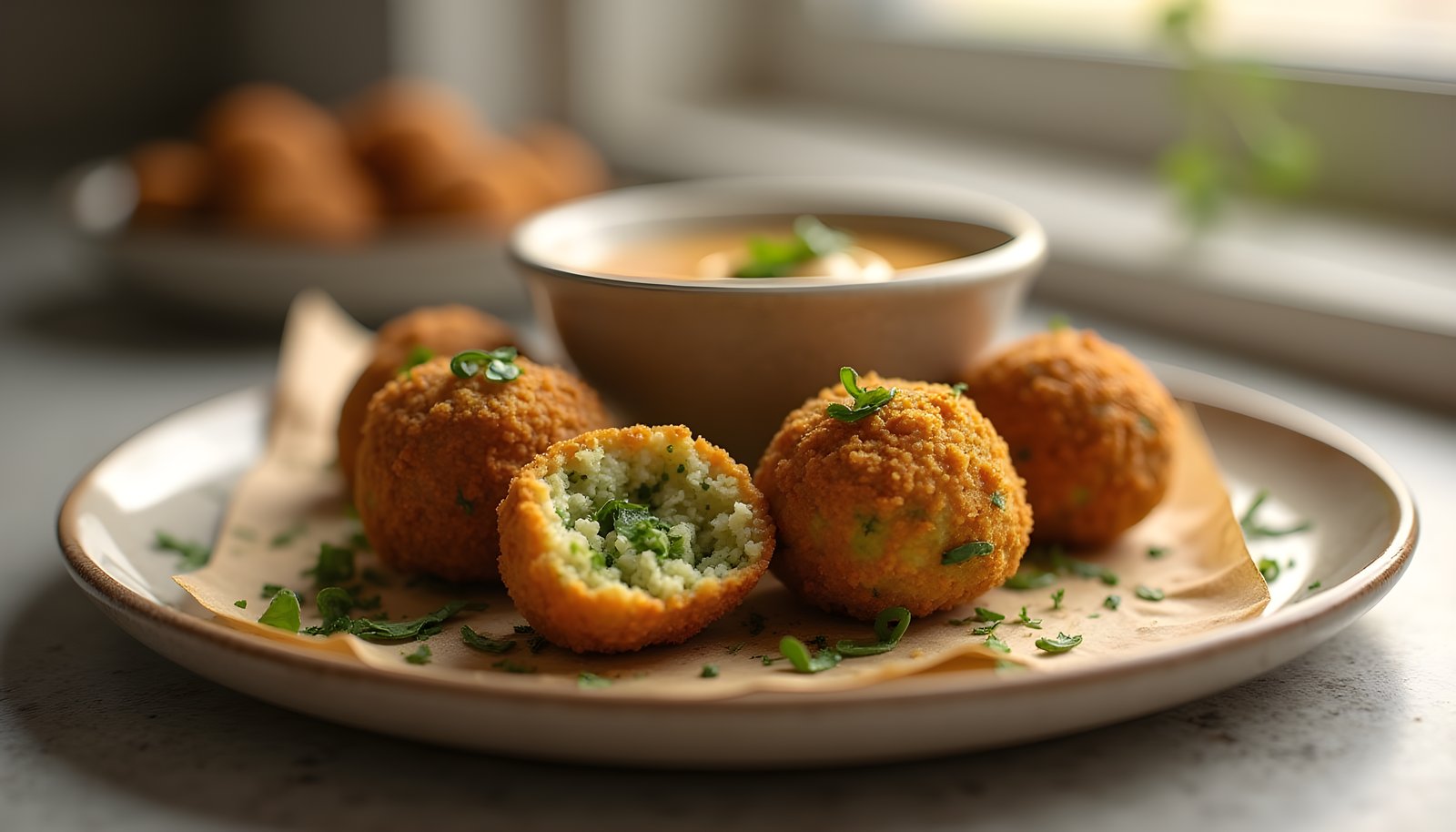
Many people file falafel under fried food and assume the fiber barely counts. In fact, falafel fiber can be substantial: a 3 piece serving of Franklin Farms baked falafel lists 7 grams, a quarter of the FDA’s 28 gram Daily Value.
What changes from one falafel to the next is the cooking method and the size. A small fried restaurant patty brings less than a gram, while frozen and baked versions land between 5 and 7 grams per serving.
Falafel fiber by serving
USDA FoodData Central holds a generic record for fried falafel and brand records for store bought versions. Here’s how they compare:
| Falafel serving | Calories | Fiber | Protein | Fat | Sodium |
|---|---|---|---|---|---|
| 1 small fried patty, USDA (17 g) | 87 | 0.8 g | 1.4 g | 7.0 g | 85 mg |
| 4 fried patties, USDA (68 g) | 350 | 3.3 g | 5.6 g | 28 g | 339 mg |
| Good & Gather frozen, 4 pieces (96 g) | 260 | 5 g | 9 g | 15 g | 560 mg |
| Franklin Farms baked, 3 pieces (85 g) | 230 | 7 g | 10 g | 6 g | 135 mg |
The baked version wins on fiber, protein, fat and sodium at once. Its ingredient list adds oats and zucchini to the chickpeas, which helps explain the extra fiber.
The generic fried record tells the opposite story. Four small patties bring only 3.3 grams of fiber but 28 grams of fat, because a deep fried ball soaks up oil.
Where falafel gets its fiber
Traditional falafel is made from dried chickpeas that are soaked but not cooked, then ground with herbs, onion and spices. Some versions, especially in Egypt, use fava beans instead.
Dry chickpeas are dense with fiber. USDA lists raw chickpeas at 12.2 grams per 100 grams, compared with 7.6 grams once they’re boiled and full of water.
Store bought falafel often uses cooked chickpeas or chickpea flour instead. Good & Gather’s ingredient list starts with cooked chickpeas, chickpea flour and onion, then oil and sesame seeds.
A falafel made from soaked dry chickpeas starts with a denser bean than one made from canned chickpeas. Herbs, onion, oil and any binder then lower the final number, which is why no two recipes match exactly.
How frying changes the numbers
Frying doesn’t destroy fiber, but it adds a lot of fat. USDA’s fried falafel record lists 41.2 grams of fat per 100 grams and 514 calories.
That fat dilutes the fiber. Per 100 calories, the fried record works out to about 0.9 grams of fiber, the frozen Good & Gather to about 1.9 and the baked Franklin Farms to about 3.0.
Plain boiled chickpeas reach about 4.6 grams per 100 calories. The closer a falafel stays to the bean, the more fiber you get for the calories.
Weighing frozen falafel brands for your freezer? Our comparison charts set popular options next to each other.
Chickpea fritters fiber vs other chickpea foods
Falafel is one of several ways to eat chickpeas. Here’s how a 100 gram portion of each compares:
| Per 100 g | Calories | Fiber | Fat |
|---|---|---|---|
| Chickpeas, raw (dry) | 378 | 12.2 g | 6.0 g |
| Franklin Farms baked falafel | 271 | 8.2 g | 7.1 g |
| Chickpeas, boiled | 164 | 7.6 g | 2.6 g |
| Hummus, commercial (USDA lab) | 229 | 5.4 g | 17.1 g |
| Good & Gather frozen falafel | 271 | 5.2 g | 15.6 g |
| Fried falafel, USDA generic | 514 | 4.8 g | 41.2 g |
| Falafel sandwich, USDA generic | 265 | 2.5 g | 14.8 g |
Baked falafel beats boiled chickpeas by weight because it has less water, though nothing tops the dry bean itself. Fried falafel lands below hummus, and the sandwich record drops lower still once pita and sauce join the falafel.
What else falafel brings
Harvard’s Nutrition Source describes legumes as a source of protein, folate, iron and phosphorus. Falafel carries much of that, along with herbs like parsley and cilantro.
Good & Gather lists 4.4 milligrams of iron per 4 pieces, 24% of the Daily Value. Franklin Farms lists 3 milligrams of iron and 10 grams of protein per 3 pieces.
USDA’s home prepared falafel record, a 100 gram patty, lists 13.3 grams of protein, 585 milligrams of potassium and 104 micrograms of folate. That record doesn’t report fiber, so its fiber number stays unknown.
Falafel as a high fiber snack or lunch
A few baked falafel make a filling snack. At 7 grams of fiber and 10 grams of protein for 230 calories, a serving of Franklin Farms holds up well against most packaged snacks.
For lunch, falafel works best as part of a bigger plate. It brings the beans, and the rest of the bowl can bring vegetables and whole grains.
Looking for more ways to cook with chickpeas, from falafel bowls to stews? Our recipe eBooks are packed with easy high-fiber meals.
A falafel bowl, counted
Picture a bowl with 4 pieces of Good & Gather falafel, a cup of cooked brown rice and 2 tablespoons of hummus. The falafel brings 5 grams of fiber, the rice adds 3.5 grams based on Mayo Clinic’s chart, and USDA’s hummus value adds about 1.8.
That comes to about 10 grams of fiber, more than a third of the Daily Value, before any salad goes on top. Add chopped cucumber, tomato and greens and the bowl climbs higher.
Swap the frozen falafel for a baked brand with 7 grams and the bowl reaches about 12 grams. Switching from fried restaurant patties to baked ones is the single biggest lever.
Choosing a frozen or ready made falafel
Frozen falafel has become a freezer staple, and the brands differ more than the boxes suggest. A quick look at four lines on the label tells you most of what you need.
- Fiber: 5 grams or more per serving is a strong pick
- Fat: under 10 grams per serving usually means baked rather than fried
- Sodium: compare against 2,300 milligrams for the day; under 400 per serving is moderate
- First ingredients: chickpeas or fava beans should come before any flour
Serving sizes vary from 3 to 4 pieces and from about 85 to 100 grams. Comparing per 100 grams, as in the table above, keeps the contest fair.
Reheating in an oven or air fryer keeps the outside crisp without adding oil. A microwave works in a pinch, though the texture turns softer.
Falafel for meal prep
Falafel holds up well for a few days, which makes it handy for packed lunches. Bake a batch on Sunday, store it in the fridge and build bowls or wraps through the week.
Pairing it with sturdy vegetables like cabbage, carrots and cucumber keeps lunches crunchy. A small container of hummus or yogurt sauce on the side keeps the falafel from getting soggy.
Because each serving brings 5 to 7 grams of fiber when baked, two falafel lunches a week add 10 to 14 grams toward your weekly total with almost no extra effort.
Making falafel with more fiber at home
Homemade falafel lets you choose the method. Baking or air frying uses far less oil than deep frying, which keeps more of the calories coming from the chickpeas.
Start with soaked dried chickpeas, then pulse them with parsley, cilantro, onion, garlic, cumin and coriander. Shape the mix into small patties, brush them lightly with oil and bake until crisp.
For extra fiber, fold in grated zucchini or a few spoonfuls of oats, as Franklin Farms does. Serving the falafel in whole wheat pita or over greens adds more.
Sodium and allergens to know
Sodium varies widely between brands. Good & Gather lists 560 milligrams per serving, 24% of the Daily Value, while Franklin Farms lists 135 milligrams.
Many falafel recipes and sauces include sesame, either as seeds or as tahini. The FDA counts sesame among the nine major food allergens that must be declared on labels.
Some store bought falafel also includes wheat flour as a binder. If you avoid gluten, read the ingredient list rather than assuming the chickpeas are the whole story.
Falafel and your digestion
Harvard’s Nutrition Source notes that legumes can cause gas in some people. A serving of falafel is a smaller dose of beans than a bowl of chickpeas, which can make it easier to start with.
Mayo Clinic recommends raising fiber gradually over a few weeks and drinking plenty of fluids. Starting with 2 or 3 pieces gives your gut time to adjust.
Pairing falafel with vegetables and a glass of water, rather than a second fried side, also makes a meal that’s easier on your stomach and richer in fiber.
The edge case: restaurant falafel
The biggest catch is that restaurant falafel is usually deep fried, and you rarely see a label. USDA’s generic record shows what that means: 17 gram patties with less than a gram of fiber and 7 grams of fat each.
A wrap with six of those patties brings roughly 5 grams of fiber, but also around 42 grams of fat before the sauce. If falafel is a regular lunch, the baked and air fried versions you make or buy will deliver far more fiber per calorie.
Falafel fiber FAQs
Is falafel high in fiber?
It depends on the version. Baked store bought falafel can have 7 grams per serving, while a small fried patty has less than 1 gram.
How much fiber is in one falafel?
A small fried patty of 17 grams has about 0.8 grams of fiber in USDA’s record. Larger or baked pieces carry more.
Is baked falafel healthier than fried?
For fiber per calorie, yes. Franklin Farms baked falafel has about 3 grams of fiber per 100 calories, versus about 0.9 for USDA’s fried falafel.
Does falafel have more fiber than hummus?
Baked falafel does, at about 8.2 grams per 100 grams. Fried falafel has slightly less than hummus, at 4.8 grams versus 5.4.
Is falafel a good source of protein?
Yes. Store bought servings list 9 to 10 grams, and USDA’s home prepared patty lists 13.3 grams.
Is falafel gluten free?
Traditional falafel uses chickpeas and herbs, but some brands add wheat flour. Check the ingredient list.
Can falafel help with constipation?
Its fiber supports regularity, especially in baked versions with 5 to 7 grams per serving. Add it gradually and drink plenty of fluids.
Sources
- U.S. Department of Agriculture, Agricultural Research Service. “Falafel (2707408); Falafel, home-prepared (172455); Falafel sandwich (2707483); Chickpeas, mature seeds, raw (173756) and cooked, boiled (173757); Hummus, commercial (321358); Branded Foods: Franklin Farms Falafel Baked Plant-based Balls (2403808), Good & Gather Falafel (2625270).” FoodData Central. 2019 to 2023. fdc.nal.usda.gov
- U.S. Food and Drug Administration. “Daily Value on the Nutrition and Supplement Facts Labels.” 2024. fda.gov
- U.S. Food and Drug Administration. “Food Allergies: What You Need to Know.” 2023. fda.gov
- Harvard T.H. Chan School of Public Health. “Legumes and Pulses.” The Nutrition Source. 2024. nutritionsource.hsph.harvard.edu
- Mayo Clinic Staff. “Chart of high-fiber foods.” Mayo Clinic. 2025. mayoclinic.org