
In this article
- Beets fiber content by form and serving
- Beet nutrition beyond fiber: the folate standout
- How beets compare with other root vegetables
- A beet and lentil salad, counted
- Beet myths vs facts
- What beets fiber does for your gut
- Getting the most fiber per serving from beets
- Easy ways to get more beets on your plate
- Which beets should you pick?
- Your beet questions, answered
- Sources
A medium raw beet holds about 2.3 grams of fiber, and a cup of sliced raw beets about 3.8 grams. The twist is that the sweet taste most people worry about comes with more fiber than you’d guess, plus a sizable dose of folate.
Beets fiber content shifts with how you prepare them. Raw and home cooked beets sit at the top, canned beets a little lower, and pickled or glazed versions pick up extra calories from the brine or sauce.
Beets fiber content by form and serving
USDA FoodData Central lists raw beets at 2.8 grams of fiber per 100 grams and boiled beets at 2.0 grams. Here’s how that plays out across the servings you’re most likely to eat.
| Beet form | Serving | Fiber | % DV (28 g) | Calories |
|---|---|---|---|---|
| Raw, sliced or grated | 1 cup (136 g) | 3.8 g | 14% | 58 |
| Raw, whole | 1 medium beet (82 g) | 2.3 g | 8% | 35 |
| Boiled, sliced | 1/2 cup (85 g) | 1.7 g | 6% | 37 |
| Boiled, sliced | 1 cup (170 g) | 3.4 g | 12% | 75 |
| Canned, drained | 1 cup | 2.8 g | 10% | 49 |
The canned figure comes from the Dietary Guidelines’ Food Sources of Dietary Fiber list, which puts a cup of beets at 2.8 grams and 49 calories. That matches USDA’s record for canned, drained beets, which run lighter in calories than fresh ones, at 31 per 100 grams.
Pickled beets are a different food. USDA lists them at about 65 calories per 100 grams, and Harvard style beets, cooked in a sweet and sour sauce, at about 73. The beet underneath is the same, so the extra calories come from what it is packed in.
If fiber per serving is your goal, raw grated beets in a salad or slaw give you the most. Roasted or boiled beets are a close second.
Beet nutrition beyond fiber: the folate standout
Beets are best known for their color, but folate is their real nutritional strength. Based on USDA’s raw beet record, one cup (136 g) provides about:
- Folate: 148 mcg, about 37% of the Daily Value
- Manganese: 0.45 mg, about 20% DV
- Potassium: 442 mg, about 9% DV
- Vitamin C: 6.7 mg, about 7% DV
- Protein: about 2.2 grams
Folate is a B vitamin that, according to the NIH Office of Dietary Supplements, your body needs to make DNA and for cells to divide. A single cup of raw beets gets you more than a third of the way to a day’s worth.
Potassium is worth a mention too. A cup of raw beets has about 442 mg, a bit under a tenth of the 4,700 mg Daily Value, and boiled beets keep most of it at 305 mg per 100 grams. Fat is almost zero in every form, so beets pair easily with richer foods like cheese or nuts.
Cooking trims folate a bit. USDA lists 109 mcg per 100 grams raw and 80 mcg boiled, so a half cup of boiled slices still brings about 68 mcg, or 17% of the Daily Value.
Manganese, a trace mineral, is the other bright spot. Beets hold about 0.33 mg per 100 grams whether raw or boiled, so cooking doesn’t cost you any of it.
How beets compare with other root vegetables
Beets are often grouped with other root vegetables, and their fiber lands toward the lower end of that crowd. The Dietary Guidelines list these amounts:
| Root vegetable | Serving | Fiber | Calories |
|---|---|---|---|
| Sweet potato, baked | 1 cup | 6.3 g | 190 |
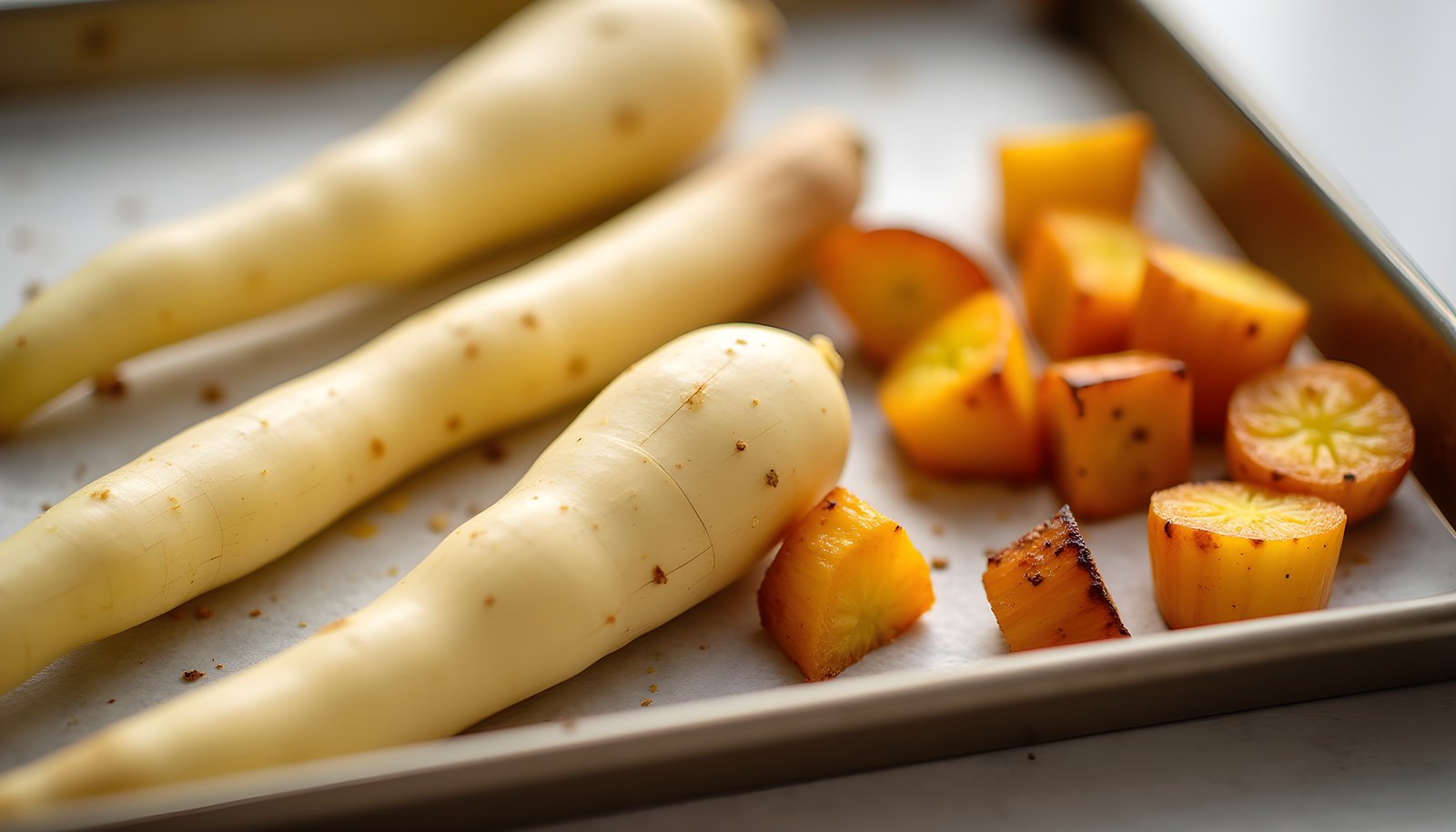
| Parsnips, cooked | 1 cup | 6.2 g | 110 |
| Jicama, raw | 1 cup | 5.9 g | 46 |
| Carrots, cooked | 1 cup | 4.8 g | 54 |
| Potato, baked with skin | 1 medium | 3.9 g | 161 |
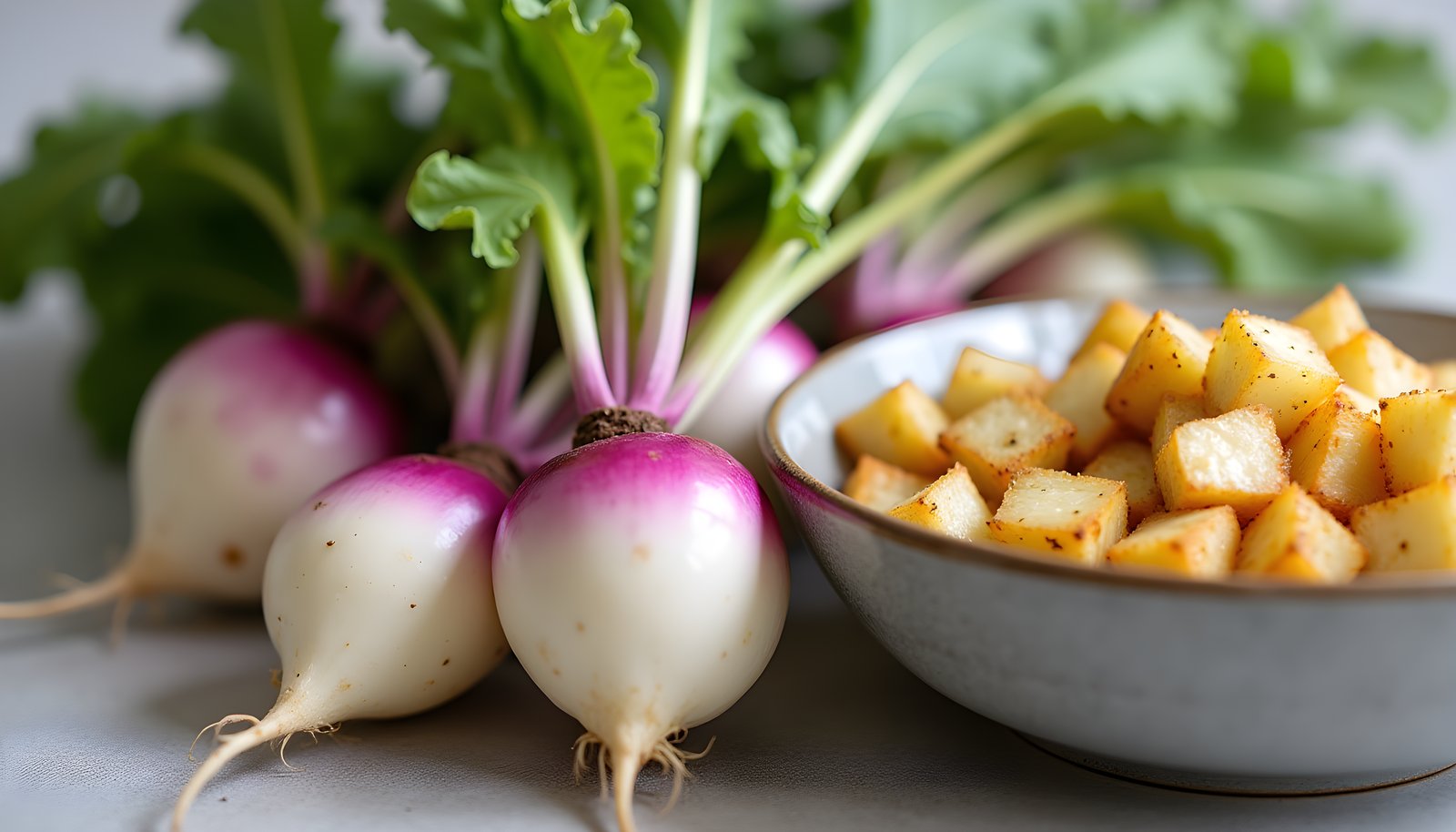
| Turnip, cooked | 1 cup | 3.1 g | 34 |
| Beets, canned | 1 cup | 2.8 g | 49 |
Parsnips and jicama roughly double the fiber of canned beets. Carrots also come out ahead, with about 2 extra grams per cooked cup.
A cup of raw beets closes some of that gap. At 3.8 grams, it edges past a cup of cooked turnip and lands close to a baked potato with fewer than half the calories.
The takeaway is that beets work best as one piece of a varied plate. Pair them with a higher fiber partner like lentils, farro or a handful of walnuts and the meal adds up quickly.
Want to know how many grams of fiber your own day should hold? Our fiber calculator gives you a personal number in seconds.
A beet and lentil salad, counted
Say you make a simple lunch: a cup of grated raw beets, half a cup of cooked lentils, some greens and a lemon dressing. The beets bring about 3.8 grams of fiber on their own.
The lentils add about 7.8 grams, according to the Dietary Guidelines. Together, that bowl lands near 11.6 grams of fiber, roughly half of a 21 to 25 gram target for women, before you’ve added anything else.
You also get well over a third of a day’s folate from the beets alone, plus whatever the lentils contribute. It’s a good example of how a moderate fiber vegetable becomes a high fiber meal when you build around it.
Swap the raw beets for a cup of canned beets and the total drops to about 10.6 grams. That’s still a strong lunch, just a little less, and it takes no peeling or grating at all.
Beet myths vs facts
Myth: beets are too sugary to be a healthy vegetable
A medium raw beet has about 5.5 grams of natural sugar and 35 calories. That sugar comes packaged with fiber, folate and potassium, and it isn’t counted as added sugar on a Nutrition Facts label.
The FDA sets the Daily Value for added sugars at 50 grams. Plain beets contribute nothing to that number, which is where pickled and glazed beets differ.
Myth: canned beets have no nutrition left
Canned, drained beets still deliver about 2.8 grams of fiber per cup according to the Dietary Guidelines, close to a cup of boiled fresh beets. They’re a practical shortcut, and a quick rinse after draining is easy.
Myth: you have to peel beets
You don’t. Scrub them well and roast with the skin on, or grate them raw after a good wash. Peeling after roasting is easier if you prefer, since the skin slips off once they cool.
What beets fiber does for your gut
The fiber in beets supports digestion the same way fiber from other whole plants does. Mayo Clinic explains that fiber increases stool weight and size and softens it, which makes it easier to pass and lowers the chance of constipation.
Mayo Clinic also links diets rich in fiber with healthier cholesterol levels, steadier blood sugar and a lower risk of dying from heart disease. A serving of beets is one small contributor to those totals.
Mayo Clinic suggests about 21 to 25 grams of fiber a day for women and 30 to 38 grams for men. A cup of raw beets covers roughly 15 to 18% of a woman’s target.
If you’re working on a more comfortable gut routine, our guides walk you through adding fiber step by step.
Getting the most fiber per serving from beets
The way you cut and cook beets nudges the fiber per serving more than most people expect. Raw beets win per gram, at 2.8 grams per 100 grams versus 2.0 for boiled, so a raw grated cup gives you a little more than a cooked one.
Portion is the bigger lever, though. A single medium beet gives you about 2.3 grams, while two beets roasted for a dinner side bring closer to 4.6 grams. Since beets are low in calories, a larger portion costs you little.
Keep sauces simple. A splash of vinegar and olive oil keeps beets close to their natural 35 calories per medium beet, while sweet glazes push them toward the Harvard beets range USDA lists at 73 calories per 100 grams.
Easy ways to get more beets on your plate
- Grate raw beets into a slaw with carrots, apple and a lemon dressing
- Roast wedges with olive oil and toss them into grain bowls or salads
- Blend roasted beets into hummus for a bright pink dip
- Layer sliced boiled beets with goat cheese and walnuts for a quick side
- Keep a can of drained beets on hand for fast weeknight salads
Prepping a batch on Sunday makes this much easier. Roasted beets keep in the fridge for a few days and slip into lunches with no extra cooking.
Looking for more vegetable-packed meal ideas? Our recipe eBooks are full of simple, high fiber dishes.
Which beets should you pick?
A simple rule covers most situations:
- If you want the most fiber and folate per serving, eat them raw, grated or thinly sliced
- If you want sweet, tender beets for a side dish, roast or boil fresh ones
- If you’re short on time, use canned beets, drained and rinsed
- If you love pickled beets, treat them as a condiment rather than your vegetable serving, since the brine adds calories
Your beet questions, answered
Are beets high in fiber?
They’re a moderate source. A cup of raw sliced beets has about 3.8 grams of fiber, around 14% of the Daily Value, while a medium beet has about 2.3 grams.
Do beets lose fiber when cooked?
A little per gram. USDA lists 2.8 grams of fiber per 100 grams raw and 2.0 grams boiled, so a cup of boiled slices still has about 3.4 grams.
How much fiber is in canned beets?
About 2.8 grams per drained cup, according to the Dietary Guidelines, with roughly 49 calories.
Are pickled beets healthy?
They still have fiber, but the brine adds calories. USDA lists pickled beets at about 65 calories per 100 grams, compared with 43 for raw beets.
How much sugar is in a beet?
A medium raw beet has about 5.5 grams of natural sugar. It isn’t counted as added sugar on a Nutrition Facts label.
Are beets or carrots higher in fiber?
Carrots, by a bit. The Dietary Guidelines list a cup of cooked carrots at 4.8 grams of fiber, compared with 2.8 grams in a cup of canned beets and about 3.8 grams in a cup of raw beets.
Can you eat beets raw?
Yes. Grate or thinly slice scrubbed raw beets into salads and slaws. Raw beets keep the most fiber and folate per serving.
Sources
- USDA Agricultural Research Service. FoodData Central: SR Legacy Beets, raw (169145); Beets, cooked, boiled, drained (169146); canned, drained solids (169966); pickled, canned (170480); Harvard, canned (170479). 2019. fdc.nal.usda.gov
- U.S. Department of Agriculture and U.S. Department of Health and Human Services. “Food Sources of Dietary Fiber.” Dietary Guidelines for Americans, 2020 to 2025. dietaryguidelines.gov
- U.S. Food and Drug Administration. “Daily Value on the Nutrition and Supplement Facts Labels.” 2024. fda.gov
- Mayo Clinic Staff. “Dietary fiber: Essential for a healthy diet.” Mayo Clinic. 2025. mayoclinic.org
- National Institutes of Health Office of Dietary Supplements. “Folate: Fact Sheet for Consumers.” 2022. ods.od.nih.gov