
In this article
- What resistant starch is, and why grains matter
- Resistant starch grains ranked, raw
- Grain foods as you actually eat them
- Myth vs fact: the oatmeal question
- Cooking, cooling and reheating grains
- Prebiotic grains: barley, oats and brown rice
- How grains compare with beans
- What 6 grams per meal looks like
- A resistant starch grain checklist
- Where resistant starch research is heading
- Questions about resistant starch grains
- Sources
Most people in the U.S. get only about 5 grams of resistant starch a day, according to Cleveland Clinic, while its dietitian suggests aiming for at least 6 grams at each meal. Grains are the obvious place to look for the difference, but the numbers inside them are smaller than many lists suggest.
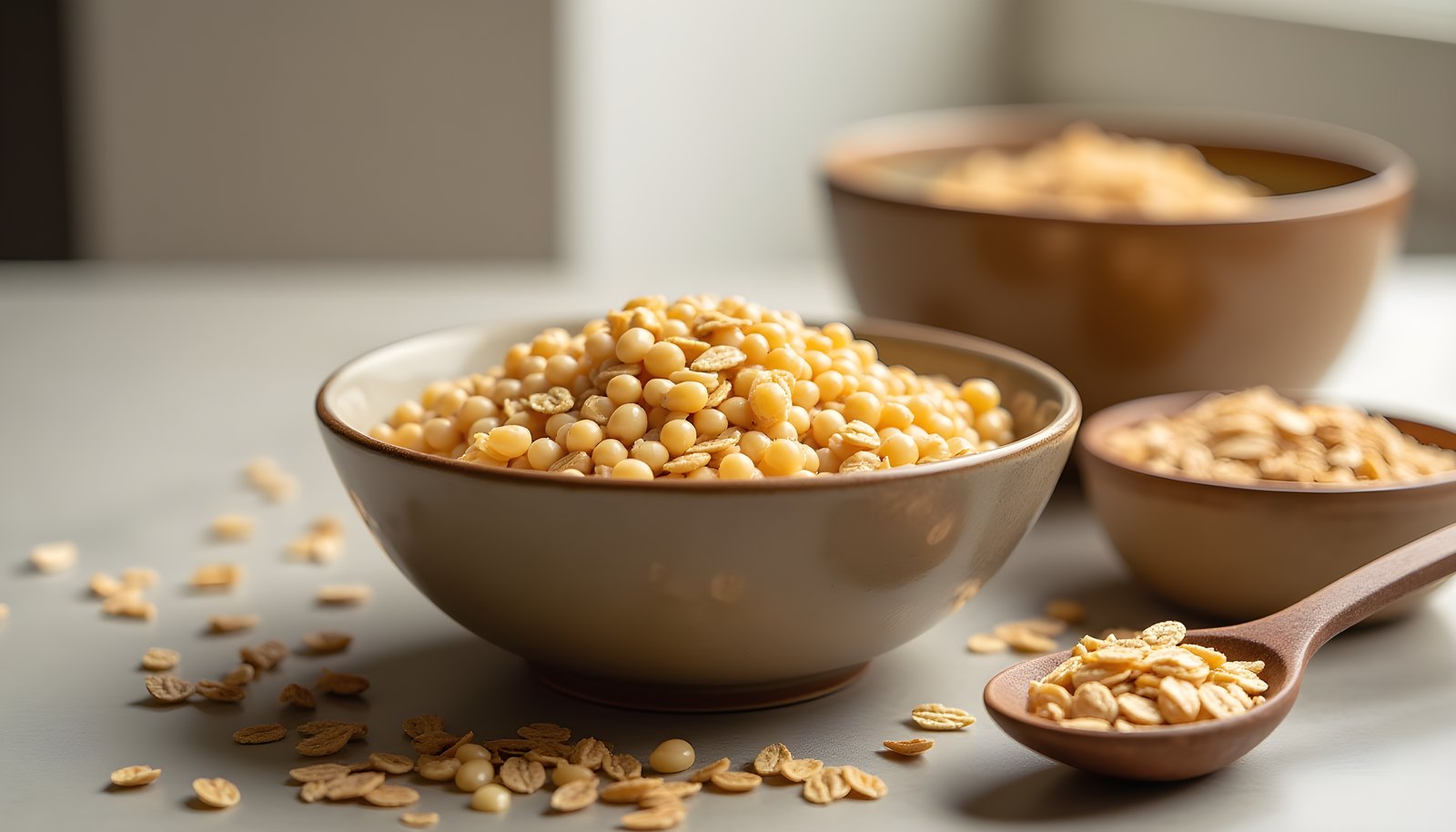
In lab tests of raw grain, oats, finger millet, wheat and barley lead the resistant starch grains, at roughly 3 to 5 grams per 100 grams of dry grain. Once cooked and on your plate, most grain foods fall to 2 grams or less per 100 grams.
What resistant starch is, and why grains matter
Resistant starch is starch that slips past digestion in the small intestine. Cleveland Clinic explains that it travels to the large intestine, where it feeds beneficial gut bacteria, which is why it overlaps with fiber.
Harvard’s Nutrition Source describes it as a fermentable fiber and a prebiotic, meaning food for gut bacteria. Those bacteria ferment it into short chain fatty acids, small compounds made as the bacteria break the starch down.
Cleveland Clinic sorts resistant starch into four types. Two of them matter most for grains:
- Type 1 sits inside the cell walls of whole grains, legumes and seeds, so it comes packaged inside the grain itself.
- Type 3 forms when starchy foods like rice and pasta are cooked and then cooled.
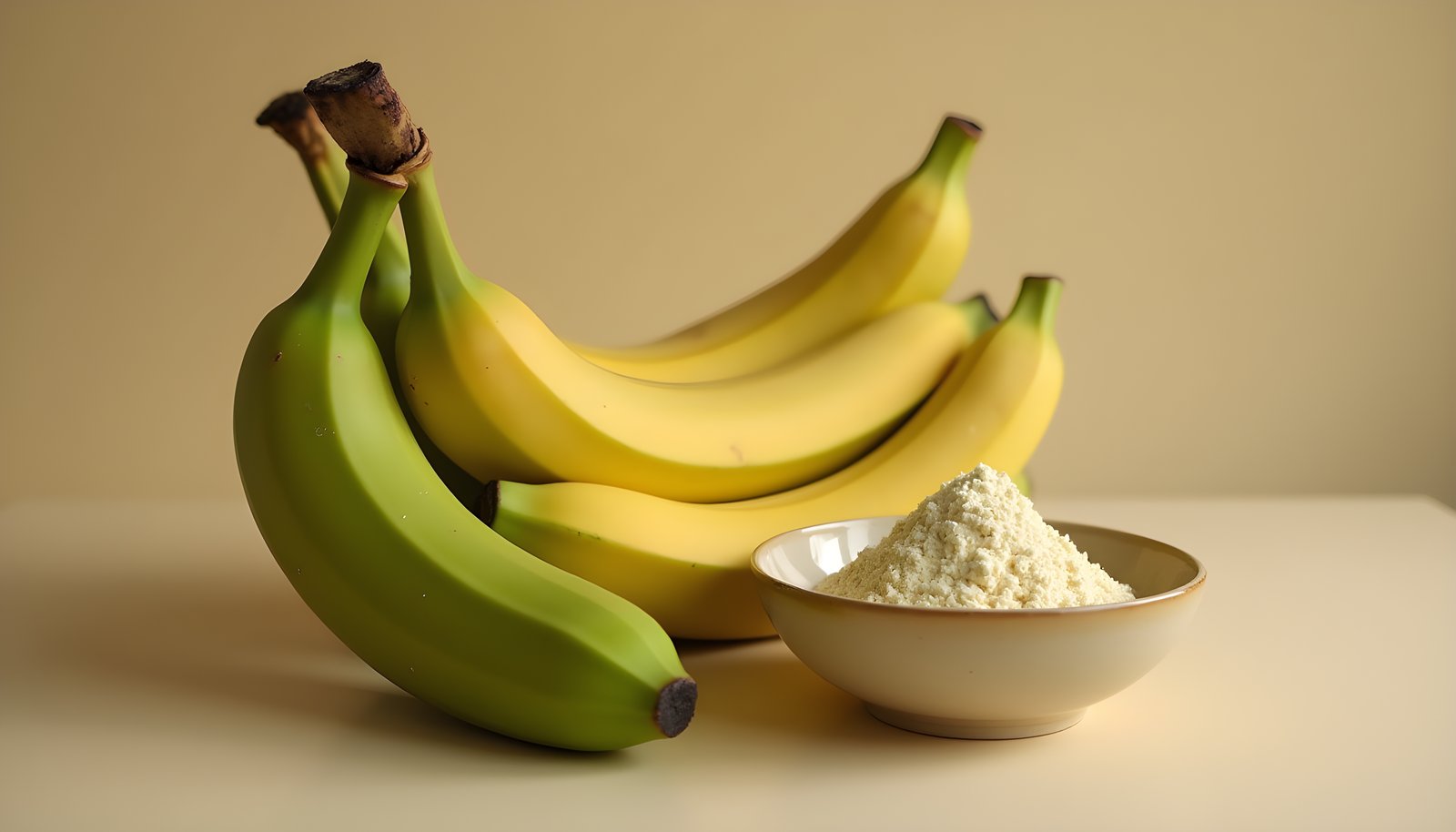
- Type 2 is found in raw potatoes and unripe bananas, and type 4 is a manufactured ingredient added to some processed foods.
So the grain you buy and what you do with it after cooking both shape how much resistant starch reaches your gut.
Resistant starch grains ranked, raw
A 2024 study in the International Journal of Food Science and Technology measured resistant starch in raw grains and legumes on a dry weight basis. Here’s how the grains lined up.
| Raw grain (dry) | Resistant starch per 100 g dry matter |
|---|---|
| Oats | 5.3 g |
| Finger millet | 4.8 g |
| Wheat | 3.7 g |
| Barley | 3.2 g |
| Red rice | 0.4 g |
| Corn | 0.4 g |
Oats come out on top, with finger millet close behind. Wheat and barley form a solid middle group.
Red rice and corn sit far lower in this test, at under half a gram. These are raw, dry figures, though, and nobody eats a bowl of raw grain, so the cooked picture matters more.
Grain foods as you actually eat them
A separate 2024 study measured resistant starch in Australian foods as consumed, using a standard lab method known as AOAC 2002.02. These are some of the grain foods it tested, per 100 grams.
| Grain food, as eaten | Resistant starch per 100 g |
|---|---|
| Pancake made with high amylose maize flour | 13.7 g |
| White flatbread (Lebanese style) | 2.3 g |
| Cornflakes | 2.3 g |
| Rye crispbread | 2.1 g |
| Corn chips | 1.2 g |
| Corn tortilla | 1.1 g |
| Wholemeal bread | 1.0 g |
| Multigrain bread with oats | 0.7 g |
| Dark rye sourdough | 0.7 g |
| White sandwich bread | 0.6 g |
| Instant oats, cooked with water | 0.15 g |
| Sweet corn, canned | 0.08 g |
| Plain rice cracker | 0.0 g |
One food dwarfs the rest. A pancake made with high amylose maize flour, a corn flour high in amylose, one of the two main building blocks of starch, reached 13.7 grams per 100 grams.
After that, the best everyday grain foods cluster around 2 grams per 100 grams: flatbread, cornflakes and rye crispbread. Most sandwich breads land at 1 gram or less.
Corn shows how much processing matters. Canned sweet corn tested at just 0.08 grams per 100 grams, while corn tortillas reached 1.1 grams and cornflakes 2.3 grams.
A 2020 review in the Journal of the Academy of Nutrition and Dietetics backs up the pattern. It found that foods with more amylose have more resistant starch than standard varieties.
Myth vs fact: the oatmeal question
Myth: Since raw oats top the grain chart, a hot bowl of oatmeal must be one of the best resistant starch foods you can eat.
Fact: Cooked oatmeal holds very little. In the Australian study, instant oats cooked with water tested at just 0.15 grams per 100 grams, one of the lowest grain results in the whole table.
Heat is a big reason. Oats were the food most sensitive to pressure cooking in the 2024 cooking study, where pressure cooking oats for 15 minutes cut their resistant starch by about 70%, from 5.3 to 1.6 grams per 100 grams of dry matter.
Oats are still worth eating. Harvard notes that oats and barley carry beta-glucan, a soluble, highly fermentable fiber that also acts as a prebiotic, so a bowl of oatmeal still feeds your gut bacteria in a different way.
Cooking, cooling and reheating grains
Cleveland Clinic explains that type 3 resistant starch forms when foods like rice, pasta and potatoes are cooked and then cooled. Its dietitian suggests cooling cooked rice or pasta in the fridge overnight and then reheating it.
The Journal of the Academy of Nutrition and Dietetics review reached the same conclusion across many foods: those that are cooked then chilled have more resistant starch than foods eaten freshly cooked.
The Australian tests showed the effect too, though it was small in some foods. Rice-based gluten free pasta went from 0.25 to 0.28 grams per 100 grams when chilled, and pulse pasta rose from 0.70 to 0.82 grams.
Want more meal prep ideas built around cooked and chilled grains? Our recipe eBooks are full of easy, high fiber dishes.
Prebiotic grains: barley, oats and brown rice
Cleveland Clinic names barley, brown rice and oats as the grains to lean on for resistant starch, alongside beans and legumes. They’re also whole grains, so they bring regular fiber with them.
Barley and oats pull double duty. Along with their resistant starch, Harvard points to their beta-glucan as a prebiotic fiber that may help normalize blood glucose and cholesterol.
Brown rice is listed by Harvard among the sources of insoluble fiber, the kind that helps food move through your digestive system. Its resistant starch rises when it’s cooked and cooled, which makes it a practical base for grain bowls and fried rice.
How grains compare with beans
Grains are only part of the story. In the same Australian study, canned cooked legumes beat nearly every grain food on the list.
| Food, as eaten | Resistant starch per 100 g |
|---|---|
| Red kidney beans, canned | 3.2 g |
| Brown lentils, canned | 2.2 g |
| Chickpeas, canned | 2.1 g |
| White flatbread | 2.3 g |
| Wholemeal bread | 1.0 g |
| Instant oats, cooked | 0.15 g |
Kidney beans hold more resistant starch than any everyday grain food in the test, and lentils and chickpeas match the best breads. Pairing a grain with beans is the simplest way to raise the total in a single meal.
That fits Cleveland Clinic’s advice, which puts beans and legumes alongside whole grains as the best everyday sources. A pot of rice and beans, cooked ahead and chilled, covers both at once.
What 6 grams per meal looks like
Cleveland Clinic’s target of at least 6 grams per meal is hard to reach with grains alone. At about 1 gram per 100 grams, you’d need around 600 grams of wholemeal bread.
Even the flatbread, at 2.3 grams per 100 grams, would take about 260 grams to reach 6 grams. Combining a chilled grain with a serving of beans gets you much closer for a realistic amount of food.
Resistant starch adds to your total fiber picture, not replaces it. Mayo Clinic suggests 21 to 25 grams of fiber a day for women and 30 to 38 grams for men, and recommends increasing it gradually with plenty of water to avoid gas and bloating.
Not sure what your own fiber target should be? Our fiber calculator sets a personal number in seconds.
A resistant starch grain checklist
- Pick whole grains such as barley, oats and brown rice, since type 1 resistant starch sits inside the grain’s cell walls.
- Cook rice or pasta ahead, chill it overnight and reheat it, as Cleveland Clinic suggests.
- Avoid long pressure cooking for oats if resistant starch is your goal.
- Look for foods made with high amylose grain flours, which test far higher than standard flours.
- Add a serving of beans, lentils or chickpeas to grain dishes to lift the total.
- Raise your intake slowly so your gut has time to adjust.
If your gut needs a gentle way to build up these foods, our guides walk you through it one step at a time.
Where resistant starch research is heading
Resistant starch data is still patchy. The authors of the Australian study call it the first in their country to measure food resistant starch with the AOAC 2002.02 method, and they note real variation between samples and products.
They call for more measured data before resistant starch can be built into everyday dietary advice. Expect grain rankings to shift as more foods are tested. In the Australian study, for example, barley wasn’t tested at all and the only rice food was a plain rice cracker, so some of the most promising cooked and cooled grains still lack good as-eaten numbers.
Questions about resistant starch grains
Which grain has the most resistant starch?
In raw lab tests, oats led at about 5.3 grams per 100 grams of dry grain, followed by finger millet at 4.8 grams. Cooked, most grain foods hold 2 grams or less per 100 grams.
Does rice have resistant starch?
Yes. Cleveland Clinic lists brown rice as a source, and cooking then chilling rice helps form more type 3 resistant starch.
Is oatmeal high in resistant starch?
Not once cooked. Instant oats cooked with water tested at about 0.15 grams per 100 grams, though oats still supply beta-glucan, a prebiotic fiber.
Does cooling pasta increase resistant starch?
Yes, cooked and chilled foods tend to have more resistant starch. In one study, chilled pulse pasta had 0.82 grams per 100 grams compared with 0.70 grams freshly cooked.
How much resistant starch should you eat per day?
Most people in the U.S. get about 5 grams a day. A Cleveland Clinic dietitian suggests aiming for at least 6 grams per meal.
Which bread has the most resistant starch?
In Australian testing, a white Lebanese style flatbread had about 2.3 grams per 100 grams, more than wholemeal bread at 1.0 gram. Values varied widely between products.
Is resistant starch the same as fiber?
Not exactly, but they overlap. Resistant starch resists digestion and ferments in the large intestine like fiber, and Harvard describes it as a fermentable prebiotic fiber.
Sources
- Cleveland Clinic. “Are Foods With Resistant Starch Good for You?” Health Essentials, 2025. health.clevelandclinic.org
- Hareer LW, Tran C, O’Neill HM, Genoni A. “Resistant starch content of Australian foods.” International Journal of Food Science and Technology, 2024. academic.oup.com
- Karunarathna S, et al. “Investigating the impact of boiling and pressure cooking on resistant starch levels in food.” International Journal of Food Science and Technology, 2024. academic.oup.com
- Patterson MA, Maiya M, Stewart ML. “Resistant Starch Content in Foods Commonly Consumed in the United States: A Narrative Review.” Journal of the Academy of Nutrition and Dietetics, 2020. jandonline.org
- Harvard T.H. Chan School of Public Health. “Fiber.” The Nutrition Source, 2022. nutritionsource.hsph.harvard.edu
- Mayo Clinic Staff. “Dietary fiber: Essential for a healthy diet.” Mayo Clinic, 2024. mayoclinic.org