
In this article
- Bamboo shoot fiber: raw, canned and cooked
- Bamboo nutrition: where the shoots shine
- Why bamboo shoots are so light
- How bamboo shoots compare with other Asian vegetables
- A bamboo shoot stir fry, counted
- Bamboo shoot fiber content against your daily goal
- What bamboo shoot fiber does for digestion
- Getting more from a can of bamboo shoots
- The edge case: boiled fresh shoots
- Bamboo shoot questions people ask
- Sources
Bamboo shoot does have fiber, but the form you buy changes the number more than you’d guess. Raw shoots carry about 2.2 grams of fiber per 100 grams, while the canned slices most of us actually cook with have about 1.4 grams.
A cup of canned, drained bamboo shoots works out to roughly 1.8 grams of fiber for 25 calories. That’s a light contribution, but bamboo shoot fiber comes with something many vegetables can’t match: a lot of crunch and potassium for almost no energy.
Bamboo shoot fiber: raw, canned and cooked
USDA FoodData Central lists bamboo shoots in several forms. Here’s how they compare per serving and per 100 grams.
| Bamboo shoots | Serving | Fiber | % DV (28 g) | Calories |
|---|---|---|---|---|
| Raw | 1/2 cup (76 g) | 1.7 g | 6% | 20 |
| Raw | 100 g | 2.2 g | 8% | 27 |
| Canned, drained | 1 cup (131 g) | 1.8 g | 6% | 25 |
| Canned, drained | 100 g | 1.4 g | 5% | 19 |
| Boiled | 1 cup (120 g) | 1.0 g | 4% | 15 |
| Cooked, as eaten in mixed dishes | 1 cup (155 g) | 2.2 g | 8% | 64 |
Raw shoots lead gram for gram. Canned shoots drop to 1.4 grams per 100 grams, and they’re watery too, at 94.3 grams of water per 100 grams.
The last row comes from USDA’s survey database, which describes bamboo shoots as they’re typically eaten in recipes. It lists 41 calories per 100 grams instead of 19, and USDA doesn’t detail the recipe, so treat that row as a rough guide.
Most shoppers will meet bamboo shoots in a can. Fresh shoots are sold in some Asian grocery stores, and they need peeling and cooking before you eat them.
Bamboo nutrition: where the shoots shine
Fiber isn’t the main reason to add bamboo shoots to a dish. Their real strength is minerals, especially potassium, for very few calories.
| Nutrient | Raw, 1/2 cup (76 g) | Boiled, 1 cup (120 g) |
|---|---|---|
| Potassium | 405 mg (9% DV) | 640 mg (14% DV) |
| Copper | 16% DV | 11% DV |
| Vitamin B6 | 11% DV | n/a |
| Zinc | 8% DV | n/a |
| Fiber | 1.7 g | 1.0 g |
| Calories | 20 | 15 |
A cup of boiled shoots brings 640 mg of potassium, about 14% of the 4,700 mg Daily Value, for only 15 calories. That works out to more than 40 mg of potassium for every calorie.
Copper is the other standout. Raw shoots supply about 16% of the Daily Value per half cup, and canned shoots land at about 17% per cup.
Raw shoots add a little vitamin B6 and zinc as well, at about 11% and 8% of their Daily Values per half cup. None of these amounts is huge on its own, but together they make bamboo shoots more than just filler in a stir fry.
Canned bamboo shoots are also low in sodium, at roughly 7 mg per 100 grams in USDA’s entry. That can vary with brand, so check the label on the can you buy.
Why bamboo shoots are so light
Canned bamboo shoots are about 94% water by weight, according to USDA. That single fact explains most of their profile: low calories, low fiber per cup and a crisp texture that holds up in sauces.
Raw shoots are a little denser, coming out ahead on both fiber and calories per 100 grams. Neither form is dense, so a large serving stays light.
This is useful when you want a big plate for few calories. A full cup of canned shoots adds just 25 calories while making a stir fry or soup feel much more generous.
How bamboo shoots compare with other Asian vegetables
Bamboo shoots usually share a pan with other vegetables common in East and Southeast Asian cooking. Here’s how they stack up, using USDA and Dietary Guidelines figures.
| Vegetable | Serving | Fiber | Calories |
|---|---|---|---|
| Snow peas, cooked | 1 cup | 4.5 g | 67 |
| Lotus root, cooked | 1 cup | 3.8 g | 108 |
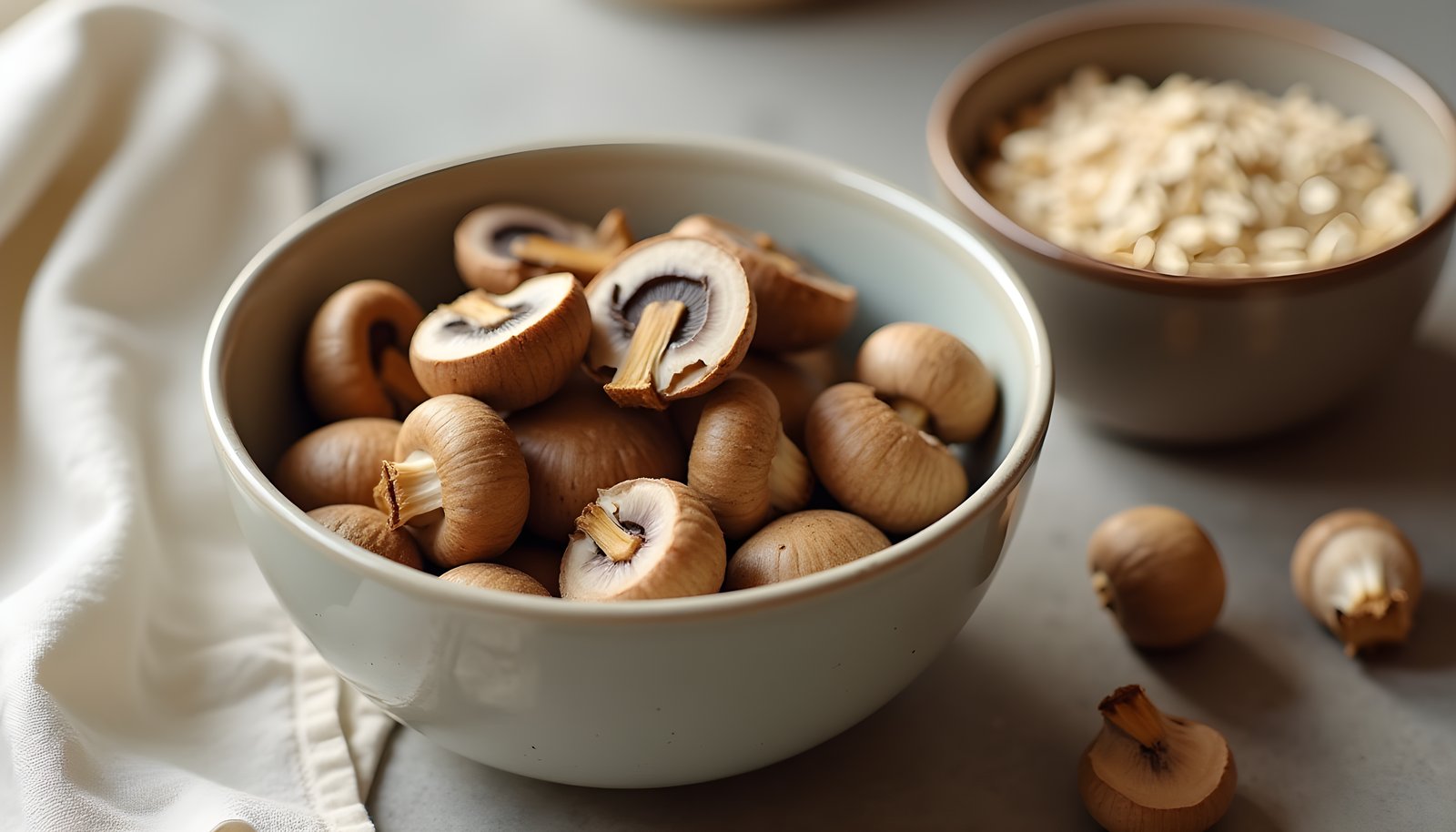
| Mushrooms, cooked | 1 cup | 3.4 g | 44 |
| Taro leaves, cooked | 1 cup | 2.9 g | 35 |
| Bean sprouts, raw | 1 cup | 1.9 g | 31 |
| Bamboo shoots, canned | 1 cup | 1.8 g | 25 |
Bamboo shoots sit at the bottom of the list on fiber per cup, just behind bean sprouts. Snow peas carry about two and a half times as much.
On calories, though, bamboo shoots are the lightest vegetable here. They give you bulk and bite at 25 calories a cup, which leaves plenty of room for higher fiber partners in the same dish.
Lotus root is the opposite case. It brings twice the fiber of bamboo but more than four times the calories, at 108 per cup.
A bamboo shoot stir fry, counted
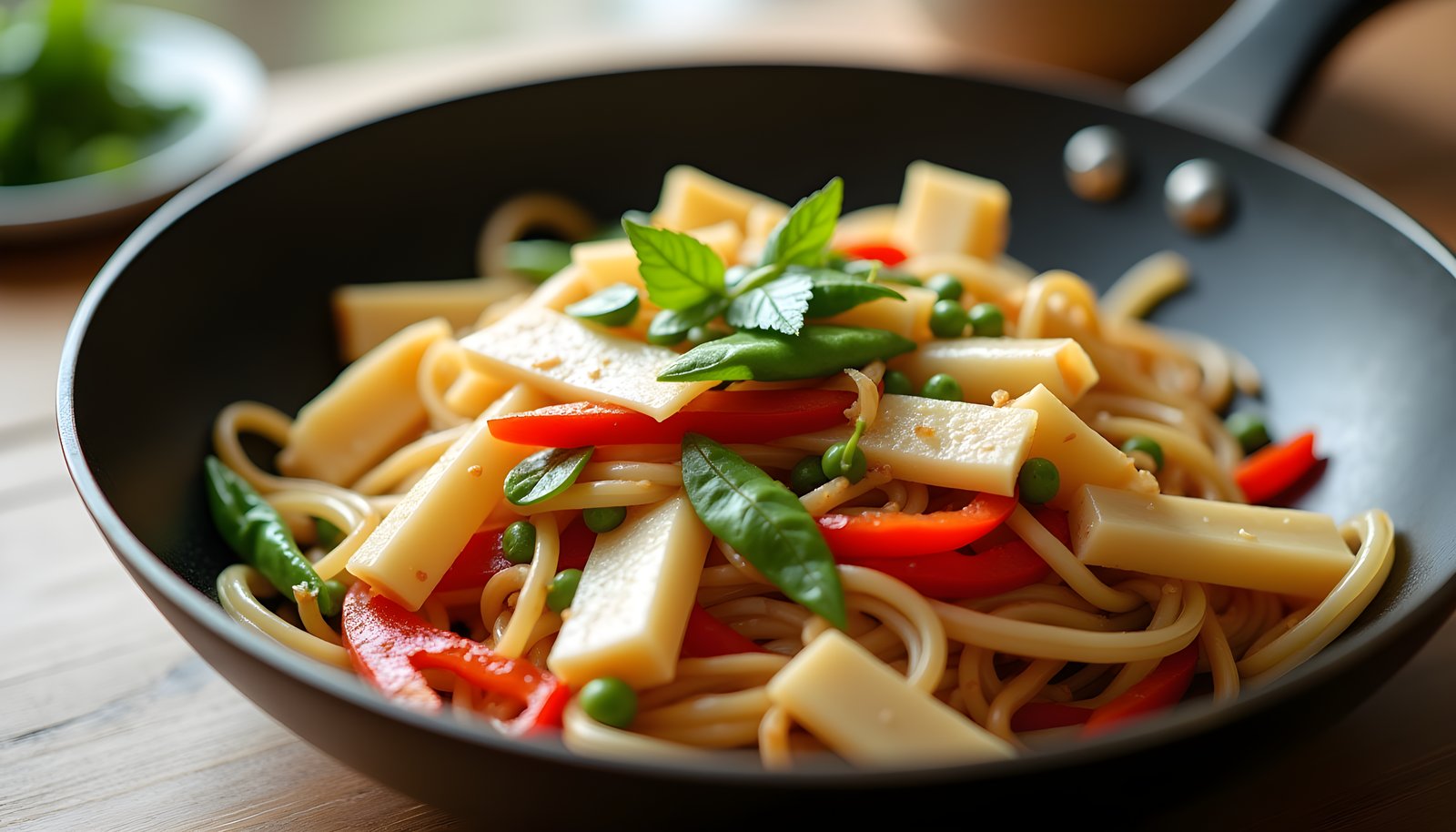
Say you make a quick stir fry with a cup of canned bamboo shoots, a cup of snow peas and a cup of sliced mushrooms, and serve it over a cup of brown rice.
| Ingredient | Fiber |
|---|---|
| Canned bamboo shoots, 1 cup | 1.8 g |
| Snow peas, 1 cup cooked | 4.5 g |
| Mushrooms, 1 cup cooked | 3.4 g |
| Brown rice, 1 cup cooked | 3.5 g |
| Total | 13.2 g |
That plate reaches about 13.2 grams of fiber, close to half the 28 gram Daily Value. The bamboo shoots add texture while the snow peas, mushrooms and rice carry most of the fiber.
Prefer curry? Swap the mushrooms for half a cup of cooked lentils, which the Dietary Guidelines list at 7.8 grams of fiber. The same plate then climbs to about 17.6 grams, well over half the Daily Value.
Both versions follow the same pattern. Bamboo shoots set the texture, and the beans, grains and greener vegetables around them set the fiber total.
Looking for more stir fries and curries that use bamboo shoots? Our recipe eBooks are packed with easy, high fiber meals.
Bamboo shoot fiber content against your daily goal
Mayo Clinic suggests 21 to 25 grams of fiber a day for women and 30 to 38 grams for men. A cup of canned bamboo shoots covers about 7 to 9% of a woman’s target and roughly 5 to 6% of a man’s.
That makes bamboo shoots a helper rather than a main source. Their value is in letting you build big, satisfying portions without many calories, then adding fiber from beans, whole grains and denser vegetables.
Mayo notes that high fiber foods tend to be more filling, and that a fiber rich diet can help lower cholesterol, control blood sugar and support a healthy weight. A dish that combines bamboo shoots with other vegetables gets you closer to those benefits than any one ingredient alone.
Curious what your own daily fiber target should be? Our fiber calculator can work it out in seconds.
What bamboo shoot fiber does for digestion
Mayo Clinic describes two broad kinds of fiber. Soluble fiber dissolves in water and forms a gel like material, while insoluble fiber helps material move through your digestive system and adds bulk to stool.
USDA lists only total fiber for bamboo shoots, without a split by type. Because they’re so low in calories and fiber per cup, they’re an easy vegetable to add while you build up your intake slowly, which Mayo recommends along with drinking plenty of water.
If your gut prefers a gradual approach, our guides walk you through building more fiber into your meals step by step.
Getting more from a can of bamboo shoots
Because canned shoots are mild and crisp, they slip into many dishes without changing the flavor much. That makes them an easy way to add volume to meals you already cook.
Canned bamboo shoots come sliced, in strips or as whole tips. Drain and rinse them before cooking to freshen the flavor.
- Add them to stir fries in the last few minutes so they stay crisp.
- Stir strips into a coconut curry along with chickpeas or lentils for a bigger fiber boost.
- Toss sliced shoots into hot and sour soup with mushrooms and tofu.
- Mix chopped shoots into dumpling or lettuce wrap fillings for extra crunch.
- Pair them with snow peas or broccoli to raise the fiber of the whole dish.
Once a can is open, move leftover shoots to a covered container in the fridge rather than leaving them in the opened can.
The edge case: boiled fresh shoots
One number in the USDA data looks odd. Fresh shoots that have been boiled list only about 1 gram of fiber per cup, lower than both raw and canned.
USDA’s records don’t say why, and the raw and canned entries both come out higher. The practical point is that bamboo shoots never carry much fiber in any form, so if you cook fresh ones at home, count them as roughly 1 gram per cup and get the bulk of your fiber from the rest of the plate.
Canned shoots, at about 1.8 grams per cup, are the more generous choice for fiber and the easier one to keep in the pantry. If you love the flavor of fresh shoots, enjoy them for taste and texture and lean on beans, grains and greens for the numbers.
Bamboo shoot questions people ask
How much fiber is in bamboo shoots?
Raw bamboo shoots have about 2.2 grams of fiber per 100 grams. Canned, drained shoots have about 1.4 grams per 100 grams, or roughly 1.8 grams per cup.
Are bamboo shoots high in fiber?
No, they’re a light source. A cup of canned bamboo shoots gives about 6% of the Daily Value for fiber, but only 25 calories.
Are canned bamboo shoots healthy?
Yes, they can be. Canned shoots are very low in calories, supply copper and potassium, and USDA lists them at only about 7 mg of sodium per 100 grams.
How many calories are in bamboo shoots?
A cup of canned, drained bamboo shoots has about 25 calories. Raw shoots have about 27 calories per 100 grams.
Do bamboo shoots have potassium?
Yes. A cup of boiled bamboo shoots has about 640 mg of potassium, around 14% of the Daily Value.
Do bamboo shoots have more fiber than bean sprouts?
They’re very close. A cup of canned bamboo shoots has about 1.8 grams of fiber, and a cup of raw mung bean sprouts has about 1.9 grams.
Can bamboo shoots help with weight loss?
They can help you build larger, more filling meals for few calories. A cup of canned shoots has just 25 calories, and Mayo Clinic notes that high fiber foods tend to be more filling.
Sources
- USDA FoodData Central. “Bamboo shoots, raw” (FDC 169210), “Bamboo shoots, cooked, boiled, drained, without salt” (FDC 169211), “Bamboo shoots, canned, drained solids” (FDC 169212); SR Legacy, 2019. “Bamboo shoots, cooked” (FDC 2709847), FNDDS. fdc.nal.usda.gov
- Dietary Guidelines for Americans. “Food Sources of Dietary Fiber.” 2020. dietaryguidelines.gov
- U.S. Food and Drug Administration. “Daily Value on the Nutrition and Supplement Facts Labels.” 2024. fda.gov
- Mayo Clinic Staff. “Dietary fiber: Essential for a healthy diet.” Mayo Clinic, 2024. mayoclinic.org