

In this article
- Protein dairy drinks fiber, bottle by bottle
- Why milk based drinks start at zero
- Where the odd gram of fiber comes from
- Dairy protein shakes nutrition beyond fiber
- Three bottles, up close
- Dairy versus plant protein drinks on fiber
- Protein drinks versus meal replacement drinks
- Myth: a complete nutrition drink covers your fiber
- A breakfast built around a protein drink, counted
- Blending fiber into a dairy protein shake
- A quick decision rule for protein dairy drinks
- Protein dairy drinks and fiber: what people ask
- Sources
Thirty grams of protein, 730 milligrams of calcium and 1 gram of fiber. That’s the label on a bottle of Fairlife’s chocolate protein shake, and it sums up protein dairy drinks fiber in one line.
Milk brings protein and calcium in large amounts, but no fiber at all. Any fiber in a dairy protein shake comes from cocoa, thickeners or a fiber ingredient added on purpose.
Protein dairy drinks fiber, bottle by bottle
These figures come from brand records submitted to USDA FoodData Central, with plain reduced fat milk for reference.
| Drink | Serving | Protein | Fiber | Sugar | Calories |
|---|---|---|---|---|---|
| Fairlife Protein 30 g Chocolate | 340 ml | 30 g | 1 g | 2 g | 150 |
| Ensure Max Protein Milk Chocolate | 330 ml | 30 g | 2 g | under 1 g | 150 |
| Boost High Protein Rich Chocolate | 237 ml | 20 g | 0 g | 15 g (all added) | 240 |
| Lifeway Protein Kefir Vanilla | 240 ml | 21 g | 0 g | 18 g (7 g added) | 170 |
| EAS Pure Milk Protein Milk Chocolate | 325 ml | 15 g | under 1 g | 0 g | 100 |
| Boost High Protein Chocolate Sensation | 237 ml | 15 g | 0 g | 15 g | 240 |
| Reduced fat 2% milk | 1 cup | 8 g | 0 g | 12 g | 120 |
Only one bottle reaches 2 grams, about 7% of the 28 gram Daily Value for fiber. Every other drink stays at 1 gram or below.
Why milk based drinks start at zero
Mayo Clinic describes dietary fiber as the parts of plant foods your body can’t digest or absorb. Milk comes from animals, so there’s no fiber in it to begin with.
That’s why plain 2% milk lists 0 grams despite 8 grams of protein per cup. Concentrating milk protein, as Fairlife does with filtered milk or as other brands do with milk protein concentrate, raises the protein without adding any fiber.
Protein kefir follows the same pattern. Lifeway’s vanilla version adds whey protein concentrate and cane sugar to cultured nonfat milk for 21 grams of protein and 0 grams of fiber.
Where the odd gram of fiber comes from
Fairlife’s ingredient list has alkalized cocoa right after the filtered milk, followed by cellulose gel and cellulose gum. Cocoa is a plant food with fiber of its own, which helps explain the single gram.
Cellulose is on FDA’s original list of fibers that count on labels, but here it’s used in small amounts to thicken the drink. EAS and both Boost bottles list cellulose gel or gum too, and still show under 1 gram or 0 grams.
Ensure Max Protein takes a different route. It lists inulin and soluble corn fiber among its ingredients, and those added fibers bring the bottle to 2 grams.
Dairy protein shakes nutrition beyond fiber
Protein
These drinks carry 15 to 30 grams per bottle, compared with 8 grams in a cup of milk. The 50 gram Daily Value for protein means a 30 gram bottle covers 60% of it.
Calcium
Calcium is the quiet strength of dairy shakes. Fairlife lists 730 milligrams and Ensure Max Protein 650 milligrams, which is 50% or more of the 1,300 milligram Daily Value in one bottle.
Sugar
Sugar splits the group in two. Fairlife, Ensure Max Protein and EAS list 0 to 2 grams, while both Boost bottles list 15 grams and Lifeway’s protein kefir lists 18 grams, 7 of them added.
Boost Rich Chocolate’s first ingredients after water are glucose syrup, milk protein concentrate and sugar. That’s how a 237 milliliter bottle reaches 240 calories.
Sodium
Sodium runs from 150 to 240 milligrams per bottle, around 7% to 10% of the Daily Value. It’s moderate, but worth noticing if you drink more than one a day.
Comparing protein drinks for fiber, sugar and calcium? Our comparison charts line up the popular bottles side by side.
Three bottles, up close
Ensure Max Protein
Ensure builds its 30 grams of protein from milk protein concentrate and calcium caseinate, then adds inulin and soluble corn fiber further down the list. The result is 2 grams of fiber, under 1 gram of sugar and 0 grams of saturated fat for 150 calories.
It’s the closest any dairy protein bottle here comes to offering fiber on purpose, though 2 grams is still a small share of a day’s needs.
Fairlife Protein 30 g
Fairlife starts with filtered lowfat milk, which concentrates the milk protein, and adds lactase enzyme to break down lactose. The label lists just 2 grams of sugar alongside 730 milligrams of calcium.
Its single gram of fiber is a side effect of the cocoa and thickeners rather than a design goal.
Lifeway Protein Kefir
This is the only bottle in the table with live and active cultures listed in the ingredients. It reaches 21 grams of protein with added whey protein concentrate, and its 400 milligrams of calcium covers 31% of the Daily Value.
Cultures and fiber are different things, though. The kefir brings the first and none of the second, so it pairs well with a fiber rich snack.
Dairy versus plant protein drinks on fiber
Plant based protein drinks don’t automatically do better. Ripple’s unsweetened pea milk lists 8 grams of protein and under 1 gram of fiber, because its protein comes from a pea protein isolate rather than whole peas.
Remedy Organics’ almond and pea protein drink reaches 2 grams of fiber with 12 grams of protein, but only by adding gum acacia, guar gum and a tapioca prebiotic powder. On fiber, the best plant and dairy bottles land in the same place.
Protein drinks versus meal replacement drinks
Boost’s high protein bottles are labeled as balanced or complete nutritional drinks, and Ensure’s line includes both Max Protein and a version made with fiber. These are built to stand in for a meal, not just to add protein.
Even so, fiber stays low. Ensure’s fiber version of its original shake lists 3 grams, with 21 grams of added sugar and 9 grams of protein per bottle.
A meal you’d eat instead usually carries far more. A medium apple has 4.8 grams of fiber and an ounce of almonds has 3.5 grams, according to the Dietary Guidelines.
Myth: a complete nutrition drink covers your fiber
Myth: if a bottle says complete or balanced nutrition, it handles fiber too. Fact: Boost Chocolate Sensation, sold as a high protein complete nutritional drink, lists 0 grams of fiber.
The word complete usually refers to the vitamins and minerals in the blend. Fiber has its own line on the panel, and that’s the one to read if you’re counting.
The same goes for words like balanced, max and pure. They describe protein, sugar or ingredient lists, and none of them promises fiber.
In our table, the bottle with the most fiber is also one of the lowest in sugar, so reading the fiber line doesn’t mean giving up on the other numbers. It just means not assuming the front of the bottle has done the reading for you.
A breakfast built around a protein drink, counted
Say you grab a Fairlife chocolate shake on the way out the door. You get 30 grams of protein and 1 gram of fiber, which leaves almost all of your fiber for the rest of the day.
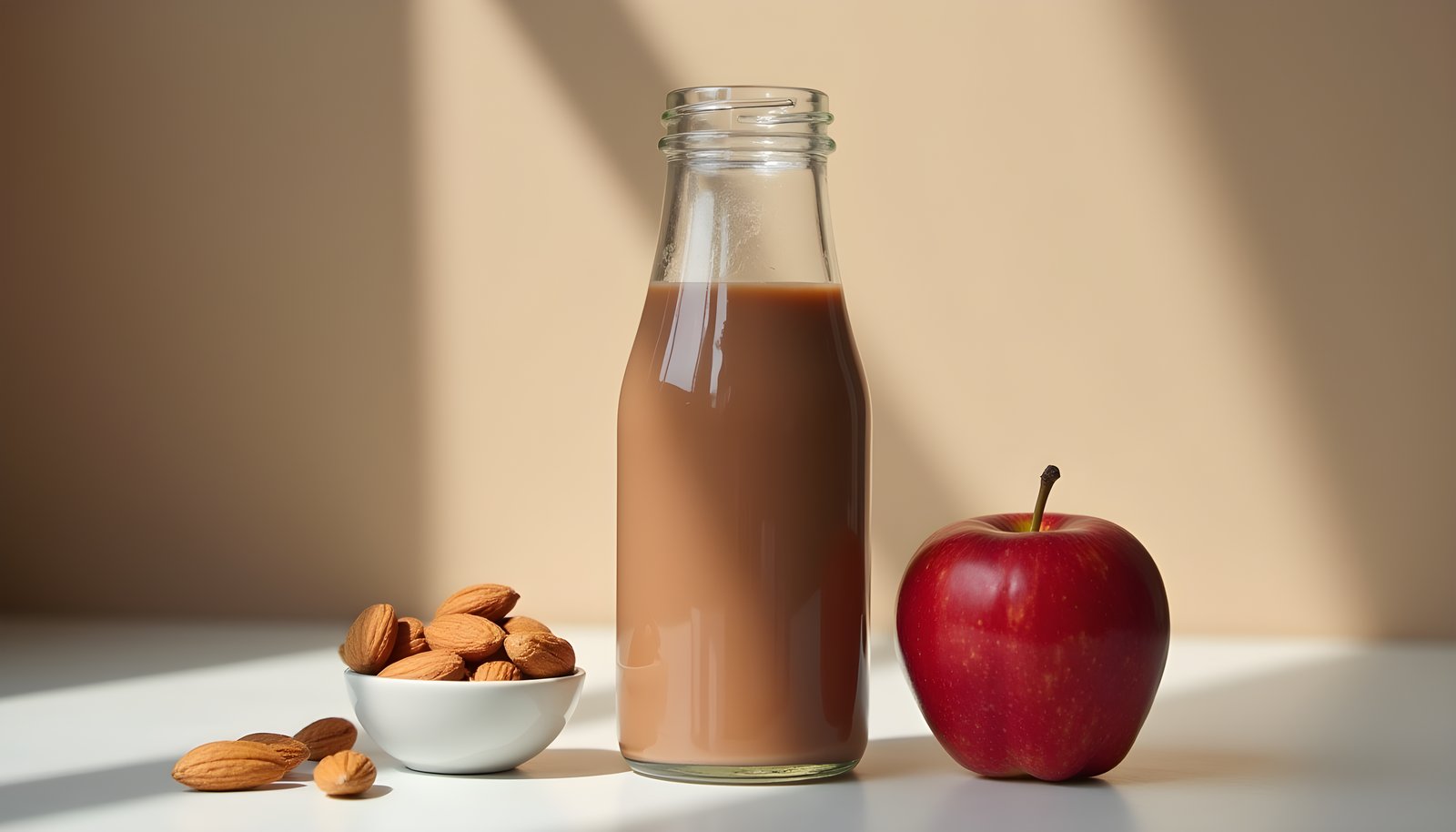
Add a medium apple and an ounce of almonds and the same breakfast reaches about 9.3 grams of fiber. That’s more than a third of a 25 gram target from food you can carry in a bag.
Mayo Clinic suggests about 25 grams of fiber a day for women and 38 grams for men up to age 50. Not sure where you land? Our fiber calculator works out a personal number in seconds.
Blending fiber into a dairy protein shake
Pouring a bottle into a blender is the easiest fix. A protein shake works well with frozen fruit, oats or seeds, and each one adds fiber that’s part of the whole food.
- Frozen raspberries: a cup adds 8.0 grams, enough to make a chocolate shake taste like a berry mocha.
- Chia seeds: a tablespoon adds 4.1 grams and thickens the shake as it sits.
- Banana: a medium banana adds 3.2 grams along with natural sweetness.
Mayo Clinic advises increasing fiber gradually and drinking plenty of fluids. If your usual shake has none, start with one of these rather than all three at once.
Want more shake and smoothie ideas with fruit, seeds and oats? Our recipe eBooks are packed with easy high fiber blends.
A quick decision rule for protein dairy drinks
- If you want the most protein for the fewest calories: pick a 30 gram bottle with 2 grams of sugar or less, like Fairlife or Ensure Max Protein.
- If you want a bit of fiber from the bottle itself: look for inulin or soluble corn fiber in the ingredients, as in Ensure Max Protein.
- If you want live cultures: protein kefir brings them, but check the added sugar line.
- If fiber is the real goal: choose any low sugar bottle and pair it with fruit, nuts or seeds, since no dairy drink we checked tops 3 grams.
Protein dairy drinks and fiber: what people ask
Do protein shakes made with milk have fiber?
Very little. Milk has no fiber, so dairy protein shakes list 0 to 2 grams, mostly from cocoa, thickeners or added fiber ingredients.
Which dairy protein drink has the most fiber?
Among the bottles we checked, Ensure Max Protein lists 2 grams with 30 grams of protein. Its fiber comes from added inulin and soluble corn fiber.
Does Fairlife protein shake have fiber?
The chocolate version lists 1 gram per 340 milliliter bottle. It contains cocoa plus cellulose gel and cellulose gum.
Does protein kefir have fiber?
No. Lifeway’s vanilla protein kefir lists 0 grams of fiber with 21 grams of protein and 18 grams of sugar.
Are meal replacement drinks high in fiber?
Usually not. Boost Chocolate Sensation lists 0 grams, and Ensure’s fiber version lists 3 grams.
Can a protein shake replace breakfast?
It can cover protein, but not fiber. Adding an apple and an ounce of almonds brings breakfast to about 9 grams of fiber.
How do I add fiber to a protein shake?
Blend in fruit or seeds. A cup of frozen raspberries adds 8 grams and a tablespoon of chia seeds adds about 4 grams.
Sources
- USDA Agricultural Research Service. FoodData Central branded records for Fairlife Protein 30 g Chocolate Nutrition Shake (2022), Ensure Max Protein Milk Chocolate (2021), Boost High Protein Rich Chocolate and Chocolate Sensation (2022), Lifeway Vanilla Protein Kefir (2021), EAS Pure Milk Protein Milk Chocolate (2022) and Ensure Original Milk Chocolate with Fiber (2021), Ripple Unsweetened Original and Remedy Organics Vanilla Essentials (2023), plus SR Legacy reduced fat 2% milk (171267). fdc.nal.usda.gov
- U.S. Food and Drug Administration. “Questions and Answers on Dietary Fiber.” 2024. fda.gov
- U.S. Food and Drug Administration. “Daily Value on the Nutrition and Supplement Facts Labels.” 2024. fda.gov
- U.S. Department of Agriculture and U.S. Department of Health and Human Services. “Food Sources of Dietary Fiber.” Dietary Guidelines for Americans, 2020 to 2025. dietaryguidelines.gov
- Mayo Clinic Staff. “Dietary fiber: Essential for a healthy diet.” Mayo Clinic. 2025. mayoclinic.org

