

In this article
- Black bean pasta fiber, box by box
- Two kinds of black bean in the box
- Myth vs fact: black bean pasta
- Bean pasta nutrition beyond fiber
- High fiber carbs, ranked by calories
- Gluten free pasta fiber: where black bean boxes stand
- Cooking and serving black bean pasta
- Going from 3 grams to 11 in one bowl
- Which black bean pasta fits your plate
- Black bean pasta FAQs
- Sources
Pick up two boxes of black bean pasta and you might see 25 grams of protein on one and 12 on the other. Turn to the fiber line, though, and both land close together: black bean pasta fiber runs about 10 to 12 grams per 2 ounce dry serving, according to USDA FoodData Central branded records.
That’s three to four times the 3 grams in classic semolina spaghetti. The protein gap comes from which black bean went into the box, and once you know that, choosing between them gets easy.
Black bean pasta fiber, box by box
These are the numbers manufacturers have submitted to USDA, per dry serving of about 2 ounces:
| Pasta | Listed ingredient | Calories | Fiber | Protein | Carbs |
|---|---|---|---|---|---|
| Explore Cuisine Organic Black Bean Spaghetti | Black soybean flour | 180 | 11 g | 25 g | 19 g |
| Bellabondonza Organic Black Bean Spaghetti | Black beans, water | 180 | 12 g | 25 g | 17 g |
| Liviva Organic Black Bean Spaghetti (57 g) | Black bean, water | 210 | 11 g | 22 g | 22 g |
| O Organics Black Bean Penne | Black bean flour | 210 | 10 g | 12 g | 37 g |
| Wegmans Black Bean Penne (55 g) | Black bean flour | 170 | 10 g | 12 g | 27 g |
| Barilla Whole Grain Spaghetti (for comparison) | Whole wheat | 180 | 6 g | 8 g | 39 g |
| Barilla Classic Spaghetti (for comparison) | Semolina | 200 | 3 g | 8 g | 41 g |
Every black bean pasta in the table lists at least 10 grams of fiber. Against the FDA’s Daily Value of 28 grams, that’s 36 to 43% in a single serving.
Tolerant’s black bean penne record, dated 2017, uses a bigger 3 ounce serving and lists 15 grams of fiber. Scaled to 2 ounces, it comes to about 9.9 grams, right in line with the others.
Two kinds of black bean in the box
The protein column splits the table neatly in two. Explore Cuisine’s record names its ingredient as black soybeans, a dark skinned variety of soybean, while the O Organics and Wegmans penne behave like the black turtle beans you’d find in a burrito.
USDA’s raw records show why that matters. Per 100 grams, soybeans carry about 36.5 grams of protein and 30.2 grams of carbohydrate, while black turtle beans carry 21.6 grams of protein and 62.4 grams of carbohydrate.
| Per 56 grams, dry | Calories | Fiber | Protein | Carbs |
|---|---|---|---|---|
| Raw black beans (USDA FoodData Central) | 191 | 8.7 g | 12.1 g | 34.9 g |
| O Organics Black Bean Penne | 210 | 10 g | 12 g | 37 g |
| Wegmans Black Bean Penne (55 g) | 170 | 10 g | 12 g | 27 g |
| Explore Cuisine Black Bean Spaghetti (black soybean) | 180 | 11 g | 25 g | 19 g |
The turtle bean penne tracks the raw beans closely, even down to the potassium: both pastas list 820 milligrams per serving, and 56 grams of raw black beans works out to about 830. The soybean style is a different food that happens to share a color.
Both styles clear 10 grams of fiber, so neither is the “wrong” choice. You’re really picking a protein and carb profile.
Subtract fiber from total carbs and the split gets sharper. Explore Cuisine’s spaghetti leaves about 8 grams of other carbohydrate per serving, the O Organics penne about 27, and classic spaghetti about 38.
So even the higher carb turtle bean style gives you more fiber and fewer starchy carbs than the wheat box it replaces. For anyone looking for high fiber carbs rather than low carb pasta, that’s a fair trade.
Myth vs fact: black bean pasta
Myth: Black bean pasta is just the beans from a can, pressed into noodles.
Fact: Some boxes are, and some are made from black soybeans. The ingredient line tells you which, and the protein number usually confirms it: around 12 grams points to turtle beans, around 25 points to soy.
Myth: A pasta can’t have more fiber than the bean it’s made from.
Fact: In these records it often does on paper. The O Organics penne lists 10 grams per 56 grams, while USDA’s raw black beans come to about 8.7 grams for the same weight, and USDA’s database doesn’t say why. Treat it as a near tie: the pasta keeps essentially all of the bean’s fiber.
Bean pasta nutrition beyond fiber
Fiber is the headline, but the minerals in these boxes are worth a look too. Per serving, according to the USDA records:
- Iron: 2.6 mg in the turtle bean penne, 5 mg in Explore Cuisine’s spaghetti and 12 mg in Liviva’s
- Potassium: 820 to 1,100 mg where listed, about 17 to 23% of the Daily Value
- Calcium: 120 to 170 mg in the soybean style spaghetti
- Sodium: 0 to 10 mg in every box, since none of them add salt
Harvard’s Nutrition Source describes legumes as sources of protein, folate, iron and phosphorus with very little fat. A single ingredient bean pasta carries most of that into a noodle you already know how to cook.
Fat stays low as well, 1 to 3.5 grams per serving. The soybean style sits at the top of that range.
High fiber carbs, ranked by calories
Grams per serving only tell part of the story, because serving sizes and calories differ. Dividing fiber by calories puts these options on equal footing:
| Option | Fiber per 100 calories |
|---|---|
| Bellabondonza Black Bean Spaghetti | 6.7 g |
| Explore Cuisine Black Bean Spaghetti | 6.1 g |
| Wegmans Black Bean Penne | 5.9 g |
| O Organics Black Bean Penne | 4.8 g |
| Raw black beans | 4.5 g |
| Barilla Chickpea Spaghetti | 4.2 g |
| Barilla Whole Grain Spaghetti | 3.3 g |
| Barilla Classic Spaghetti | 1.5 g |
Black bean pasta tops the list, edging past chickpea pasta and leaving whole wheat well behind. Mayo Clinic’s fiber chart lists a cup of cooked whole wheat spaghetti at 6 grams, which is a solid choice but still about half of a black bean serving.
Cooked beans hold their own too. The Dietary Guidelines for Americans list a half cup of cooked black beans at 7.5 grams, so the pasta is a convenient way to get a bean sized dose without opening a can.
Weighing black bean, chickpea and whole wheat boxes against each other? Our comparison charts lay out the popular brands in one place.
Gluten free pasta fiber: where black bean boxes stand
Every black bean pasta in our table lists beans as its only main ingredient, with no wheat. The O Organics penne is sold specifically as gluten free pasta.
That makes black bean pasta one of the highest fiber options in the gluten free aisle, where rice and corn pastas are common. If you need to avoid gluten strictly, look for a certified gluten free claim, since a wheat free ingredient list doesn’t guarantee the factory is.
One more label point: the FDA lists soy among the nine major food allergens that must be declared. Anyone avoiding soy should read the ingredient line closely, because “black bean” on the front can mean black soybean on the back.
Cooking and serving black bean pasta
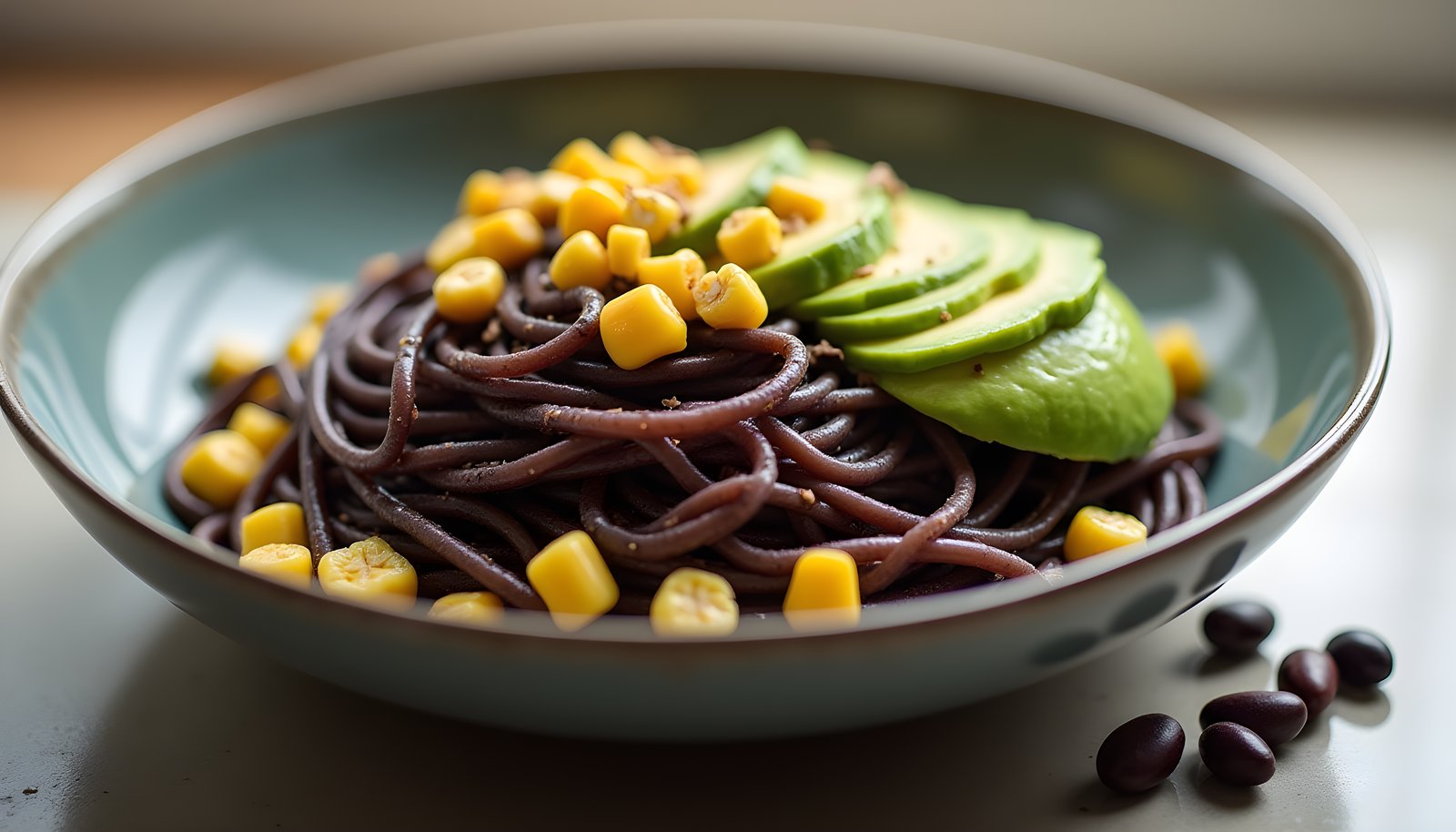
Black bean pasta cooks dark, nearly black, and has an earthy flavor that stands up to bold sauces. It tends to soften faster than wheat pasta, so start tasting a couple of minutes before the box time.
Flavors that suit it:
- Lime, cilantro and roasted corn
- Smoky chipotle or a chunky tomato salsa
- Peanut or sesame sauce with crunchy vegetables
- Garlic, olive oil and wilted greens
Adding vegetables pushes the bowl further. Using Dietary Guidelines values, a cup of cooked broccoli adds 5.2 grams and a cup of raw red bell pepper adds 3.1, so a serving of black bean pasta with both lands near 19 grams.
Looking for dinners that build on bowls like this? Our recipe eBooks have plenty of high-fiber pasta and bean meals to try.
Going from 3 grams to 11 in one bowl
Swapping classic spaghetti for black bean pasta adds about 8 grams of fiber to a single meal. That’s a big jump if you’re used to lighter dinners.
Harvard’s Nutrition Source notes that legumes can cause gas and bloating in some people. A half serving mixed with regular pasta for the first week or two is an easy way to ease in.
Mayo Clinic suggests raising fiber gradually over a few weeks and drinking plenty of fluids as you go. If your stomach tends to protest new foods, our gut health guides walk you through a slower, steadier approach.
Which black bean pasta fits your plate
Use the protein line on the box to sort your choices:
- If you want the most protein per bowl: pick a black soybean style, around 22 to 25 grams per serving
- If you’re watching carbs: the same soybean style, at 17 to 22 grams of carbs
- If you avoid soy: choose a turtle bean penne at about 12 grams of protein and check the ingredient line
- If you want the closest thing to whole black beans: also the turtle bean style, which mirrors the raw bean almost nutrient for nutrient
- If fiber is your only goal: any of them works, since every box here lists 10 grams or more
Whichever you choose, you’re starting dinner with more than a third of the day’s fiber already in the pot.
Black bean pasta FAQs
How much fiber is in black bean pasta?
Most black bean pastas list 10 to 12 grams of fiber per 2 ounce dry serving. That’s about 36 to 43% of the 28 gram Daily Value.
Is black bean pasta made from soybeans?
Sometimes. Explore Cuisine’s black bean spaghetti lists black soybean flour, while other brands use black turtle beans, so check the ingredient line.
Is black bean pasta low carb?
The soybean style is lower in carbs, at about 17 to 22 grams per serving. Turtle bean pastas list 27 to 37 grams, still less than classic spaghetti’s 41.
Is black bean pasta gluten free?
Single ingredient black bean pastas contain no wheat. Look for a certified gluten free claim if you need to avoid gluten strictly.
Does black bean pasta have more fiber than black beans?
On paper, slightly. The O Organics penne lists 10 grams per 56 grams, while the same weight of raw black beans has about 8.7 grams in USDA’s data.
Can black bean pasta cause gas?
Yes, it can. Harvard notes legumes cause gas in some people, so start with a smaller portion and increase it over a week or two.
How does black bean pasta compare with chickpea pasta?
Black bean pasta usually has more fiber. Most black bean boxes list 10 to 12 grams per serving, while Barilla Chickpea Spaghetti lists 8.
Sources
- U.S. Department of Agriculture, Agricultural Research Service. “Branded Foods: Explore Cuisine Organic Black Bean Pasta Spaghetti (2609053), Bellabondonza Organic Black Bean Spaghetti (1949385), Liviva Organic Black Bean Pasta Spaghetti (2607986), O Organics Organic Black Bean Gluten Free Pasta Penne (1967695), Wegmans Black Bean Penne (2407728), Tolerant Organic Black Bean Penne (1891733), Barilla Chickpea Spaghetti (2598847), Barilla Whole Grain Spaghetti (2549623), Barilla Classic Spaghetti; and Beans, black, mature seeds, raw (173734); Soybeans, mature seeds, raw (174270).” FoodData Central. 2017 to 2023. fdc.nal.usda.gov
- U.S. Food and Drug Administration. “Dietary Fiber.” Interactive Nutrition Facts Label. 2021. accessdata.fda.gov
- U.S. Food and Drug Administration. “Food Allergies: What You Need to Know.” 2023. fda.gov
- U.S. Department of Agriculture and U.S. Department of Health and Human Services. “Food Sources of Dietary Fiber.” Dietary Guidelines for Americans, 2020 to 2025. 2020. dietaryguidelines.gov
- Harvard T.H. Chan School of Public Health. “Legumes and Pulses.” The Nutrition Source. 2024. nutritionsource.hsph.harvard.edu
- Mayo Clinic Staff. “Chart of high-fiber foods.” Mayo Clinic. 2025. mayoclinic.org

