

In this article
- Lima beans fiber by type and serving
- Myth vs fact: butter beans and lima beans
- Legume nutrition: what else lima beans bring
- Lima beans vs other high fiber foods
- Lima beans and digestion
- Why lima beans are never eaten raw
- Soluble and insoluble fiber in lima beans
- A bowl of succotash, counted
- Cooking with lima beans
- How lima beans fit your week
- The one thing to watch
- Lima bean fiber questions
- Sources
That bag of frozen lima beans in the back of the freezer, the one that comes out for succotash once a year, deserves more attention. A cup of cooked lima beans gives you about 9 grams of fiber, more than almost any other vegetable on the Dietary Guidelines list.
Cook large dried limas instead, and the number climbs to about 13 grams per cup. This guide sorts out lima beans fiber by type, how butter beans fit in, and simple ways to eat more of them.
Lima beans fiber by type and serving
Lima beans come in two main forms: green, immature limas sold frozen or canned, and mature limas sold dried. The difference shows up clearly in the fiber.
| Lima beans, cooked | Fiber | Calories | Protein |
|---|---|---|---|
| Baby or green limas, 1/2 cup | 4.6 g | 105 | about 6 g |
| Baby or green limas, 1 cup | 9.2 g | 209 | about 12 g |
| Large mature limas, 1 cup (188 g) | 13.2 g | 216 | 14.7 g |
| Large mature limas, 100 grams | 7.0 g | 115 | 7.8 g |
Values for green limas come from the Dietary Guidelines for Americans’ fiber table, and mature lima values from USDA FoodData Central. The mature beans have had time to dry and build up more fiber and protein.
A cup of mature limas covers nearly half of the 28 gram Daily Value. Even the frozen kind covers about a third.
Myth vs fact: butter beans and lima beans
Myth: Butter beans are a different, less nutritious bean than limas.
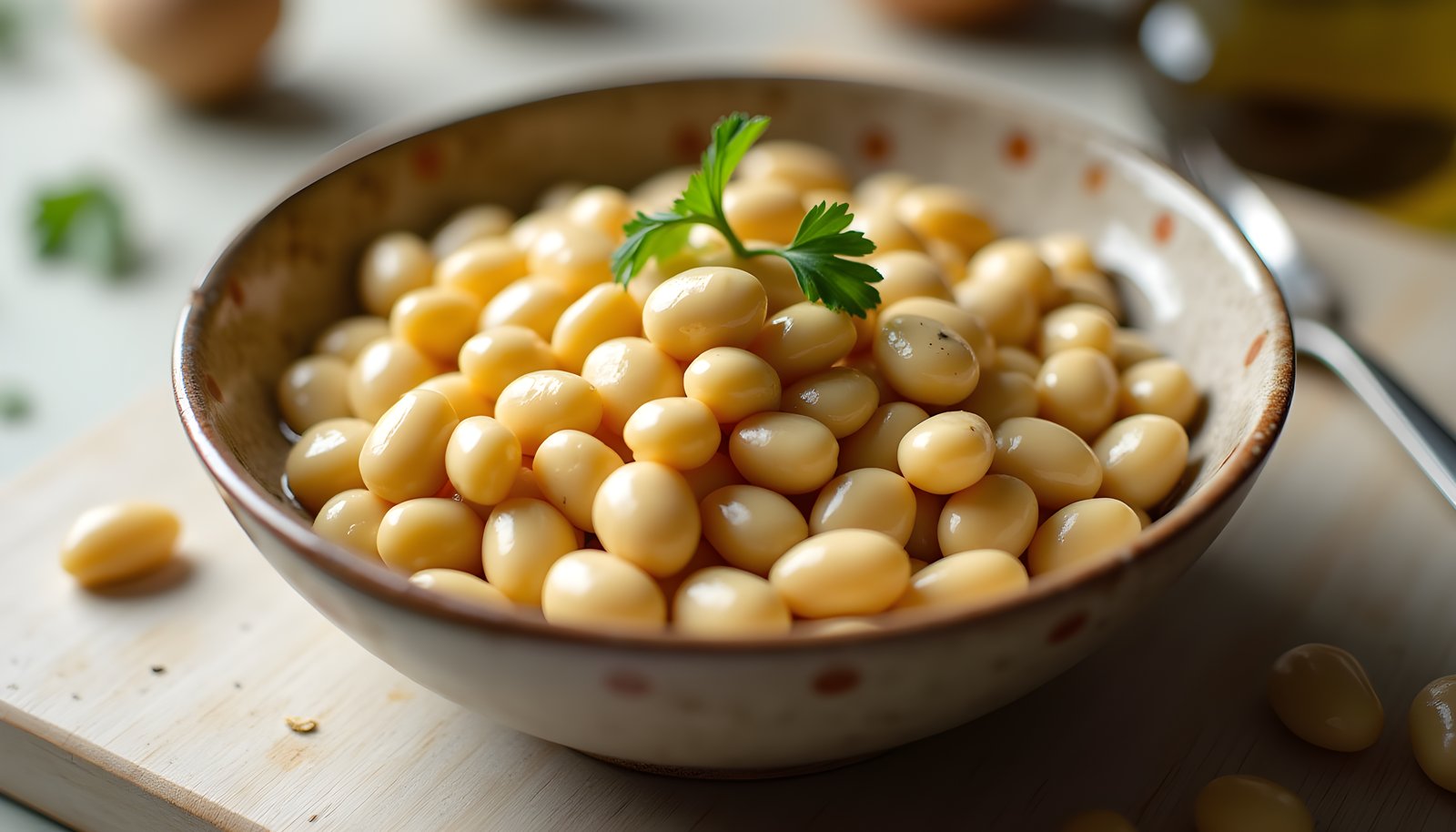
Fact: Butter bean is simply another name for the lima bean, common in the American South and the UK. The name usually refers to the large, pale, creamy mature beans, while “lima” often means the smaller green ones.
So butter beans fiber is the same as large lima beans fiber, about 13 grams per cooked cup. The creamy, buttery texture that gives them their name comes from the starchy interior, not from any added fat.
Legume nutrition: what else lima beans bring
Per cooked cup of mature limas, USDA values show roughly:
- Potassium: about 960 milligrams, around a fifth of the Daily Value
- Folate: about 155 micrograms
- Protein: close to 15 grams
- Fat: under 1 gram
That potassium figure is more than double the roughly 420 milligrams in a medium banana, by USDA values. Harvard’s Nutrition Source notes that legumes as a group supply protein, folate, iron and phosphorus, plus both soluble and insoluble fiber, while staying low in saturated fat and, when unprocessed, sodium.
Not sure how many grams of fiber you’re aiming for? Our fiber calculator gives you a personal target in a few seconds.
Lima beans vs other high fiber foods
Green limas sit near the top of the vegetable list in the Dietary Guidelines for Americans’ table of fiber sources, per cooked cup:
| Vegetable, 1 cup cooked | Fiber | Calories |
|---|---|---|
| Artichoke | 9.6 g | 89 |
| Lima beans | 9.2 g | 209 |
| Green peas | 8.8 g | 134 |
| Brussels sprouts | 6.4 g | 65 |
| Sweet potato | 6.3 g | 190 |
| Broccoli | 5.2 g | 54 |
| Corn | 4.0 g | 134 |
Lima beans beat green peas, Brussels sprouts and broccoli on fiber per cup. They’re more filling than leafy vegetables, too, because they carry more protein and starch.
Against other mature beans, large limas land in the middle. A cup of navy beans has about 19 grams and black beans about 15, while great northern beans come in at about 12.4, by USDA values.
Calories tell a different story. Green limas and green peas both deliver close to 9 grams per cup, but the peas do it with about 75 fewer calories, so peas win on fiber per calorie while limas win on staying power.
Lima beans and digestion
Lima beans contain galacto-oligosaccharides, carbohydrates that gut bacteria ferment, which can cause gas and bloating in some people. Monash University notes that these carbohydrates are water soluble, so canned beans that are drained and rinsed tend to contain less.
Monash lists a quarter cup, or 35 grams, of canned butter beans as a low FODMAP serve. That’s a helpful starting point if your gut is sensitive to legumes.
Mayo Clinic suggests increasing fiber gradually and drinking enough water. Over a few weeks, most people can comfortably work up to larger portions.
If you’re working on gut comfort while adding fiber, our gut health guides lay out a gentle, step-by-step plan.
Why lima beans are never eaten raw
Lima beans carry a natural compound called linamarin, a cyanogenic glycoside, meaning a plant sugar that can release small amounts of cyanide when the bean is crushed or chewed. It sounds alarming, but it’s the reason limas get cooked, not a reason to avoid them.
Oregon State University Extension notes that wild lima beans can be very high in this compound, while commercial limas grown in the United States must stay under 200 mg of cyanide per kilogram. Typical U.S. beans test at about 100 to 170 mg per kilogram.
Cooking breaks down the enzymes that release cyanide, and boiling in plenty of water works better than steaming. For fresh garden limas, OSU suggests that boiling or steaming for 5 to 10 minutes is a sensible step up from eating them straight from the pod.
The extension’s conclusion is calm: if your diet has enough protein and limas aren’t the only thing you eat, problems are unlikely. Frozen, canned and properly cooked dried limas are all fine for regular meals.
Soluble and insoluble fiber in lima beans
Like other legumes, lima beans give you both kinds of fiber. Mayo Clinic explains that soluble fiber dissolves in water to form a gel that can help lower cholesterol and steady blood sugar, while insoluble fiber adds bulk and helps material move through the gut.
Beans carry the two types together, so one serving of limas works on both fronts at once. That pairing is less common in foods like bran cereal, which leans heavily insoluble.
Harvard’s Nutrition Source points out that this mix is part of why legumes are linked with better heart health and blood sugar control. You don’t need to track the two types separately: eating the whole bean, skin included, covers both.
A bowl of succotash, counted
Succotash, the classic mix of lima beans and corn, makes a good test. Picture a side of a half cup of green limas and a half cup of corn, cooked with a little butter and onion.
Using Dietary Guidelines values, the limas bring 4.6 grams of fiber and the corn about 2. That’s roughly 6.6 grams in one side dish, more than a cup of cooked broccoli.
Swap the green limas for a half cup of large mature limas, and the bowl edges past 8 grams. Add diced red pepper or tomatoes and it gets a little higher still.
Want more ideas for limas beyond succotash? Our recipe eBooks are packed with simple, high-fiber sides and mains.
Cooking with lima beans
Lima beans have a mild, creamy flavor that pairs well with herbs, lemon and olive oil. A few easy ideas:
- Mash large butter beans with garlic and lemon for a creamy spread
- Braise them with tomatoes, oregano and feta
- Stir frozen baby limas into soups in the last few minutes
- Roast cooked butter beans until crisp at the edges
- Toss them into grain salads with herbs and a sharp vinaigrette
Dried limas need a soak, which Harvard recommends doing for at least three hours, then a gentle simmer. Their skins can slip off if boiled too hard, so keep the heat low.
Frozen limas are the shortcut. They cook in about the time it takes to boil water, and they keep most of what makes them worth eating.
How lima beans fit your week
Mayo Clinic recommends about 25 grams of fiber a day for women and 38 grams for men. A cup of mature limas covers more than half the women’s target, and a cup of frozen limas covers more than a third.
The Dietary Guidelines for Americans suggest about 3 cups of legumes a week, Harvard’s Nutrition Source notes. Lima beans count as both a vegetable and a legume, which makes them an easy way to cover two food groups at once.
A simple pattern: a lima and corn side twice a week, plus one butter bean braise or mash. That alone adds about 25 to 30 grams of fiber over the week.
Spread across seven days, that works out to roughly 4 grams a day from one food. Against the women’s 25 gram target, that one habit covers about 16% of every day’s fiber.
The one thing to watch
The type you buy matters more with limas than with most beans. Frozen baby limas give you about 9 grams per cup, while large dried limas give about 13, a 40% difference for what looks like the same food.
Canned butter beans also vary by brand, and many are packed with added salt. If fiber is the goal, choose large limas, cook them from dry when you can, and rinse canned beans before using them.
Lima bean fiber questions
How much fiber is in a cup of lima beans?
About 13.2 grams in a cup of large lima beans cooked from dry, and about 9.2 grams in a cup of cooked frozen baby limas.
Are butter beans the same as lima beans?
Yes. Butter bean is another name for the lima bean, usually used for the large, creamy mature beans.
Do frozen lima beans have fiber?
Yes. A cup of cooked frozen limas has about 9.2 grams of fiber, close to a third of the Daily Value.
Are lima beans a vegetable or a legume?
Both. Lima beans are legumes, and green limas are also counted as a starchy vegetable in many diet guides.
Do lima beans cause gas?
They can, because they contain fermentable carbohydrates. Rinsing canned beans and starting with about a quarter cup can help.
Are lima beans high in potassium?
Yes. A cup of cooked mature limas has about 960 milligrams of potassium, more than most beans.
Is it safe to eat raw lima beans?
No. Raw limas contain linamarin, which can release cyanide, so they should always be cooked. U.S. commercial limas are low in it, and boiling reduces it further.
Sources
- Waite-Cusic J. “Is there cyanide in lima beans?” Oregon State University Extension Service. 2019. extension.oregonstate.edu
- U.S. Department of Agriculture, Agricultural Research Service. “FoodData Central.” 2026. fdc.nal.usda.gov
- U.S. Department of Agriculture and U.S. Department of Health and Human Services. “Food Sources of Dietary Fiber.” Dietary Guidelines for Americans, 2020 to 2025. 2020. dietaryguidelines.gov
- Harvard T.H. Chan School of Public Health. “Legumes and Pulses.” The Nutrition Source. 2024. nutritionsource.hsph.harvard.edu
- Collins L. “Including legumes on a low FODMAP diet.” Monash University FODMAP blog. 2016. monashfodmap.com
- Mayo Clinic Staff. “Dietary fiber: Essential for a healthy diet.” Mayo Clinic. 2024. mayoclinic.org

