

In this article
- Kidney beans fiber by the serving
- Kidney bean nutrition beyond the fiber
- Legume fiber content: kidney beans and their neighbors
- Why raw kidney beans need a hard boil
- Cooking dry kidney beans: a safety checklist
- Kidney beans among plant protein foods
- Kidney beans, blood sugar and the research
- Kidney beans and digestion
- A pot of chili, counted
- Simple ways to use kidney beans
- How often to eat kidney beans
- Your next step
- Kidney beans and fiber: common questions
- Sources
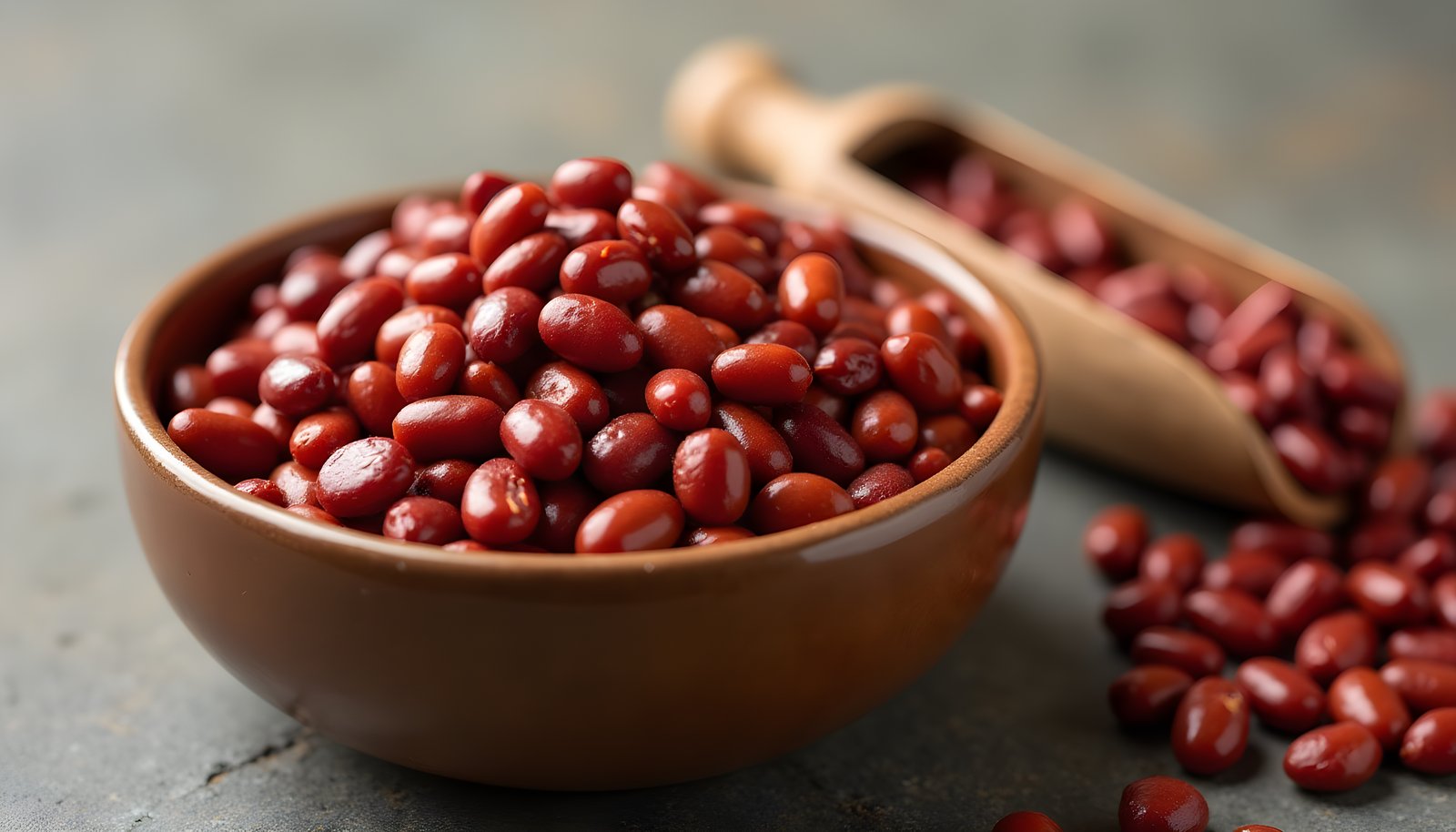
Kidney beans are one of the best fiber buys in the pantry, and one of the few foods where how you cook them really matters for your health. A cup of properly cooked kidney beans gives you about 13 grams of fiber. A handful of undercooked ones can make you sick within hours.
This guide covers kidney beans fiber from every angle, from the numbers per serving to the one cooking rule every bean lover should know.
Kidney beans fiber by the serving
These values come from USDA FoodData Central for red kidney beans boiled from dry, without salt.
| Serving | Fiber | Calories | Protein |
|---|---|---|---|
| 100 grams | 7.4 g | 127 | 8.7 g |
| 1/2 cup (about 89 g) | 6.5 g | 113 | 7.7 g |
| 1 cup (177 g) | 13.1 g | 225 | 15.3 g |
A cup covers nearly half of the FDA’s Daily Value of 28 grams for fiber. Per 100 calories, kidney beans supply about 5.8 grams of fiber, which places them well ahead of most grains and vegetables.
Canned kidney beans
Canned kidney beans are a reliable shortcut. Drained, they have about 5.5 grams of fiber per 100 grams, and draining plus rinsing nudges that to about 6.0 grams, since rinsing washes away some of the starchy liquid and salt.
Rinsing also trims sodium, from about 230 to 208 milligrams per 100 grams in USDA data. Low sodium cans cut it far more.
Kidney bean nutrition beyond the fiber
Kidney beans are a mineral-rich food. Per cooked cup, based on USDA values, you get roughly:
- Folate: about 230 micrograms, more than half the Daily Value
- Potassium: about 713 milligrams, around 15%
- Iron: about 5.2 milligrams, close to 30%
- Protein: about 15 grams
Harvard’s Nutrition Source notes that legumes supply protein, folate, iron and phosphorus, along with both soluble and insoluble fiber. Whole, unprocessed beans are also naturally low in saturated fat and sodium.
Not sure how a cup of kidney beans fits your own day? Our fiber calculator gives you a personal target in seconds.
Legume fiber content: kidney beans and their neighbors
Kidney beans sit in the solid middle of the legume group. Here’s how they compare per 100 grams cooked, using USDA FoodData Central values:
| Legume, boiled | Fiber per 100 g | Calories per 100 g |
|---|---|---|
| Navy beans | 10.5 g | 140 |
| Pinto beans | 9.0 g | 143 |
| Black beans | 8.7 g | 132 |
| Lentils | 7.9 g | 116 |
| Chickpeas | 7.6 g | 164 |
| Kidney beans | 7.4 g | 127 |
The gap from top to bottom is about 3 grams per 100 grams. What kidney beans give up in fiber, they make up for in texture: they hold their shape through long simmering, which is why they’re a chili staple.
They also beat chickpeas on calories, so per calorie the two land close together despite the small fiber difference.
Why raw kidney beans need a hard boil
Kidney beans contain a natural plant protein called phytohaemagglutinin, or PHA, sometimes called kidney bean lectin. Kansas State University Research and Extension explains that red kidney beans have the highest levels of any bean.
Raw red kidney beans contain about 20,000 to 70,000 units of PHA, while fully cooked beans drop to about 200 to 400 units, too little to cause a problem. Eating as few as four or five raw or undercooked beans can bring on severe vomiting within a few hours, followed by diarrhea, according to FDA information cited by K-State.
Most people recover within three to four hours after symptoms start, which is part of why cases often go unreported. The fix is simple: enough heat for long enough.
Other beans with PHA
PHA isn’t unique to red kidney beans. K-State notes that white kidney beans, also called cannellini, have about a third as much, and fava beans have about 5 to 10%. Other beans carry lower levels still.
Myth vs fact: soaking makes them safe
Myth: An overnight soak is enough to make dry kidney beans safe to eat.
Fact: Soaking softens the beans, but heat is what destroys PHA. The soak is only the first step, and a full, rolling boil has to follow.
Cooking dry kidney beans: a safety checklist
K-State shares the FDA’s recommended method for dry red kidney beans:
- Soak the beans in water for at least 5 hours.
- Drain and discard the soaking water.
- Cover with fresh water and bring to a full boil.
- Boil for at least 30 minutes. The toxin is destroyed at 212°F (100°C) in about 10 minutes, but 30 minutes makes sure every bean gets there.
- Skip the slow cooker for dry kidney beans; it likely won’t get hot enough to destroy the toxin.
Once boiled, the beans can go into a slow cooker chili or a simmering stew safely. Canned kidney beans have already been fully cooked, so they’re ready to use.
Fully cooked kidney beans should be soft all the way through, with no chalky center. Softness alone isn’t proof of safety in a low temperature cooker, though, which is why the hard boil comes first.
Kidney beans among plant protein foods
A cup of kidney beans pairs about 15 grams of protein with about 13 grams of fiber. Animal proteins like chicken, fish and beef bring protein but no fiber at all.
Harvard’s Nutrition Source points to a meta-analysis of 36 randomized trials with 1,803 people, which found that replacing red meat with plant proteins such as legumes lowered cholesterol, triglycerides and blood pressure.
That makes kidney beans a practical swap in dishes like chili, where they already belong. Making half the meat beans, or skipping the meat entirely, adds fiber without changing the character of the dish.
Kidney beans, blood sugar and the research
Legumes have a low glycemic index, meaning they raise blood sugar slowly, and they combine fiber with slow-digesting resistant starch. Harvard’s Nutrition Source notes that the research on diabetes prevention is still mixed, though.
In a study of 64,277 middle-aged women in Shanghai followed for 4.5 years, those who ate the most legumes, about a third of a cup a day, had a 38% lower risk of type 2 diabetes. A study of 35,988 older US women, on the other hand, found no clear link between beans and diabetes.
Part of the difference may come down to how much people ate and what else was on their plates. For now, kidney beans are best seen as a high fiber, low glycemic food that fits well in a blood sugar friendly diet, not a treatment.
Kidney beans and digestion
Like other legumes, kidney beans contain oligosaccharides and resistant starch, carbohydrates that reach the large intestine undigested. Harvard’s Nutrition Source explains that gut bacteria ferment them, which feeds helpful microbes but can also cause gas and bloating.
Soaking dried beans and draining the water helps, and the soaking that kidney beans need for safety does double duty here. Mayo Clinic recommends adding fiber gradually and drinking plenty of water as your intake rises.
If beans tend to leave you uncomfortable, our gut health guides lay out a gentle, step-by-step plan for building them into your meals.
A pot of chili, counted
Picture a family pot of chili with two cups of cooked kidney beans. The beans alone bring about 26 grams of fiber to the pot.
Split four ways, each bowl gets about 6.5 grams from the beans. Add a third cup of beans and each bowl climbs to nearly 10 grams, about a third of a 28 gram day, from one change to the recipe.
Serve it over brown rice instead of white, or with a side salad, and a single bowl can reach 10 grams or more.
Want more bean-forward dinners like this? Our recipe eBooks are packed with hearty, high-fiber meals that put legumes at the center.
Simple ways to use kidney beans
Kidney beans have a firm skin and creamy middle, so they suit dishes where beans need to hold up:
- Red beans and rice, with a cup of beans per two servings.
- A three bean salad with kidney beans, chickpeas and green beans.
- Minestrone or vegetable soup, added in the last 15 minutes if canned.
- Bean burritos, mashed lightly with spices.
- Stuffed sweet potatoes topped with beans and salsa.
Because they’re so sturdy, cooked kidney beans also freeze well. Freeze them flat in bags so you can break off just what you need.
How often to eat kidney beans
The Dietary Guidelines for Americans recommend about 3 cups of legumes a week, Harvard’s Nutrition Source notes. Two kidney bean dinners plus a bean salad at lunch can cover it.
Mayo Clinic sets daily fiber targets at about 25 grams for women and 38 grams for men. A cup of kidney beans gets you a third to half of the way there.
Your next step
Cook one batch of dry kidney beans this week the safe way: soak, drain, then boil hard for 30 minutes. Portion the beans into containers, and you’ll have about 13 grams of fiber per cup ready for chili, salads and soups.
Kidney beans and fiber: common questions
How much fiber is in a cup of kidney beans?
About 13 grams in a cup of boiled red kidney beans, according to USDA data. That’s close to half of the FDA’s 28 gram Daily Value.
Do canned kidney beans have fiber?
Yes. Drained canned kidney beans have about 5.5 grams of fiber per 100 grams, and rinsing nudges that to about 6.0 grams while lowering sodium.
Are raw kidney beans poisonous?
Raw or undercooked red kidney beans contain phytohaemagglutinin, a natural toxin. Eating as few as four or five can cause severe vomiting, so dry beans must be boiled thoroughly.
How long should you boil kidney beans?
At least 30 minutes after soaking for 5 hours and draining, per FDA guidance shared by Kansas State University. The toxin is destroyed at 212°F.
Can you cook dry kidney beans in a slow cooker?
Not from dry. A slow cooker likely won’t get hot enough to destroy the toxin, so boil the beans first, then add them to the slow cooker.
Are kidney beans a good source of protein?
Yes. A cooked cup has about 15 grams of protein along with about 13 grams of fiber, which makes kidney beans a filling plant protein.
Do kidney beans have more fiber than black beans?
Slightly less. Boiled kidney beans have about 7.4 grams of fiber per 100 grams, while black beans have about 8.7 grams.
Sources
- Blakeslee K. “Cooking Dry Beans Safely.” Kansas State University Research and Extension. 2017. k-state.edu
- U.S. Department of Agriculture, Agricultural Research Service. “FoodData Central.” 2026. fdc.nal.usda.gov
- Harvard T.H. Chan School of Public Health. “Legumes and Pulses.” The Nutrition Source. 2024. nutritionsource.hsph.harvard.edu
- U.S. Food and Drug Administration. “Interactive Nutrition Facts Label: Dietary Fiber.” 2021. accessdata.fda.gov
- Mayo Clinic Staff. “Dietary fiber: Essential for a healthy diet.” Mayo Clinic. 2024. mayoclinic.org

