
In this article
- What steaming actually does to fiber
- Does steaming cause fiber loss?
- Fructan rich vegetables hold up well
- Raw vs steamed vegetables fiber by the serving
- Cooked veggies nutrition beyond fiber
- Which is easier on digestion?
- How to steam vegetables for the most fiber
- When raw still wins
- A simple rule for raw or steamed
- Raw and steamed vegetable fiber: common questions
- Sources
Steam a head of broccoli and its soluble fiber nearly triples, from 3.9 to 11.1 grams per 100 grams of dry matter. Its total fiber stays about the same.
That’s the real story of raw vs steamed vegetables fiber. Steaming doesn’t strip fiber away the way many people assume; it reshuffles it, turning some of the tough insoluble kind into the softer soluble kind your gut bacteria ferment.
Below you’ll see what that shift looks like vegetable by vegetable, how steaming compares with raw and boiled on a normal serving, and when raw still makes more sense.
What steaming actually does to fiber
Fiber comes in two broad types. Insoluble fiber is the rigid material in plant cell walls that adds bulk to stool, and soluble fiber dissolves into a gel that Mayo Clinic notes can help lower blood cholesterol and glucose.
Steam heat softens the cell wall and loosens some of the pectin and hemicellulose that hold it together. Part of that insoluble material becomes soluble without leaving the vegetable.
Researchers in Belgium measured this in 29 vegetables, raw and steamed for 20 to 30 minutes. Steaming shifted fiber from insoluble to high molecular weight soluble fiber in 18 of the 29, while total fiber was largely unchanged across the group.
| Vegetable (per 100 g dry matter) | Insoluble, raw | Insoluble, steamed | Soluble, raw | Soluble, steamed |
|---|---|---|---|---|
| Broccoli | 31.2 g | 26.3 g | 3.9 g | 11.1 g |
| Celeriac | 33.8 g | 27.1 g | 2.7 g | 11.3 g |
| Celery | 30.9 g | 19.4 g | 4.5 g | 16.6 g |
| Onion | 11.5 g | 9.2 g | 3.7 g | 8.1 g |
Celery shows the biggest swing, with soluble fiber rising almost fourfold. Celeriac, the knobby root of a celery relative, more than quadruples too.
Why the soluble shift matters
Mayo Clinic describes soluble fiber as the type that dissolves into a gel, found in foods like oats, peas, beans, apples, citrus fruits and carrots. That gel slows digestion and is linked to lower blood cholesterol and steadier blood sugar.
Insoluble fiber does a different job. It holds onto water, adds bulk and helps material move through your digestive tract, which is why it matters for regularity.
A steamed vegetable gives you a more even split of the two. You lose a little bulk and gain more of the gel forming, fermentable type, which your gut bacteria turn into short chain fatty acids.
Does steaming cause fiber loss?
For most vegetables, no. The same study found total fiber held steady in most of the 29 vegetables, and carrots actually rose from 25.4 to 28.7 grams per 100 grams of dry matter after steaming.
A few did drop. Butternut squash fell from 21.4 to 14.1 grams and another squash from 21.3 to 17.0, so dense, starchy squashes seem to lose more than leafy or stalky vegetables.
The researchers also pointed out why steaming tends to beat boiling. In boiling water, some soluble fiber can leach out into the pot, while steam cooks the vegetable without submerging it.
Not sure how much fiber your own plate should hold? Our fiber calculator gives you a personal daily target in seconds.
Fructan rich vegetables hold up well
Some vegetables carry a lot of fructans, chains of fructose that act as a prebiotic, meaning they feed beneficial gut bacteria. Inulin, the fiber in chicory root, is the best known example.
Steaming left these almost untouched. The Belgian study measured fructans before and after steaming, and the length of the fructan chains didn’t change either.
| Vegetable (per 100 g dry matter) | Fructans, raw | Fructans, steamed |
|---|---|---|
| Salsify | 69.5 g | 71.9 g |
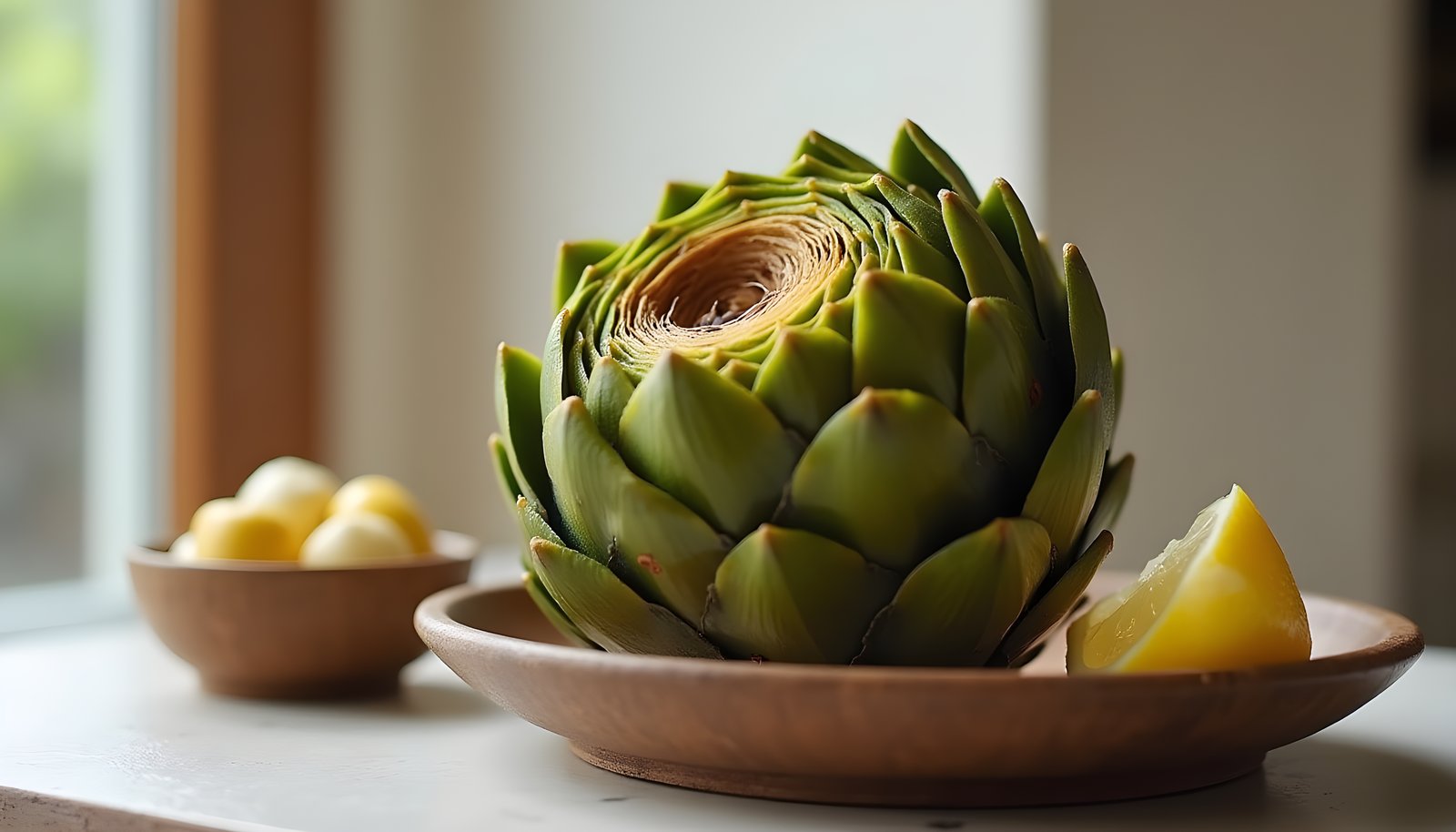
| Globe artichoke | 62.0 g | 63.8 g |
| Onion | 32.6 g | 32.7 g |
| Broccoli and asparagus | under 0.5 g | under 0.5 g |
The authors noted that only a few vegetables, mainly salsify, artichoke and Jerusalem artichoke, contain enough fructans to supply the 10 to 14 grams a day linked to prebiotic benefits. Steaming is a good way to cook them without losing that advantage.
Raw vs steamed vegetables fiber by the serving
USDA FoodData Central lists most vegetables raw and boiled rather than steamed. Boiled values are a fair stand-in for steamed ones, and if anything, steamed vegetables keep slightly more since less soluble fiber is lost to water.
| Vegetable (per 100 g) | Raw | Cooked |
|---|---|---|
| Broccoli | 2.6 g | 3.3 g |
| Carrots | 2.8 g | 3.0 g |
| Cauliflower | 2.0 g | 2.3 g |
| Spinach | 2.2 g | 2.4 g |
| Kale | 4.1 g | 4.0 g |
| Asparagus | 2.1 g | 2.0 g |
| Brussels sprouts | 3.8 g | 2.6 g |
Gram for gram, raw and cooked vegetables land within about half a gram of each other in most cases. Brussels sprouts are the clear exception in USDA’s boiled data, which is one more reason to steam them rather than boil.
By the cup, cooked vegetables usually win because they shrink. A cup of cooked broccoli has 5.2 grams in the Dietary Guidelines list, compared with about 2.4 grams in a cup of raw florets.
The same pattern runs through the Dietary Guidelines list of cooked vegetables. A cup of cooked Brussels sprouts gives you 6.4 grams, cauliflower 4.9 grams and carrots 4.8 grams, and a cooked artichoke tops the list at 9.6 grams.
Swap a side salad of raw florets for a cup of steamed broccoli and Brussels sprouts at dinner, and you can roughly double the fiber on your plate without eating a bigger pile of food. Steaming simply packs more vegetable into the same space.
Cooked veggies nutrition beyond fiber
Steaming has a second advantage over other cooking methods: it’s gentle on water soluble vitamins. The NIH Office of Dietary Supplements notes that cooking can reduce vitamin C, and that steaming or microwaving may lessen those losses.
A study comparing five home cooking methods for broccoli backs that up. Boiling, microwaving, stir-frying and stir-frying followed by boiling all caused significant losses of vitamin C, while steaming did not.
Steaming also caused the smallest loss of glucosinolates, the sulfur compounds behind broccoli’s sharp flavor. The researchers concluded that steaming was the best method for keeping broccoli’s nutrients.
| Cooking method | Fiber | Vitamin C | Best for |
|---|---|---|---|
| Raw | Mostly insoluble | Usually highest | Crunchy salads, dips |
| Steamed | More soluble, total kept | Well retained | Everyday sides, sensitive digestion |
| Boiled | Some soluble fiber can leach out | Larger losses | Soups where you eat the liquid |
| Stir-fried | Not measured in these studies | Losses in broccoli study | Quick dinners, flavor |
Which is easier on digestion?
Steamed vegetables are usually gentler. The softer cell walls take less work to break down, and the extra soluble fiber gives your gut bacteria something easier to ferment.
This is also why many people who struggle with raw salads find they can eat a large portion of steamed vegetables comfortably. The fiber is still there; it’s just in a form that’s easier to handle.
Raw vegetables, with their intact, insoluble-heavy cell walls, are better at adding bulk. That’s useful if you’re aiming for regularity, but a big raw salad can feel heavy if your digestion is sensitive.
If bloating is your issue, our gut health guides walk you through adding more fiber at a pace your system can handle.
How to steam vegetables for the most fiber
- Keep pieces fairly large. Big florets and thick carrot coins expose less surface to heat and moisture.
- Bring the water to a boil first, then add the basket, so the vegetables spend less time warming up.
- Keep the vegetables above the water line so nothing leaches into the pot.
- Stop at tender crisp, while the color is still bright, rather than steaming to softness.
- Leave edible skins on carrots, potatoes and squash, since the outer layer carries fiber too.
- Use the leftover water in soup or sauce if a little did drip into it.
Looking for simple steamed side dishes and bowls that pack in more fiber? Our recipe eBooks are full of easy weeknight ideas.
When raw still wins
Raw isn’t a worse choice; it’s a different one. Raw vegetables keep all of their crunch and their insoluble bulk, and they need no prep beyond washing and slicing, which makes them easy to snack on.
Vitamin C is the other reason to keep some vegetables raw. USDA lists raw kale at 93 mg of vitamin C per 100 grams and boiled kale at just 18 mg, a far bigger gap than anything that happens to its fiber. A raw kale salad and a bowl of steamed kale are doing two different jobs.
Some vegetables are also mostly eaten raw, like lettuce, cucumber and radishes, and steaming wouldn’t improve them. Mixing raw and steamed through the week gives you both types of fiber in good amounts.
A simple rule for raw or steamed
If you want more soluble fiber, gentler digestion or more vegetable per serving, steam it. That goes double for broccoli, cauliflower, carrots, Brussels sprouts and celery.
If you want crunch, maximum vitamin C or more bulk for regularity, eat it raw. And if you’re choosing between steaming and boiling, steam whenever you can, unless you plan to eat the cooking liquid too.
Raw and steamed vegetable fiber: common questions
Do steamed vegetables have less fiber than raw?
No, not in any meaningful way. Studies find total fiber stays about the same after steaming in most vegetables, and some, like carrots, even measure higher, while the fiber shifts toward the soluble type.
Does steaming broccoli destroy its fiber?
No. Steaming broccoli nearly tripled its soluble fiber in one study, from 3.9 to 11.1 grams per 100 grams of dry matter, while insoluble fiber dropped somewhat and total fiber held.
Is steaming better than boiling for fiber?
Yes, usually. Boiling can leach some soluble fiber into the water, while steaming cooks vegetables without submerging them, and it also keeps more vitamin C.
Which vegetables lose fiber when steamed?
Dense squashes showed the biggest drops in research, with butternut squash falling from 21.4 to 14.1 grams per 100 grams of dry matter. Most other vegetables held steady.
Are steamed vegetables easier to digest than raw?
Usually, yes. Steaming softens cell walls and increases soluble fiber, which tends to be gentler on the gut than the firmer, mostly insoluble fiber in raw vegetables.
How long should you steam vegetables?
Until they’re tender but still bright and slightly crisp. Shorter steaming helps keep vitamins, and keeping pieces above the water line prevents nutrients from leaching out.
Is raw or steamed spinach better for fiber?
Per gram they’re similar, at 2.2 and 2.4 grams per 100 grams, but cooked spinach shrinks so much that a cooked cup gives you far more fiber than a raw cup.
Sources
- Kalala G, Kambashi B, Everaert N, et al. “Characterization of fructans and dietary fibre profiles in raw and steamed vegetables.” International Journal of Food Sciences and Nutrition. 2017. uclouvain.be
- Yuan GF, Sun B, Yuan J, Wang QM. “Effects of different cooking methods on health-promoting compounds of broccoli.” Journal of Zhejiang University Science B. 2009. zjujournals.com
- U.S. Department of Agriculture, Agricultural Research Service. “FoodData Central” (raw and boiled broccoli, carrots, cauliflower, spinach, kale, asparagus, Brussels sprouts). 2019. fdc.nal.usda.gov
- U.S. Department of Agriculture and U.S. Department of Health and Human Services. “Food Sources of Dietary Fiber,” Dietary Guidelines for Americans, 2020 to 2025. 2020. dietaryguidelines.gov
- National Institutes of Health, Office of Dietary Supplements. “Vitamin C: Fact Sheet for Consumers.” 2021. ods.od.nih.gov
- Mayo Clinic Staff. “Dietary fiber: Essential for a healthy diet.” Mayo Clinic. 2024. mayoclinic.org