
In this article
- Basil seeds fiber: what the research measures
- Sabja seeds nutrition beyond fiber
- Basil seeds and chia: cousins in texture, not in botany
- Digestive drinks with basil seeds: what’s in the bottle
- How to soak and use basil seeds
- A quick checklist for buying basil seeds
- Seed health: what’s proven and what isn’t
- Where basil seed research is heading
- Basil seeds and fiber: common questions
- Sources
Yes, basil seeds are rich in fiber, but nobody can give you one tidy number for them. Lab studies summarized in a 2021 review in Foods report anywhere from 7.1 to 26.2 grams of fiber per 100 grams, a spread wide enough to cover a modest seed and a chia rival.
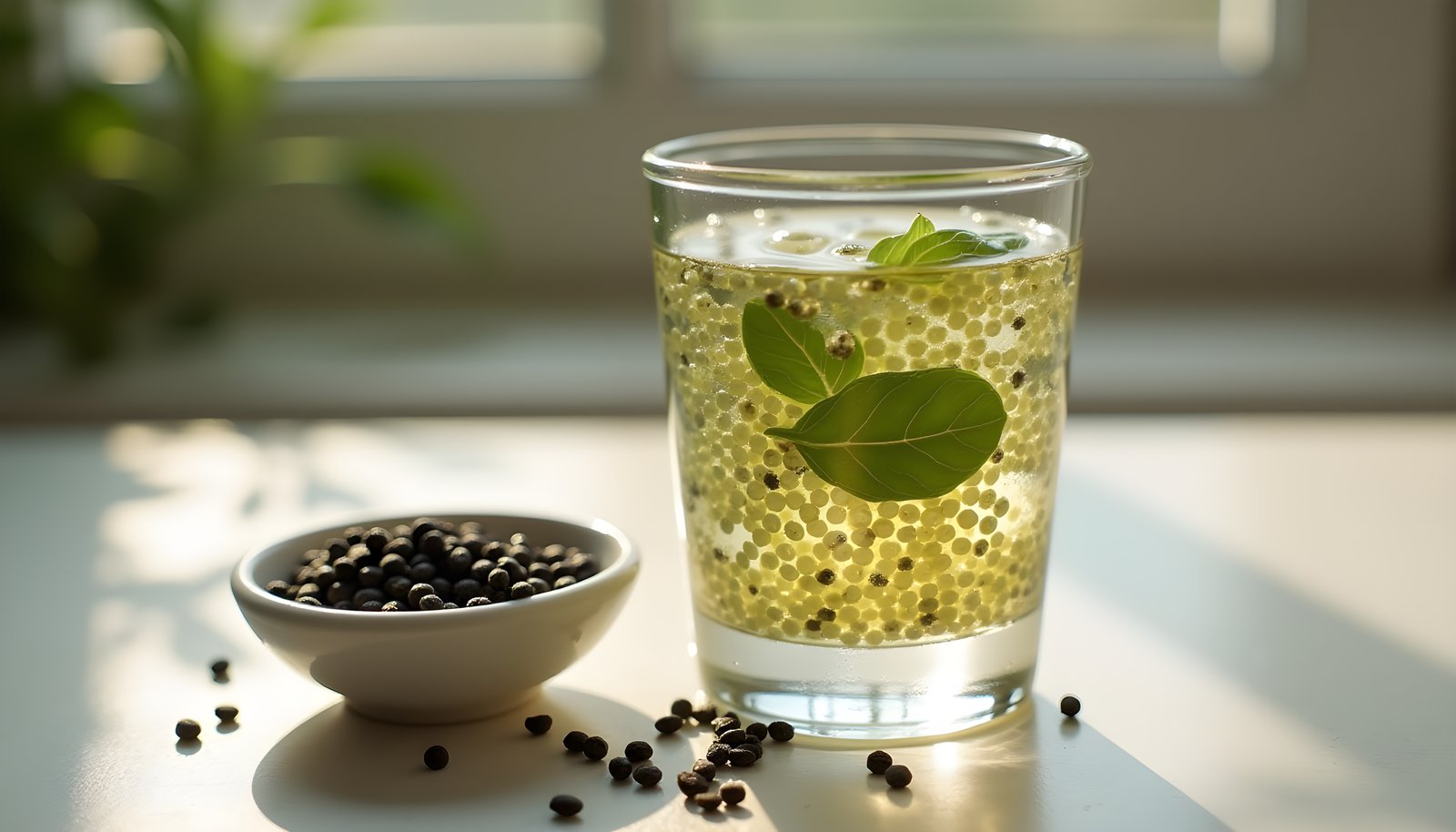
That range comes from different basil varieties, growing conditions and testing methods. What stays consistent is the gel: soak basil seeds, also sold as sabja or tukmaria, and each one wraps itself in a clear coat of soluble fiber within minutes.
Basil seeds fiber: what the research measures
USDA FoodData Central has no standard entry for plain basil seeds, so the best numbers come from published lab analyses. The Foods review pulled those studies together:
| Component (per 100 g of seed) | Range reported |
|---|---|
| Dietary fiber | 7.1 to 26.2 g |
| Protein | 11.4 to 22.5 g |
| Fat | 9.7 to 33.0 g |
| Carbohydrate | 43.9 to 63.8 g |
| Mucilage (the gel forming fiber) | about 17 to 20 g |
| Energy (average) | about 442 kcal |
Mucilage is the slippery, water loving fiber in the seed’s outer layer. A separate 2021 review in Nutrients reports that warm water extraction can pull out about 20.5 grams of mucilage per 100 grams of dry seed, and that the extracted mucilage itself is about 98.5% dietary fiber.
In practical terms, a 10 gram portion of dry seeds would carry somewhere between 0.7 and 2.6 grams of fiber based on those studies. Because the range is so wide, the fiber line on your own package is the number to trust.
Sabja seeds nutrition beyond fiber
Sabja seeds nutrition looks a lot like other small oil seeds: a mix of carbohydrate, protein and fat, with fiber making up a meaningful part of the carbohydrate.
- Protein: 11.4 to 22.5 grams per 100 grams, similar to many other seeds
- Fat: 9.7 to 33.0 grams per 100 grams, varying widely by sample
- Fatty acids: the fat includes linoleic acid and alpha linolenic acid (ALA), the plant omega 3, with ALA reported anywhere from 0.3% to 66% of the fatty acids
- Minerals: magnesium and other minerals are present, but the review notes that most mineral data come from a related species, holy basil, rather than sweet basil
That last point matters. The Foods review attributes its strongest mineral figures, such as 636 mg of calcium per 100 grams, to Ocimum tenuiflorum, holy basil, not the sweet basil seeds most stores sell.
For everyday use, think of basil seeds as a fiber and texture ingredient first. They’re not a reliable stand in for a calcium or iron source until better data exist.
Curious how a spoonful of seeds fits into your own daily target? Our fiber calculator gives you a personal number in seconds.
Basil seeds and chia: cousins in texture, not in botany
Basil seeds come from sweet basil, Ocimum basilicum, while chia comes from Salvia hispanica. Both are in the mint family, and both form a gel in liquid, which is why they get swapped so often.
| Feature | Basil seeds | Chia seeds |
|---|---|---|
| Fiber per 100 g | 7.1 to 26.2 g (studies) | 34.4 g (USDA) |
| Standard USDA entry | No | Yes |
| Usual way to eat | Soaked, in drinks and desserts | Raw, soaked or ground |
| Plant family | Mint family | Mint family |
Chia has the higher and better documented fiber figure: USDA lists it at 34.4 grams per 100 grams, and a tablespoon gives you about 4.1 grams. Basil seeds may come close at the top of their range, but you can’t count on it from one bag to the next.
That matters if you swap one for the other in a recipe. A tablespoon of chia weighs about 12 grams and gives you 4.1 grams of fiber. The same 12 grams of basil seeds would land somewhere between 0.9 and 3.1 grams, based on the published range.
So if a recipe relies on chia for fiber, replacing it fully with basil seeds may cost you a gram or more per spoon. Using half of each is an easy middle ground.
Basil seeds earn their place through texture and tradition. They are almost always eaten soaked, and in a glass they stay as separate, gel coated seeds that you sip along with the drink.
Digestive drinks with basil seeds: what’s in the bottle
Basil seed drinks are popular across South and Southeast Asia, and bottled versions now sit on many grocery shelves. USDA’s branded records show how little fiber some of them carry:
| Drink (per bottle) | Size | Calories | Fiber | Sugar |
|---|---|---|---|---|
| Taza Pomegranate Drink with Basil Seeds | 300 ml | 160 | under 1 g | 36 g total |
| Foco Basil Seed Drink | 350 ml | 210 | 1 g | 44 g total |
| Namai Mango Drink with Basil Seeds | 290 ml | 60 | 2 g | 14 g total, 6 g added |
Picture two shoppers picking a bottle on a hot afternoon. One grabs the cream soda style drink and gets 44 grams of sugar with a single gram of fiber, and the label lists sugar ahead of the basil seeds.
The other picks the lighter mango version, which lists 2 grams of fiber and 60 calories. It uses mango juice plus low calorie sweeteners, so the sugar is lower, but the fiber is still modest.
Neither bottle does much for your fiber goal. A homemade drink, with a spoonful of soaked seeds in water, lemon or unsweetened tea, gives you the full fiber of the seeds without the sugar load.
How to soak and use basil seeds
Basil seeds are meant to be soaked before eating. Stir them into plenty of water, wait until each seed sits in a clear gel coat, then add them to food or drinks.
- Stir soaked seeds into lemonade, coconut water or iced tea with no sugar added.
- Spoon them over yogurt with sliced mango or berries.
- Add them to a smoothie for body without changing the flavor.
- Use them in falooda style desserts with milk, but go easy on the syrup.
- Fold them into overnight oats in place of some of the chia.
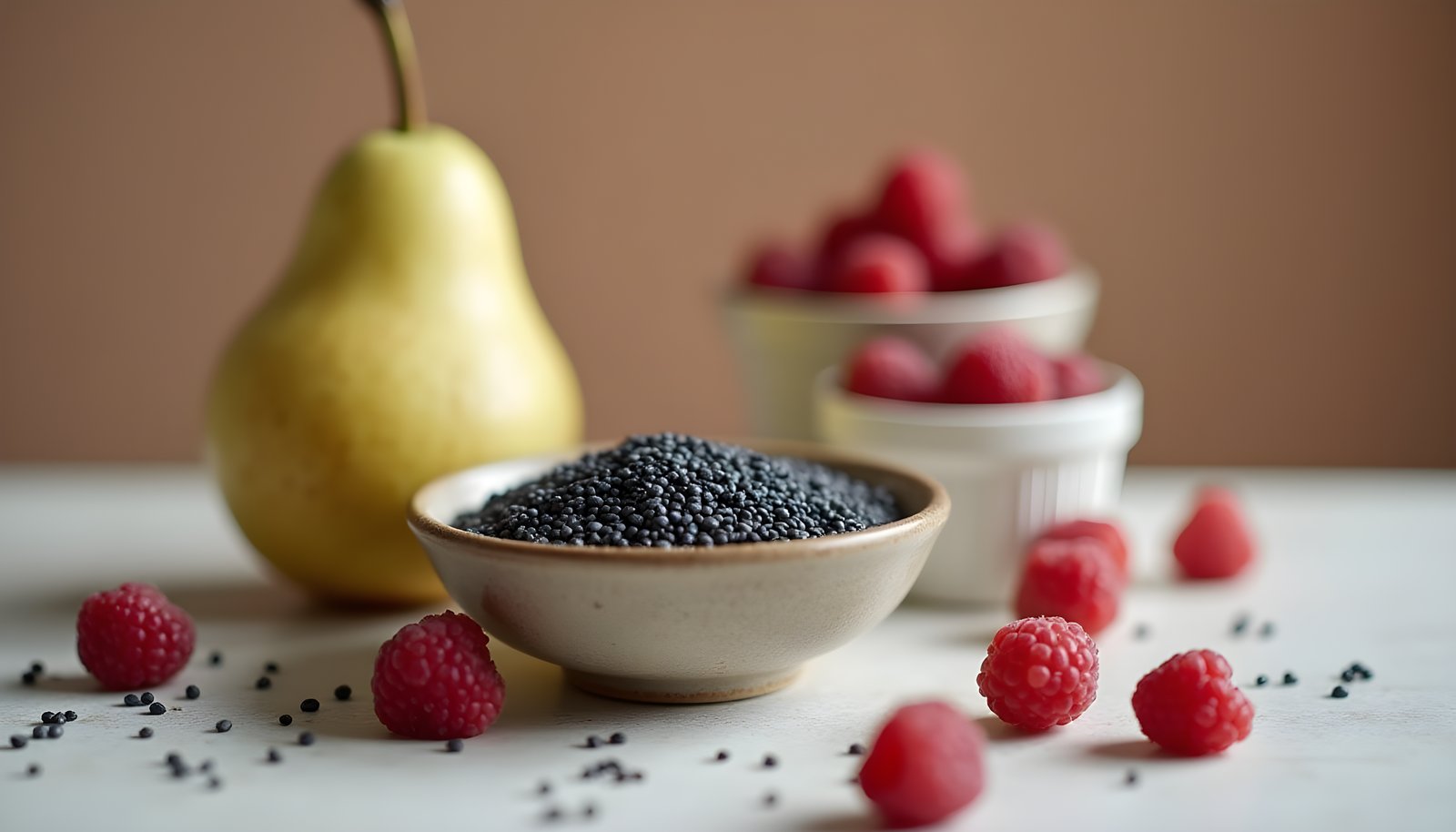
Pairing the seeds with fruit lifts the fiber further. A cup of raspberries carries 8 grams of fiber on its own, according to the Dietary Guidelines, so soaked basil seeds over berries and yogurt makes a properly high fiber snack.
Want more drink and breakfast ideas that build in fiber? Our recipe eBooks are full of easy options.
A quick checklist for buying basil seeds
Since there’s no standard USDA entry to lean on, the package does most of the work. Run through these points before you buy:
- Look for a Nutrition Facts panel with a fiber line, and note the serving size in grams so you can compare brands fairly.
- Check the name: sweet basil seeds are sold as basil seeds, sabja or tukmaria, while holy basil (tulsi) is a different plant.
- For bottled drinks, read the ingredient order. If sugar comes before basil seeds, expect a sweet drink with little fiber.
- Compare total sugar against fiber. A bottle with 36 to 44 grams of sugar and about 1 gram of fiber is closer to soda than to a fiber drink.
- Watch for sweeteners and colors if you prefer to avoid them. Some drinks use sucralose, aspartame or artificial colors to cut sugar.
- Buy plain dry seeds if fiber is your goal, and soak them at home.
Plain seeds also let you control exactly how much sugar ends up in the glass, which matters when a single 350 ml bottle can hold 44 grams.
If you like the drink format, a simple home version is a glass of water or unsweetened tea, a squeeze of lime, a few slices of fruit and a spoonful of soaked seeds. You keep all the seed fiber and skip the 36 to 44 grams of sugar in some bottles.
Seed health: what’s proven and what isn’t
Basil seeds have a long history in traditional remedies, including for constipation. The research, however, is still early.
Both 2021 reviews describe interesting lab findings, such as antioxidant and antidiabetic activity in test tubes and prebiotic effects of basil seed extracts. Neither review reports human trials showing that basil seeds improve blood sugar, fullness or bowel habits.
What we can say with confidence comes from the fiber itself. Mayo Clinic notes that soluble fiber, the kind that forms a gel, can help lower cholesterol and blood sugar, and that fiber in general helps keep bowel movements regular.
If you’re adding basil seeds to raise your fiber, add them gradually and drink plenty of fluids, as Mayo Clinic recommends for any increase in fiber.
Where basil seed research is heading
The biggest gap is basic: a standard nutrient profile for sweet basil seeds sold in stores. Until USDA or another national database lists one, fiber figures will keep swinging between studies.
Researchers are also exploring basil seed mucilage as a food ingredient, for example as a natural thickener in yogurt, and studying its effects on gut bacteria. As those studies move from lab dishes to people, the health claims around sabja should become clearer, and the numbers on this page firmer.
Basil seeds and fiber: common questions
How much fiber do basil seeds have?
Studies report 7.1 to 26.2 grams per 100 grams, depending on variety and testing method. Check your package label for the figure that applies to your brand.
Are basil seeds the same as chia seeds?
No. Basil seeds come from sweet basil and chia from Salvia hispanica, though both gel in liquid. Chia has a firmer fiber figure, at 34.4 grams per 100 grams in USDA data.
Are sabja seeds good for digestion?
They may help as a source of soluble fiber. Fiber supports regular bowel movements, but human studies on basil seeds themselves are still lacking.
Do basil seed drinks have fiber?
Usually only a little. Bottled drinks in USDA’s database list under 1 to 2 grams of fiber per bottle, and some carry 36 to 44 grams of sugar.
Do you have to soak basil seeds?
Yes, they are meant to be soaked. In water they quickly form a clear gel coat, which is how they are used in drinks and desserts.
Can basil seeds help with weight loss?
There is no human evidence that they do on their own. Their soluble fiber adds bulk, but the reviews on basil seeds report no trials on fullness or weight.
Are basil seeds high in calcium?
The evidence is unclear. The strongest mineral figures in the research come from holy basil, a related species, rather than the sweet basil seeds sold in most stores.
Sources
- Calderón Bravo H, Vera Céspedes N, Zura-Bravo L, Muñoz LA. “Basil Seeds as a Novel Food, Source of Nutrients and Functional Ingredients with Beneficial Properties: A Review.” Foods. 2021. mdpi.com
- Dybka-Stępień K, Otlewska A, Góźdź P, Piotrowska M. “The Renaissance of Plant Mucilage in Health Promotion and Industrial Applications: A Review.” Nutrients. 2021. mdpi.com
- USDA Agricultural Research Service. FoodData Central: SR Legacy chia seeds, dried, plus branded records for Taza Pomegranate Drink with Basil Seeds (542471), Foco Basil Seed Drink (2108009) and Namai Mango Drink with Basil Seeds (2593059). fdc.nal.usda.gov
- U.S. Department of Agriculture and U.S. Department of Health and Human Services. “Food Sources of Dietary Fiber.” Dietary Guidelines for Americans, 2020 to 2025. dietaryguidelines.gov
- Mayo Clinic Staff. “Dietary fiber: Essential for a healthy diet.” Mayo Clinic. 2025. mayoclinic.org