
In this article
- Lentils fiber content and protein per serving
- The protein package comparison
- Protein and fiber for every 100 calories
- Why lentils and rice make such a good pair
- A lentil and rice bowl by the numbers
- Lentils in a 50 gram protein day
- Easy ways to eat more lentils
- Lentil nutrition beyond protein and fiber
- Lentils and gut health
- Where lentil and plant protein research is heading
- Lentil protein and fiber: what readers ask
- Sources
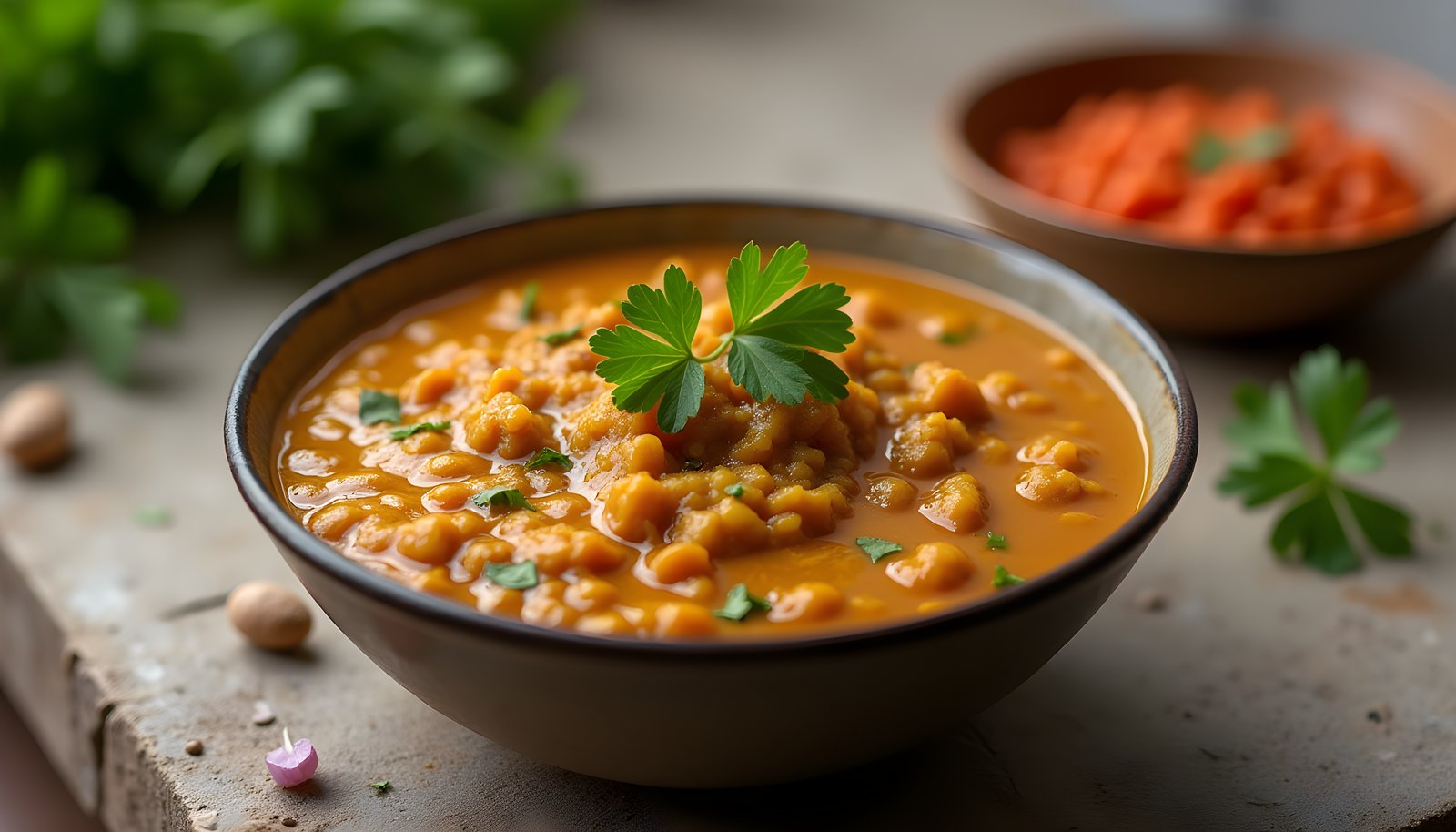
A cup of cooked lentils gives you about 18 grams of protein and 15.6 grams of fiber. That’s almost a gram of fiber for every gram of protein, a ratio no meat, egg or dairy food can offer, since none of them contain fiber at all.
It’s also why Harvard’s Nutrition Source uses lentils as its example of a healthy protein package. They bring the protein along with fiber, virtually no saturated fat and almost no sodium.
Below you’ll see how lentils fiber content and protein compare with other protein foods, how to pair lentils so you get every essential amino acid, and what lentil nutrition does for your gut and long term health.
Lentils fiber content and protein per serving
USDA lists boiled lentils at 9.0 grams of protein and 7.9 grams of fiber per 100 grams, for just 116 calories. Here’s how that scales to common portions:
| Cooked lentils (USDA) | Protein | Fiber | Calories |
|---|---|---|---|
| 1/4 cup (50 g) | 4.5 g | 3.9 g | 58 |
| 1/2 cup (99 g) | 8.9 g | 7.8 g | 115 |
| 1 cup (198 g) | 17.9 g | 15.6 g | 230 |
| 1 1/2 cups (297 g) | 26.9 g | 23.4 g | 345 |
A full cup covers about 56% of the FDA’s 28 gram Daily Value for fiber. The same cup supplies roughly 36% of the 50 grams of protein a 140 pound adult needs each day, based on Harvard’s figure of 0.8 grams per kilogram of body weight.
Lentils are also nearly fat free. USDA lists just 0.38 grams of fat and 0.05 grams of saturated fat per 100 grams.
The protein package comparison
Harvard’s Nutrition Source argues that the whole package a protein comes in matters more for health than the protein alone. Its own examples put lentils next to several popular animal proteins:
| Food (Harvard) | Protein | Fiber | What else comes with it |
|---|---|---|---|
| Lentils, 1 cup cooked | About 18 g | About 15 g | Virtually no saturated fat or sodium |
| Sirloin steak, 4 oz broiled | About 33 g | 0 g | About 5 g saturated fat |
| Ham steak, 4 oz | About 22 g | 0 g | About 1,500 mg sodium |
| Sockeye salmon, 4 oz grilled | About 30 g | 0 g | Just over 1 g saturated fat, plus omega-3 fats |
Harvard also notes that plant proteins tend to come with more unsaturated fat and no cholesterol, which is part of why they are linked with lower heart disease risk.
Steak and salmon win on raw protein grams per serving. Lentils are the only food in the table that also moves you toward your fiber goal.
That trade matters because most people fall short on fiber far more than protein. Harvard puts the average American fiber intake at about 15 grams a day, close to what a single cup of lentils provides.
Curious how much fiber you personally need each day? Our fiber calculator works it out from your age and sex in a few seconds.
Protein and fiber for every 100 calories
Serving sizes vary a lot between foods, so another fair comparison is per calorie. Using USDA values:
| Food (USDA) | Protein per 100 kcal | Fiber per 100 kcal |
|---|---|---|
| Lentils, boiled | 7.8 g | 6.8 g |
| Black beans, boiled | 6.7 g | 6.6 g |
| Chickpeas, boiled | 5.4 g | 4.6 g |
| Quinoa, cooked | 3.6 g | 2.3 g |
| Brown rice, cooked | 2.2 g | 1.3 g |
| Egg, large | 8.8 g | 0 g |
Lentils beat every other legume and grain here on both counts. An egg edges them on protein per calorie but brings no fiber.
This is the real case for lentils as a superfood. They come close to animal foods on protein density while matching the best beans on fiber.
Why lentils and rice make such a good pair
Proteins are built from amino acids, and some of them are essential, meaning you have to get them from food. Harvard notes that plant foods often run low in one or more of them, so a plant heavy diet works best when you mix your protein sources.
Lentils and grains cover each other’s gaps neatly. USDA’s amino acid data shows the pattern:
| Amino acid, share of protein (USDA) | Lentils, boiled | Brown rice, cooked |
|---|---|---|
| Lysine | 7.0% | 3.7% |
| Methionine plus cystine | 2.2% | 3.3% |
Lentils are rich in lysine, the amino acid rice runs short on. Rice carries relatively more of the sulfur containing amino acids, methionine and cystine, that lentils have less of.
Plenty of traditional dishes already do this pairing for you: lentils with rice, dal with flatbread, or lentil soup with a slice of whole grain bread.
You don’t need to combine them in the same bite. Eating a mix of legumes and grains across the day does the job, which is the variety Harvard recommends.
A lentil and rice bowl by the numbers
Picture a weeknight bowl built on half a cup of lentils and half a cup of brown rice, topped with roasted vegetables. The base alone, using USDA values, gives you:
- Protein: about 11.6 grams
- Fiber: about 9.4 grams, a third of the Daily Value
- Calories: about 240
Swap the rice for a full cup of lentils and the base jumps to 17.9 grams of protein and 15.6 grams of fiber for 230 calories. The lentil and rice version already reaches a third of your daily fiber before the vegetables go on.
Want more lentil bowls, soups and curries for busy nights? Our recipe eBooks are full of easy, high fiber meals.
Lentils in a 50 gram protein day
Here’s how one cup of lentils fits into a simple day that reaches Harvard’s roughly 50 gram protein mark for a 140 pound adult, using USDA and Harvard values:
| Meal | Food | Protein | Fiber |
|---|---|---|---|
| Breakfast | 2 large eggs | 12.6 g | 0 g |
| Lunch | Lentil soup with 1 cup lentils | 17.9 g | 15.6 g |
| Dinner | 4 oz grilled salmon | About 30 g | 0 g |
| Total | About 60 g | 15.6 g |
The day clears its protein target easily, and the lentils supply every gram of fiber in it. Add fruit, vegetables and a whole grain and you’re well on the way to 28 grams.
Without the lentils, the same day would land near 42 grams of protein and close to zero fiber from its main dishes. That gap is the clearest picture of what lentils add.
Easy ways to eat more lentils
Lentils take on whatever flavors you give them. A few simple ideas:
- Stir red lentils into a pot of vegetable soup to thicken it.
- Toss cooled green or brown lentils with chopped cucumber, tomato and feta for a lunch salad.
- Use seasoned lentils as taco filling, alone or mixed with ground meat.
- Spoon a curry style dal over brown rice for a lentil and grain pairing.
- Fold a scoop of lentils into a grain bowl or wrap.
Cooking a big batch at the start of the week turns each of these into a five minute job. Keep the cooked lentils plain so they can go sweet, spicy or savory depending on the meal.
Lentil nutrition beyond protein and fiber
A cup of lentils is also packed with folate, one of the B vitamins. Using USDA values against FDA Daily Values, one cup delivers:
- Folate: 358 mcg, about 90% DV
- Iron: 6.6 mg, about 37% DV
- Zinc: 2.5 mg, about 23% DV
- Potassium: 731 mg, about 16% DV
Iron is the standout for anyone eating less meat. A cup of lentils carries more than a third of the Daily Value, and folate comes close to a full day’s worth.
Lentils and gut health
A cup of lentils supplies more than half the fiber Daily Value, and that fiber does real work in your gut. Mayo Clinic notes that fiber adds bulk to stool and softens it, and that a high fiber diet may lower the risk of hemorrhoids and small pouches in the colon called diverticular disease.
Harvard’s protein page adds that about one daily serving of beans, chickpeas, lentils or peas can increase fullness. That steady, full feeling makes lentils a practical base for meals when you’re trying to eat a little less without feeling hungry.
The catch is speed. Mayo recommends raising fiber gradually over a few weeks with plenty of water, since a sudden jump can cause gas, bloating and cramping.
If your gut needs some time to adjust to more legumes, our gut health guides walk you through a gentle, step by step plan.
Where lentil and plant protein research is heading
Harvard’s Nutrition Source highlights a 2016 study that followed more than 131,000 people for up to 32 years. Higher protein intake from plant foods was linked with a lower risk of death, while total protein as a share of calories showed no link.
It also points to a meta-analysis of 36 randomized trials with 1,803 participants. Diets higher in legumes, soy and nuts lowered total and LDL cholesterol compared with diets heavy in red meat.
Most of this evidence is observational, so it shows links rather than proof. Still, the direction is consistent, and lentils bring plant protein, fiber and almost no saturated fat in a single food, which is why they keep turning up in this research.
Lentil protein and fiber: what readers ask
How much protein is in a cup of lentils?
About 18 grams. USDA lists 17.9 grams of protein in a cup of boiled lentils, along with 15.6 grams of fiber and 230 calories.
Do lentils have more protein than beans?
Slightly, especially per calorie. Lentils provide about 7.8 grams of protein per 100 calories, compared with about 6.7 grams for black beans and 5.4 grams for chickpeas.
Are lentils a complete protein?
Not on their own. Lentils are rich in lysine but lower in methionine and cystine, so pairing them with grains like rice or bread across the day fills the gap.
Are lentils good for gut health?
Yes. Their fiber adds bulk to stool and softens it, and a cup supplies about 56% of the Daily Value, so raise your intake gradually with plenty of water.
Can lentils replace meat?
They can stand in for much of it. A cup gives about 18 grams of protein, plus 15 grams of fiber and 37% of the Daily Value for iron, with virtually no saturated fat.
Do lentils help you feel full?
Yes. Harvard notes that about one daily serving of beans, chickpeas, lentils or peas can increase fullness, which may help with weight management.
How many lentils should I eat a day?
Half a cup to a cup is a practical range. Half a cup gives about 8.9 grams of protein and 7.8 grams of fiber, while a full cup doubles that to more than half the fiber Daily Value.
Sources
- U.S. Department of Agriculture, Agricultural Research Service. “FoodData Central” (Lentils, mature seeds, cooked, boiled, without salt 172421; black beans and chickpeas, boiled; quinoa, cooked; rice, brown, long grain, cooked; egg, whole, raw, large). 2026. fdc.nal.usda.gov
- Harvard T.H. Chan School of Public Health. “Protein.” The Nutrition Source. 2025. nutritionsource.hsph.harvard.edu
- U.S. Food and Drug Administration. “Daily Value on the Nutrition and Supplement Facts Labels.” 2024. fda.gov
- Mayo Clinic Staff. “Dietary fiber: Essential for a healthy diet.” Mayo Clinic. 2025. mayoclinic.org
- Harvard T.H. Chan School of Public Health. “Fiber.” The Nutrition Source. 2024. nutritionsource.hsph.harvard.edu