
In this article
- Brazil nuts fiber, counted per nut
- Brazil nut nutrition beyond selenium
- Why selenium rich nuts need a limit
- The selenium number isn’t fixed
- Myth: if a little selenium is good, a handful is better
- How Brazil nuts compare with other nuts
- Brazil nuts in a mixed nut jar
- Making room for fiber around a Brazil nut
- Start with one nut, then build the rest of the snack
- Brazil nuts and fiber: what people ask
- Sources
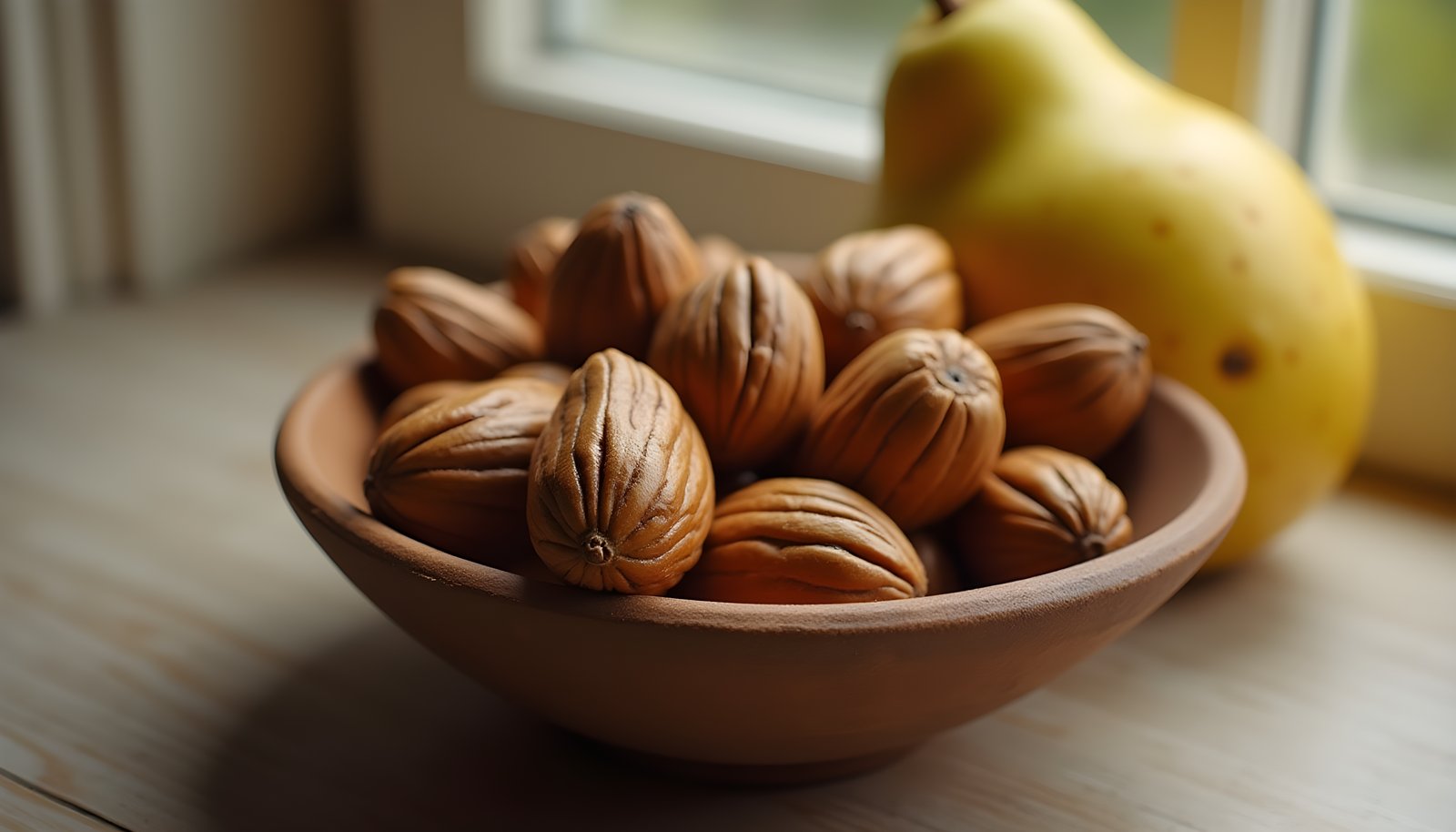
One ounce of Brazil nuts has 2.1 grams of fiber and about 544 micrograms of selenium. That second number is 989% of the Daily Value, and it’s the reason Brazil nuts fiber works differently from every other nut on the shelf.
With almonds or pecans, the advice is simple: eat an ounce, get the fiber. With Brazil nuts, an ounce a day would push most adults past the safe upper limit for selenium, so the real question is how much fiber you can get from the one or two nuts you should actually eat.
Brazil nuts fiber, counted per nut
USDA FoodData Central lists dried Brazil nuts at 7.5 grams of fiber per 100 grams. An ounce holds 6 to 8 nuts, so each nut brings roughly 0.3 grams of fiber.
The table shows what that means at realistic portions. Selenium figures use the National Institutes of Health range of 68 to 91 micrograms per nut.
| Portion | Fiber | % DV fiber | Calories | Selenium |
|---|---|---|---|---|
| 1 nut (about 4 g) | 0.3 g | 1% | 26 | 68 to 91 mcg |
| 2 nuts (about 8 g) | 0.6 g | 2% | 53 | 136 to 182 mcg |
| 4 nuts (about 16 g) | 1.2 g | 4% | 105 | 272 to 364 mcg |
| 1 ounce (6 to 8 nuts) | 2.1 g | 8% | 187 | about 544 mcg |
The selenium Daily Value is 55 micrograms, and the upper limit for adults is 400 micrograms a day. One nut covers your daily need, and four or five can bring you near the ceiling before you count anything else you eat.
So a Brazil nut is a selenium food first and a fiber food a distant second. Two nuts give you about 0.6 grams of fiber, which is only about 2% of a day’s target.
Brazil nut nutrition beyond selenium
Selenium gets the headlines, but Brazil nuts carry a full mineral profile too. Per ounce, USDA lists:
- Magnesium: 107 mg, about 25% of the Daily Value, one of the highest of any nut
- Copper: 0.49 mg, about 54% DV
- Phosphorus: 206 mg, about 16% DV
- Vitamin E: 1.6 mg, about 11% DV
- Protein: 4.1 grams
- Fat: 19 grams, split almost evenly between monounsaturated (6.8 g) and polyunsaturated (6.9 g)
Saturated fat is higher than in most nuts, at 4.6 grams per ounce. That’s about 23% of the 20 gram Daily Value, compared with under 2 grams in pecans.
Carbs are low, at 3.3 grams per ounce, and about two thirds of that is fiber. Sugar is under a gram.
Most of these numbers look impressive per ounce, but remember you’ll rarely eat an ounce. At two nuts, you still get about 30 mg of magnesium (7% DV) and 0.14 mg of copper (15% DV), plus all the selenium you need. That small portion punches well above its size on minerals.
Why selenium rich nuts need a limit
Your body uses selenium to build about 25 selenoproteins, proteins that need selenium to work. According to the NIH, they play key roles in thyroid hormone metabolism, DNA synthesis and reproduction, and they help protect cells from oxidative damage.
Too much over time causes selenosis, a buildup of selenium. The NIH lists hair loss and brittle or lost nails as the most common signs, along with a garlic smell on the breath, a metallic taste, skin rash, nausea and fatigue.
The NIH specifically flags Brazil nuts as a food that could lead to toxicity if eaten regularly in larger amounts. That makes them the rare whole food where more isn’t better.
The selenium number isn’t fixed
Selenium in plants depends on the soil where they grew, and Brazil nuts show this more than most foods. The NIH notes that values from different analyses vary widely.
USDA’s own records make the point. The older SR Legacy entry lists 1,917 micrograms per 100 grams, while a newer Foundation Foods sample of raw Brazil nuts lists 280 micrograms, almost seven times lower.
That spread is one more reason to keep portions small. You can’t tell from the bag whether your nuts came from high or low selenium soil, so the safe habit is to treat every Brazil nut as a high selenium one.
Brazil nut trees grow wild in the Amazon rainforest, and the nuts are harvested from many different areas. Two bags from the same store can come from very different soils, and nothing on the label tells you which.
The fiber, by contrast, is steady. The Foundation sample lists about 6 grams of fiber per 100 grams, close to the 7.5 grams in the older record.
Myth: if a little selenium is good, a handful is better
Myth: since selenium supports your thyroid and protects cells, a daily handful of Brazil nuts is a smart health habit.
Fact: one nut already covers the daily need. A handful of six to eight can land above the 400 microgram upper limit, and the NIH links regular high intake to hair loss and brittle nails, not better health.
The habit that works is one or two nuts a few times a week, or one a day at most. Selenium also comes from seafood, meat, eggs, grains and dairy, so many people already get a fair amount without any Brazil nuts at all.
Supplements matter here too. Many multivitamins and some standalone supplements contain selenium, so if you take one, count it before adding Brazil nuts to your routine.
Wondering how much fiber your day actually needs once you take Brazil nuts out of the fiber column? Our fiber calculator works out a personal number in seconds.
How Brazil nuts compare with other nuts
Ounce for ounce, Brazil nuts sit in the lower half for fiber. But because you shouldn’t eat a full ounce of them, the fair comparison is what each nut gives you at the portion you’d actually eat.
| Nut, typical portion | Fiber | Calories | Selenium limit? |
|---|---|---|---|
| Brazil nuts, 2 nuts | 0.6 g | 53 | Yes, keep to 1 to 2 |
| Almonds, 1 oz | 3.5 g | 164 | No |
| Pistachios, 1 oz | 3.0 g | 159 | No |
| Pecans, 1 oz | 2.7 g | 196 | No |
| Walnuts, 1 oz | 1.9 g | 185 | No |
| Cashews, 1 oz | 0.9 g | 157 | No |
Seen this way, almonds give you nearly six times the fiber of a sensible Brazil nut portion. Even cashews, the lowest fiber nut in the table, beat two Brazil nuts.
Calories tell a similar story. Two Brazil nuts cost only about 53 calories, so they’re easy to fit in, but they also can’t fill the role of a proper nut snack the way an ounce of almonds or pistachios can.
That isn’t a knock on Brazil nuts. It just means they belong in your day for selenium and minerals, while other nuts and seeds do the fiber work.
Brazil nuts in a mixed nut jar
Picture a jar of deluxe mixed nuts on the desk at work. Brazil nuts are the big ones on top, and a few grabs a day can easily add up to four or five of them without you noticing.
Four Brazil nuts alone would bring 272 to 364 micrograms of selenium, close to the 400 microgram limit. Add a tuna sandwich at lunch and you could pass it.
Two easy fixes: pick the Brazil nuts out and eat just one, or make your own mix with almonds, pistachios and pumpkin seeds and add a single Brazil nut per serving. An ounce of pumpkin seeds adds 5.2 grams of fiber on its own.
Want snack mixes and recipes built around higher fiber nuts and seeds? Our recipe eBooks have plenty of easy ideas.
Making room for fiber around a Brazil nut
Since Brazil nuts can’t carry your fiber, pair them with foods that can. One nut chopped over a bowl that already has fiber gives you the selenium without crowding out anything else.
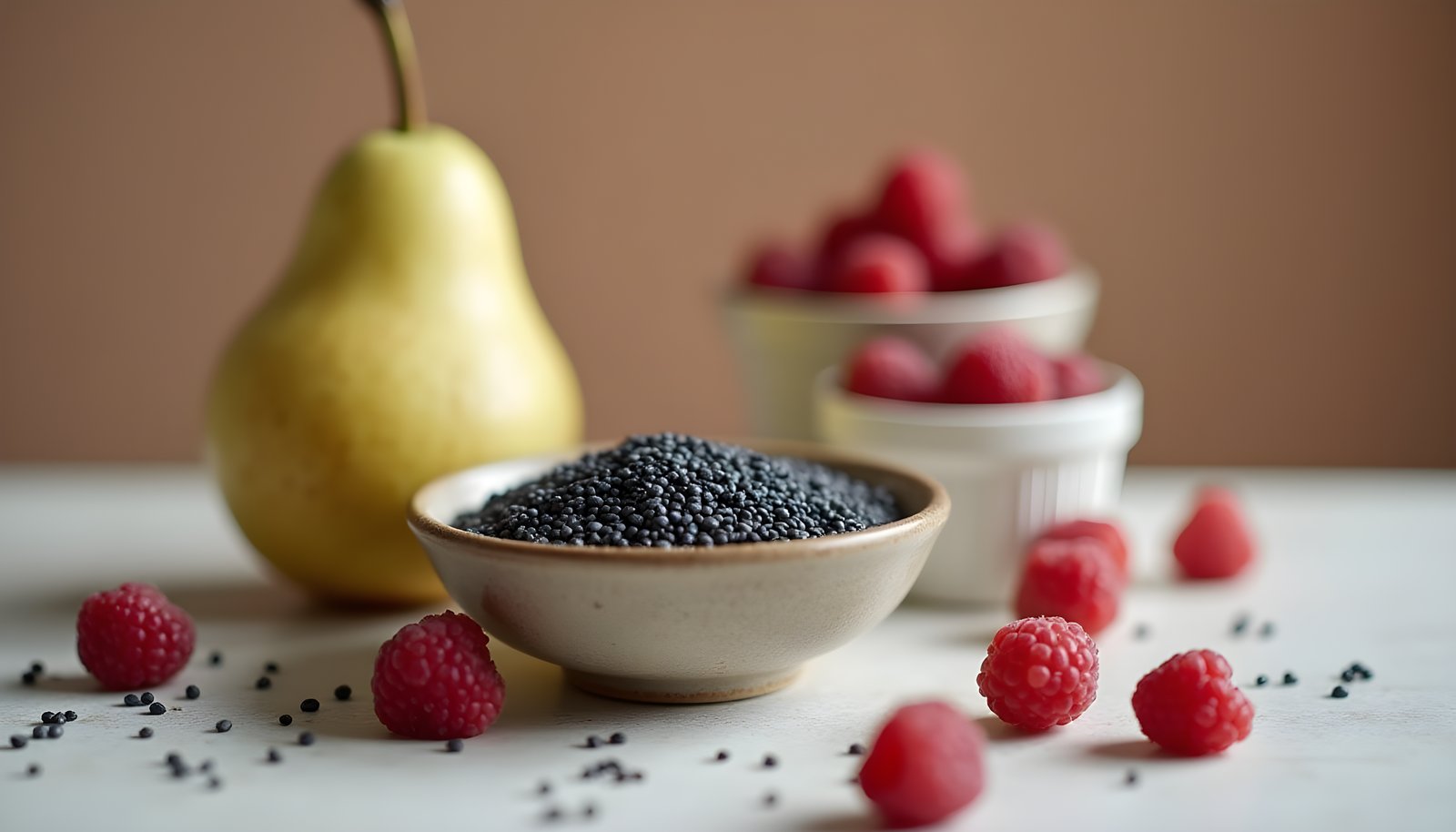
- Chop one Brazil nut over oatmeal with half a cup of raspberries (4.0 g fiber).
- Add one to a snack plate with a pear (5.5 g) and an ounce of almonds (3.5 g).
- Blend one into a smoothie with a tablespoon of chia seeds (4.1 g).
- Grate one over a salad with half a cup of edamame (4.1 g).
Mayo Clinic recommends building fiber from whole foods like these rather than supplements, and raising it slowly with plenty of fluids. Adults generally need 25 to 38 grams a day, so the fruit, seeds and legumes in these pairings carry almost all of it.
Start with one nut, then build the rest of the snack
Today, try this simple swap: take one Brazil nut, not a handful, and pair it with a piece of fruit and a small portion of almonds or seeds. You’ll get all the selenium you need for the day and 8 grams or more of fiber from the foods around it.
If you love the taste of Brazil nuts, that one nut habit lets you enjoy them often without worrying about selenium, and your fiber total gets better at the same time.
Brazil nuts and fiber: what people ask
How much fiber is in one Brazil nut?
About 0.3 grams. An ounce of 6 to 8 Brazil nuts has 2.1 grams of fiber, so each nut contributes only a small amount.
How many Brazil nuts should I eat a day?
One or two at most. A single nut has 68 to 91 micrograms of selenium, already above the 55 microgram Daily Value, and the adult upper limit is 400 micrograms.
Are Brazil nuts a good source of fiber?
Not really. Because you should keep to a nut or two, they add well under a gram of fiber, while an ounce of almonds gives you 3.5 grams.
What happens if you eat too many Brazil nuts?
Over time, too much selenium can cause selenosis. The NIH lists hair loss, brittle nails, garlic breath, a metallic taste, nausea and fatigue as signs.
Are Brazil nuts good for your thyroid?
Selenium does support thyroid hormone metabolism, but one nut covers your daily need. Eating more doesn’t add benefit and raises the risk of getting too much.
Do Brazil nuts have more selenium than other foods?
Yes, by far. An ounce lists about 544 micrograms, 989% of the Daily Value, though the amount varies widely with the soil the trees grew in.
Are Brazil nuts high in saturated fat?
Higher than most nuts. An ounce has about 4.6 grams of saturated fat, roughly 23% of the Daily Value, compared with under 2 grams in pecans.
Sources
- USDA Agricultural Research Service. FoodData Central: SR Legacy Nuts, brazilnuts, dried, unblanched (170569) and Foundation Foods Nuts, brazilnuts, raw (2515373), plus per ounce SR Legacy records for almonds, pistachios, pecans, walnuts and cashews. fdc.nal.usda.gov
- National Institutes of Health, Office of Dietary Supplements. “Selenium: Fact Sheet for Health Professionals.” 2026. ods.od.nih.gov
- U.S. Food and Drug Administration. “Daily Value on the Nutrition and Supplement Facts Labels.” 2024. fda.gov
- U.S. Department of Agriculture and U.S. Department of Health and Human Services. “Food Sources of Dietary Fiber.” Dietary Guidelines for Americans, 2020 to 2025. dietaryguidelines.gov
- Mayo Clinic Staff. “Dietary fiber: Essential for a healthy diet.” Mayo Clinic. 2025. mayoclinic.org