
In this article
- Egg protein powder fiber by brand
- Egg white protein supplements fiber and the gum question
- How egg powders compare with other protein powders
- Powder versus whole eggs
- Protein without fiber: what you’re really getting
- The fiber you still need
- Building a high fiber egg protein shake
- Flavored or unflavored egg powder
- Who egg protein powder suits best
- Myth vs fact: protein powders keep you regular
- Reading a protein powder label for fiber
- One change for your next shake
- Egg protein powder and fiber: what people ask
- Sources
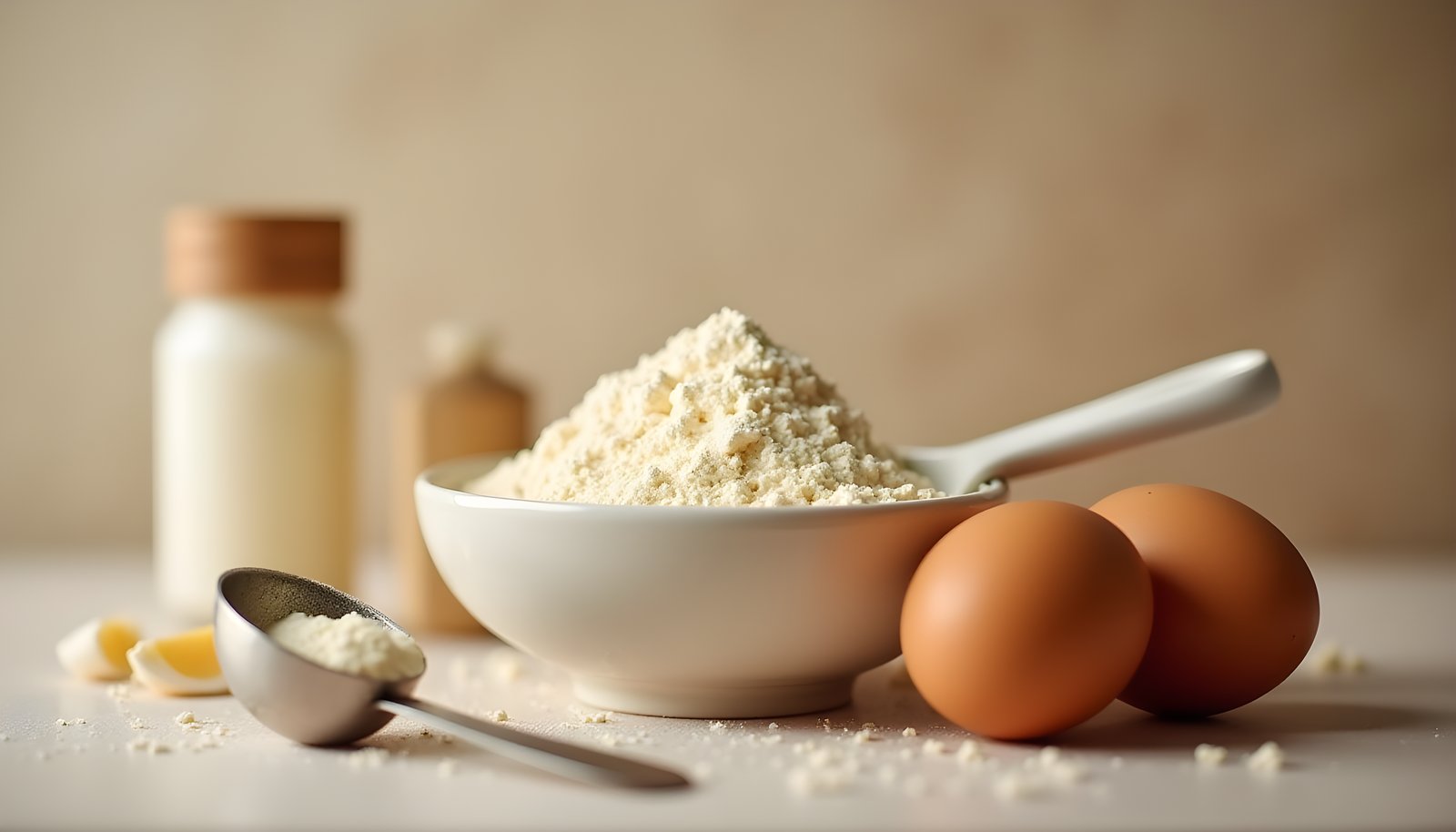
You finish a workout, shake a scoop of egg white protein into water and assume you’ve covered your nutrition for the next few hours. On egg protein powder fiber, though, that scoop contributes 0 grams, and so does every egg based powder in USDA’s database we checked.
Protein is what these powders do well. Fiber has to come from whatever else goes into the shaker or blender.
Egg protein powder fiber by brand
These values come from USDA FoodData Central, including the branded records manufacturers submit. Servings follow each label:
| Powder | Serving | Calories | Protein | Fiber | Sodium |
|---|---|---|---|---|---|
| Dried egg white (USDA reference) | 1 oz (28 g) | 107 | 22.7 g | 0 g | 358 mg |
| NOW egg white protein, unflavored | 1/4 cup (20 g) | 80 | 16 g | 0 g | 260 mg |
| NOW egg white protein, creamy vanilla | 1 scoop (28 g) | 100 | 20 g | 0 g | 320 mg |
| 365 cage free egg white protein, vanilla | 1 scoop (31 g) | 120 | 24 g | 0 g | 370 mg |
| Designer Protein egg white and yolk, vanilla | 2 scoops (32 g) | 110 | 24 g | 0 g | 350 mg |
Every row lands on zero. The unflavored NOW powder lists a single ingredient, egg white powder, so there’s nothing in it that could supply fiber.
The flavored versions add sweeteners, natural flavors and sunflower lecithin, an emulsifier. None of those are fiber either.
Even the Designer Protein blend, which uses both egg white and egg yolk protein, lists 0 grams of fat and 0 grams of fiber per serving. Adding yolk protein changes the protein mix, not the fiber line.
Egg white protein supplements fiber and the gum question
The 365 vanilla powder is the most interesting case. Its ingredient list includes xanthan gum and guar gum, and guar gum is one of the seven isolated fibers FDA named in its 2016 labeling rule.
Even so, the label lists 0 grams of fiber per scoop. Whatever amount of gum the scoop contains doesn’t add up to a declared gram of fiber.
So egg white protein supplements fiber stays at zero even when a fiber ingredient appears on the list. The nutrition panel, not the ingredient list, tells you what you’re actually getting.
How egg powders compare with other protein powders
Switching powder types won’t solve the fiber gap. Here’s how egg compares with whey and pea, two other common options:
| Powder type | Serving | Protein | Protein per 100 calories | Fiber |
|---|---|---|---|---|
| Dried egg white | 1 oz (28 g) | 22.7 g | 21 g | 0 g |
| NOW egg white, unflavored | 20 g | 16 g | 20 g | 0 g |
| Whey protein isolate (USDA reference) | 30 g | 17.4 g | 16 g | 0 g |
| NOW Sports organic pea protein | 20 g | 15 g | 19 g | 1 g |
Egg white powders lead on protein per calorie, with whey a little behind. The pea protein powder manages 1 gram of fiber, a small amount that comes from its single ingredient, pea protein isolate.
No protein powder here comes close to a real fiber food. A cup of cooked lentils, by contrast, carries about 18 grams of protein and 15 grams of fiber, according to Harvard’s Nutrition Source.
Comparing powders for your own routine? Our comparison charts line up the popular picks side by side.
Powder versus whole eggs
Egg protein powder concentrates what’s in the white and strips out most of what’s in the yolk. Here’s how a scoop compares with eating whole eggs, using FoodData Central values:
| Option | Calories | Protein | Fat | Sodium | Fiber |
|---|---|---|---|---|---|
| 1 large whole egg | 72 | 6.3 g | 4.8 g | 71 mg | 0 g |
| 3 large whole eggs | 216 | 18.9 g | 14.4 g | 213 mg | 0 g |
| NOW egg white powder, 1/4 cup | 80 | 16 g | 0 g | 260 mg | 0 g |
To match one scoop’s protein with whole eggs, you’d eat close to three of them and about 135 more calories. On fiber, both routes are identical at zero.
Protein without fiber: what you’re really getting
A scoop of egg white powder is close to pure protein. Per 100 grams, dried egg white lists 81.1 grams of protein, 0 grams of fat and 7.8 grams of carbohydrate.
It also brings minerals from the egg white itself, including 315 milligrams of potassium, 35 micrograms of selenium and 0.71 milligrams of riboflavin per ounce. Sodium is the number to watch, at 358 milligrams per ounce, about five times what a whole large egg carries.
Harvard’s Nutrition Source puts the recommended protein intake at 0.8 grams per kilogram of body weight, roughly 50 grams a day for a 140 pound adult. One or two scoops of egg white powder can cover a large share of that.
The fiber you still need
Mayo Clinic suggests about 25 grams of fiber a day for women 50 and younger and 38 grams for men 50 and younger. If a shake replaces a meal or snack that would have included fruit or grains, the fiber from that meal disappears too.
If your morning shake stands in for a bowl of oatmeal or a piece of fruit, you could be losing several grams of fiber without noticing. That makes the add ins especially important.
Here’s how one day could look. The berry chia shake below delivers about 15 grams, and a lunch with 1 cup of cooked lentils, which Mayo Clinic’s chart lists at 15.5 grams, brings the total past 30 grams before dinner.
Want to know your personal fiber target? Our fiber calculator gives you a number in a few seconds.
Building a high fiber egg protein shake
These Dietary Guidelines and Mayo Clinic portions blend well with egg white powder:
| Add to your shake | Amount | Fiber |
|---|---|---|
| Raspberries | 1 cup | 8.0 g |
| Blackberries | 1 cup | 7.6 g |
| Chia seeds | 1 Tbsp | 4.1 g |
| Instant oatmeal, cooked | 1 cup | 4.0 g |
| Banana | 1 medium | 3.2 g |
| Oat bran | 1/2 cup | 2.9 g |
Three combinations to try
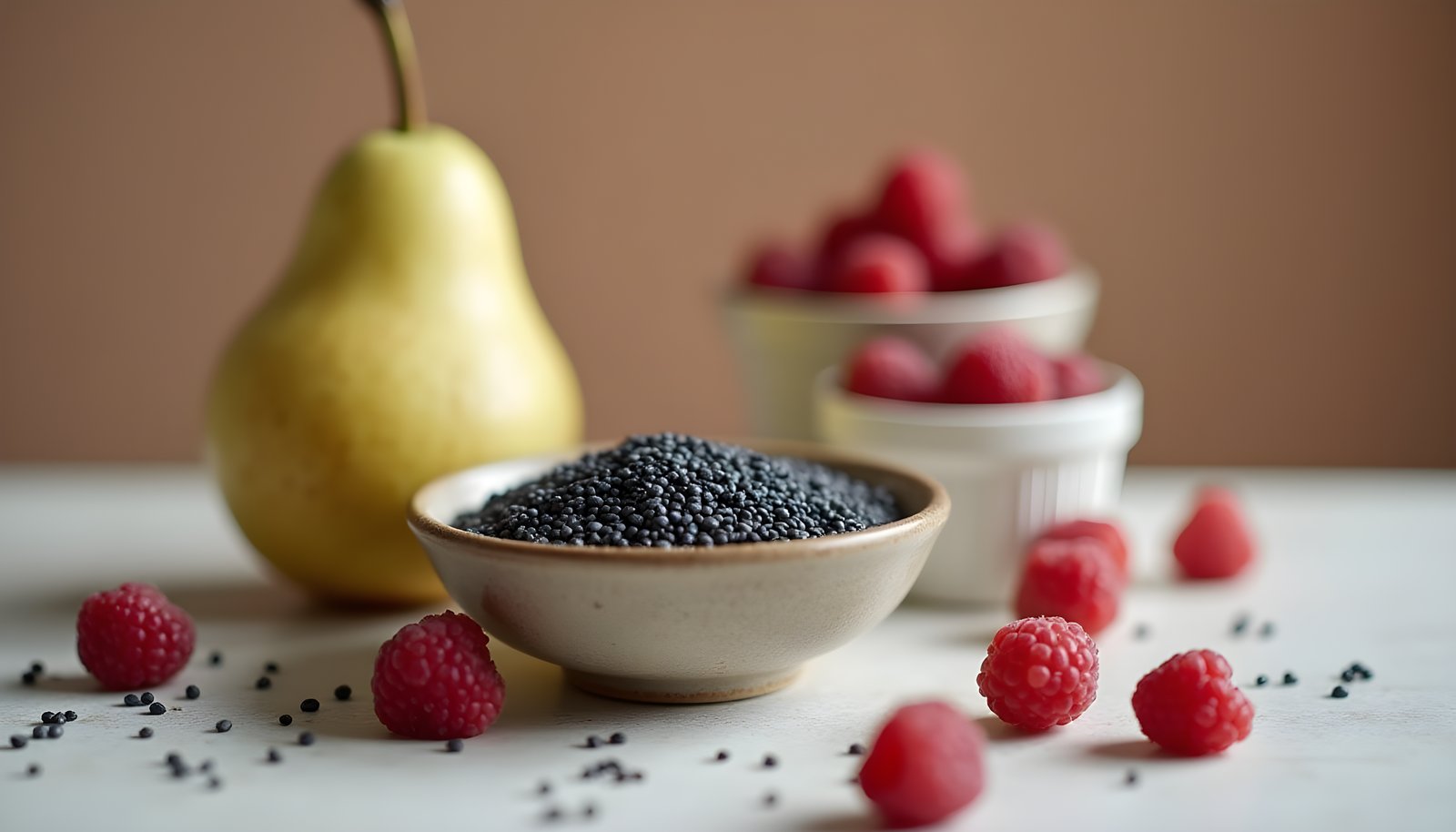
- Berry chia shake: one scoop of unflavored egg white powder with 1 cup raspberries, 1 tablespoon chia and 1/2 cup oat bran, about 15.0 g of fiber
- Blackberry banana shake: vanilla egg white powder with 1 cup blackberries and a medium banana, about 10.8 g
- Protein oatmeal: a scoop stirred into 1 cup of cooked oatmeal, topped with 1 tablespoon chia and 1/2 cup raspberries, about 12.1 g
The berry chia shake covers 60 percent of a 25 gram day while still delivering the 16 grams of protein from the powder. That’s a better deal than either the powder or the fruit alone.
Flavored or unflavored egg powder
Flavor changes a few numbers but never the fiber. The unflavored NOW powder lists 1 gram of sugar and just one ingredient, egg white powder.
NOW’s creamy vanilla version lists 0 grams of sugar, sweetened instead with xylitol, a sugar alcohol, and stevia. The 365 vanilla powder uses stevia and lists 1 gram of sugar with no added sugar.
If you’re blending with fruit, the unflavored option gives you the most control, since berries and bananas bring their own sweetness along with their fiber.
Who egg protein powder suits best
Egg white powders fit a few situations well. The unflavored NOW powder lists only egg white, so it works for people avoiding milk based powders like whey.
It’s also one of the leanest options per calorie, at about 20 grams of protein per 100 calories. That makes it useful when you want protein without much fat or carbohydrate.
It isn’t an option for anyone avoiding eggs. In that case, a pea protein powder offers similar protein with a gram of fiber, though you’d still want fruit or seeds for a meaningful amount.
Myth vs fact: protein powders keep you regular
Myth: A protein powder is a complete nutrition shake, so it must cover fiber too.
Fact: Egg, whey and pea protein powders are mostly isolated protein, and the products checked here list 0 to 1 gram of fiber. Unless a label lists added fiber in grams, the shake needs fruit, seeds or grains to provide any.
Reading a protein powder label for fiber
When you compare tubs, a few checks save time:
- Read the dietary fiber line, not the front of the tub
- Treat gums like xanthan and guar as texture agents unless the panel shows fiber in grams
- Expect 0 grams from pure egg white or whole egg powders
- Check the serving size, since scoops in these records range from 20 to 32 grams
- Look at sodium too, since egg white powders in these records range from 260 to 370 milligrams per serving
One change for your next shake
Next time you make a shake, add one cup of raspberries or blackberries before you blend. That single step adds around 8 grams of fiber to a drink that had none.
Frozen berries work just as well as fresh, and they chill the shake without watering it down. Keep a bag in the freezer next to your tub of powder.
If you like a thicker texture, stir in a tablespoon of chia as well. You’ll have a protein shake that finally pulls its weight on fiber, too.
Egg protein powder and fiber: what people ask
Does egg white protein powder have fiber?
No. USDA records for NOW, 365 and Designer Protein egg powders all list 0 grams of fiber per serving. Dried egg white itself has 0 grams of fiber per 100 grams.
Is egg protein better than whey?
Both are low in fiber, at 0 grams in USDA’s records. Egg white powders give slightly more protein per calorie, about 20 to 21 grams per 100 calories compared with about 16 for whey isolate.
Which protein powder has the most fiber?
Among the powders checked, NOW Sports organic pea protein leads with 1 gram per 20 gram serving. Real fiber comes from add ins like berries and chia.
Why does my protein powder have guar gum but no fiber?
A small amount of gum may not add up to a declared gram of fiber. The 365 egg white powder lists guar gum but shows 0 grams of fiber.
How can I add fiber to a protein shake?
Blend in fruit, seeds or oats. A cup of raspberries adds 8.0 grams and a tablespoon of chia adds 4.1 grams.
How much protein is in egg white powder?
About 81 grams per 100 grams, according to USDA FoodData Central. A typical 20 to 32 gram serving provides 16 to 24 grams of protein.
Is egg white protein powder high in sodium?
It can be. Dried egg white lists 358 milligrams of sodium per ounce, and branded powders range from 260 to 370 milligrams per serving.
Sources
- U.S. Department of Agriculture, Agricultural Research Service. “FoodData Central” (egg white, dried 172204; whey protein powder isolate 173177; NOW egg white protein unflavored 2339070 and creamy vanilla 2339076; 365 cage free egg white protein vanilla 2338211; Designer Protein egg white and yolk vanilla 2473656; NOW Sports organic pea protein 2339075; egg, whole, raw 171287). 2026. fdc.nal.usda.gov
- U.S. Food and Drug Administration. “Questions and Answers on Dietary Fiber.” 2024. www.fda.gov
- Harvard T.H. Chan School of Public Health. “Protein.” The Nutrition Source. 2025. nutritionsource.hsph.harvard.edu
- U.S. Department of Agriculture and U.S. Department of Health and Human Services. “Food Sources of Dietary Fiber.” Dietary Guidelines for Americans, 2020 to 2025. www.dietaryguidelines.gov
- Mayo Clinic Staff. “Chart of high-fiber foods.” Mayo Clinic. 2025. www.mayoclinic.org
- Mayo Clinic Staff. “Dietary fiber: Essential for a healthy diet.” Mayo Clinic. 2025. mayoclinic.org