
In this article
- Navy beans fiber, serving by serving
- Navy bean nutrition: the full picture
- White beans fiber: navy vs its pale cousins
- Navy beans next to other high fiber foods
- A lunch swap, by the numbers
- Navy bean powder in kids’ muffins and smoothies
- Myth vs fact: baked beans count the same
- What navy beans do in your gut and for your heart
- Cooking with navy beans
- Navy beans and your daily fiber target
- Picking your bean: a simple rule
- Navy bean questions people search for
- Sources
Nineteen grams. That’s how much fiber sits in a single cooked cup of navy beans, the highest of any common bean in USDA data and about 68% of the Daily Value.
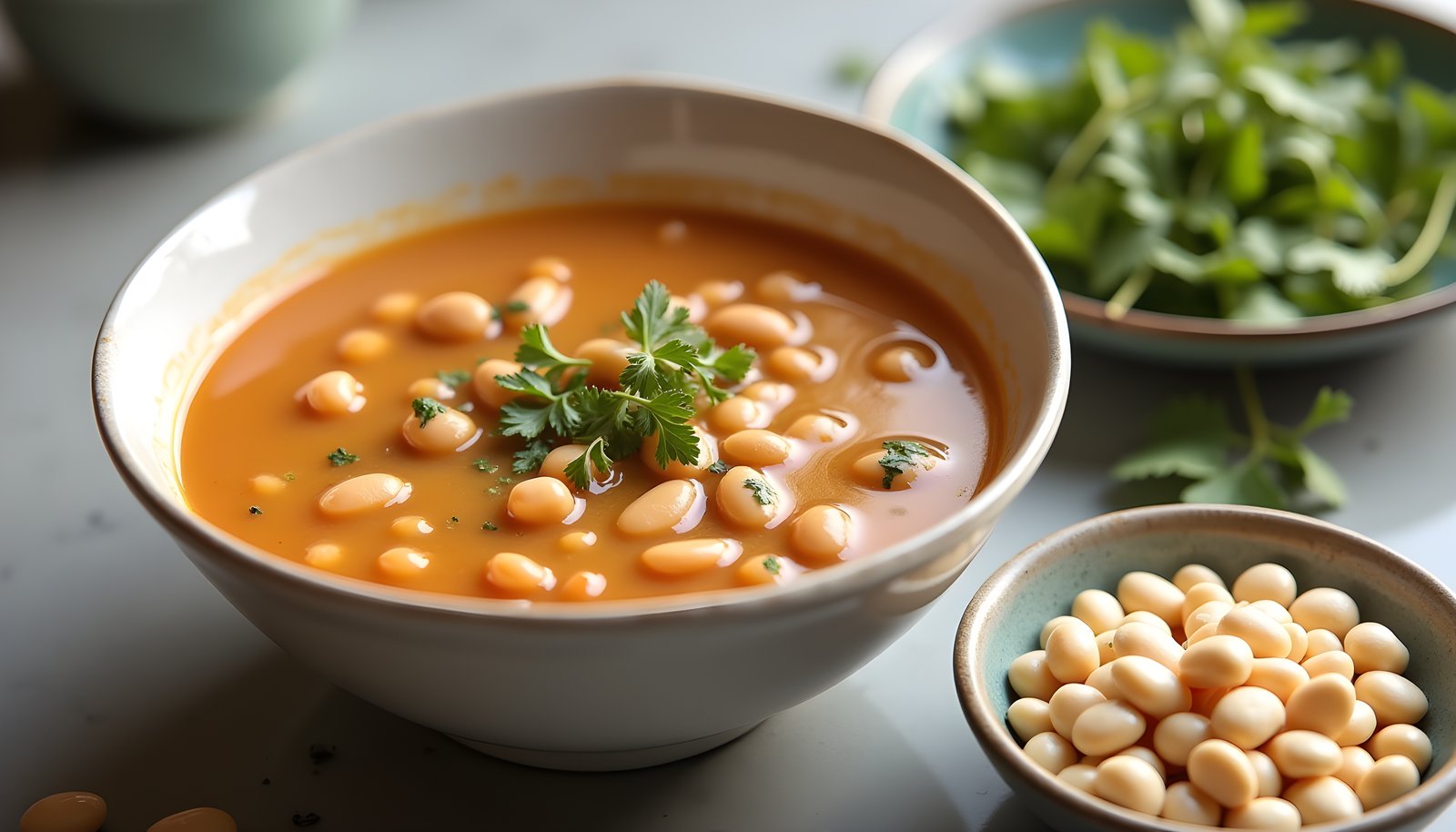
Navy beans are small, mild and creamy, best known as the bean inside a can of baked beans. This guide breaks down navy beans fiber by serving, how they compare with other white beans, and what researchers found when they baked navy bean powder into kids’ snacks.
Navy beans fiber, serving by serving
The figures below are from USDA FoodData Central for navy beans boiled from dry without salt.
| Navy beans, boiled | Fiber | Calories | Protein |
|---|---|---|---|
| 100 grams | 10.5 g | 140 | 8.2 g |
| 1/2 cup | 9.6 g | 128 | 7.5 g |
| 1 cup (182 g) | 19.1 g | 255 | 15.0 g |
A half cup alone covers about a third of the 28 gram Daily Value. That half cup also tops the legume list in the Dietary Guidelines for Americans’ table of fiber sources, ahead of split peas at 8.2 grams and lentils at 7.8.
Canned navy beans
Mayo Clinic’s high-fiber food chart lists about 13 grams in a cup of canned navy or cannellini beans. That’s lower than home-cooked, partly because canned beans hold more liquid, but still more than most foods in the grocery store.
Drain and rinse canned beans to cut the salt. Low sodium cans make that step even easier.
Navy bean nutrition: the full picture
Navy bean nutrition reaches well past fiber. One cooked cup gives you about:
- Folate: 255 micrograms, about 64% of the Daily Value
- Potassium: around 710 milligrams
- Magnesium: around 95 milligrams
- Iron: about 4.3 milligrams, close to a quarter of the Daily Value
- Sodium: next to none when cooked without salt
Harvard’s Nutrition Source groups beans with lentils and peas as pulses, the dried edible seeds of legume plants. It credits them with protein, folate, iron and phosphorus, along with both soluble and insoluble fiber and very little saturated fat.
Protein and fiber in near equal amounts is a rare combination. Animal foods provide protein with zero fiber, and most grains offer far less of both per calorie.
White beans fiber: navy vs its pale cousins
“White beans” can mean several varieties, and the fiber differs more than the color suggests. Per cooked cup, by USDA values:
| White bean, per cooked cup | Fiber | Calories |
|---|---|---|
| Navy beans | 19.1 g | 255 |
| Lima beans | 13.2 g | 216 |
| Great northern beans | 12.4 g | 209 |
| Canned navy or cannellini (Mayo) | 13 g | n/a |
Navy beans lead by a wide margin, with roughly 6 to 7 grams more per cup than great northern or lima beans. Great northerns are larger and hold their shape better in soups, while navy beans break down into a silky texture.
Working out how many grams you need in a day? Our fiber calculator sets a personal target based on your age and sex.
Navy beans next to other high fiber foods
Navy beans also stand out against high fiber foods beyond the bean aisle. From the Dietary Guidelines table of common food sources, per standard serving:
| Food and serving | Fiber | Calories |
|---|---|---|
| Navy beans, 1/2 cup | 9.6 g | 128 |
| Artichoke, cooked, 1 cup | 9.6 g | 89 |
| Raspberries, 1 cup | 8.0 g | 64 |
| Split peas, 1/2 cup | 8.2 g | 116 |
| Lentils, 1/2 cup | 7.8 g | 115 |
| Black beans, 1/2 cup | 7.5 g | 114 |
| Chickpeas, 1/2 cup | 6.3 g | 135 |
Raspberries and artichokes win on calories, but a half cup of beans is a far easier portion to work into a meal than a whole cooked artichoke. Navy beans also add protein, which fruit and most vegetables can’t match.
Fiber per 100 calories
Dividing fiber by calories shows how efficiently each food delivers. Using the same Dietary Guidelines servings, navy beans give about 7.5 grams of fiber per 100 calories, compared with roughly 7.1 for split peas, 6.8 for lentils, 6.6 for black beans and 4.7 for chickpeas.
That makes navy beans the most fiber-efficient bean on the list, a useful edge if you’re trying to raise fiber without adding many calories.
A lunch swap, by the numbers
Say your usual lunch is a cup of creamy tomato soup with a few crackers. Neither one brings much fiber to the table.
Stir a half cup of navy beans into the same soup and you add 9.6 grams of fiber and about 7.5 grams of protein for 128 extra calories. The beans melt into the broth, so the soup gets thicker and more filling without tasting like a bean dish.
Do the same with a cup of beans in a big pot of vegetable soup, split four ways, and each bowl gains close to 5 grams.
Navy bean powder in kids’ muffins and smoothies
Most bean research looks at adults. A 2017 pilot trial at Colorado State University tried something different: it tested whether children aged 8 to 13 with high cholesterol would actually eat navy bean products every day.
For four weeks, kids got a daily muffin or smoothie made with 17.5 grams of cooked navy bean powder, heat-stabilized rice bran, a mix of both, or neither. Thirty-eight children finished, and only three dropped out, all for not eating the foods.
What changed
Total fiber intake rose significantly in both navy bean groups by week four. The navy bean group also had higher HDL cholesterol, the protective kind, than the control group.
Other cholesterol measures didn’t shift much in such a short window. The researchers concluded that the foods were well tolerated and that larger daily amounts over a longer period are needed to move more lipid markers.
For parents, the practical takeaway is the tolerance result. Pureed navy beans can disappear into baked goods and smoothies with few complaints.
Myth vs fact: baked beans count the same
Myth: A can of baked beans gives you the same benefits as plain navy beans.
Fact: The beans themselves keep their fiber, but most baked bean recipes add sugar and salt in the sauce. Harvard’s Nutrition Source suggests checking labels on processed legume products for added sodium and sugar, so treat sweet baked beans as an occasional side and plain navy beans as the everyday choice.
What navy beans do in your gut and for your heart
Beans contain resistant starch and oligosaccharides that escape digestion and reach the colon intact. Harvard’s Nutrition Source notes that gut bacteria ferment them into short chain fatty acids such as butyrate, which helps keep the colon lining healthy.
That fermentation is also the source of bean-related gas. Mayo Clinic suggests adding fiber gradually and drinking plenty of water, which gives your gut bacteria time to adjust.
Harvard also cites research tying regular legume intake to heart health, including a review of 11 trials where legumes lowered LDL cholesterol by about 6%. Soluble fiber is one of the reasons it gives.
If digestion is your main concern, our gut health guides take you through a gentler, step-by-step way to add fiber.
Cooking with navy beans
Navy beans soften faster than larger beans and turn creamy, which suits them to purées and soups. A few ideas:
- Blend into a white bean dip with lemon, garlic and olive oil
- Simmer into a Senate style bean soup with carrots, celery and onion
- Purée into pasta sauce for extra body without cream
- Bake into muffins or brownies as part of the fat and flour
- Make homemade baked beans with less sugar than the canned versions
Harvard recommends soaking dried beans for at least three hours, then draining and rinsing before cooking. It’s an easy step to do the night before.
Want more ideas for cooking with white beans? Our recipe eBooks are stocked with simple, high-fiber meals for any night of the week.
Navy beans and your daily fiber target
Mayo Clinic’s daily fiber targets are about 25 grams for women and 38 grams for men. One cup of navy beans covers about three quarters of a woman’s target and half of a man’s.
The Dietary Guidelines for Americans suggest about 3 cups of legumes a week, Harvard’s Nutrition Source notes. Three one-cup servings of navy beans alone would bring about 57 grams of fiber across the week.
Navy beans make that target easier to hit than you might think. A cup of raspberries at breakfast (8.0 grams), a half cup of navy beans in your lunch soup (9.6 grams) and a half cup of lentils with dinner (7.8 grams) add up to 25.4 grams before you count any grains or vegetables.
Spread out like that, no single meal feels heavy on beans, and your gut gets a steady supply instead of one big load.
Picking your bean: a simple rule
If you want the most fiber per bite, buy dried navy beans and cook them yourself. If you want beans that stay whole in a salad or stew, choose great northern or cannellini and accept a few grams less.
If time is the issue, a can of navy beans still beats almost every other side on the plate. And if your recipe calls for baked beans, make them at home with a light hand on the sugar.
Navy bean questions people search for
How much fiber is in a cup of navy beans?
About 19 grams in a cup of navy beans boiled from dry, according to USDA FoodData Central. That’s around 68% of the 28 gram Daily Value.
Are navy beans the highest fiber bean?
Yes, among common beans. A half cup of cooked navy beans has 9.6 grams, the top legume in the Dietary Guidelines for Americans fiber table.
Do canned navy beans have less fiber?
A bit less. Mayo Clinic lists about 13 grams per cup of canned navy beans, compared with about 19 grams for beans cooked from dry.
Are navy beans and white beans the same?
Navy beans are one type of white bean. Great northern, cannellini and baby lima beans are others, and navy beans have the most fiber of the group.
Do baked beans have fiber?
Yes, because they’re made from navy beans. Many canned versions add sugar and salt, so check the label or make them at home.
Are navy beans good for kids?
They can be. In a 2017 pilot trial, children aged 8 to 13 tolerated daily muffins and smoothies made with navy bean powder, and their fiber intake rose.
How much protein do navy beans have?
About 15 grams per cooked cup, alongside 19 grams of fiber. That combination makes navy beans a filling plant protein.
Sources
- Borresen EC, Jenkins-Puccetti N, Schmitz K, et al. “A Pilot Randomized Controlled Clinical Trial to Assess Tolerance and Efficacy of Navy Bean and Rice Bran Supplementation for Lowering Cholesterol in Children.” Global Pediatric Health. 2017. doi.org
- U.S. Department of Agriculture, Agricultural Research Service. “FoodData Central.” 2026. fdc.nal.usda.gov
- U.S. Department of Agriculture and U.S. Department of Health and Human Services. “Food Sources of Dietary Fiber.” Dietary Guidelines for Americans, 2020 to 2025. 2020. dietaryguidelines.gov
- Harvard T.H. Chan School of Public Health. “Legumes and Pulses.” The Nutrition Source. 2024. nutritionsource.hsph.harvard.edu
- Mayo Clinic Staff. “Chart of high-fiber foods.” Mayo Clinic. 2025. mayoclinic.org
- Mayo Clinic Staff. “Dietary fiber: Essential for a healthy diet.” Mayo Clinic. 2024. mayoclinic.org