
In this article
- How much lentils fiber is in a serving
- Red lentils fiber vs green lentils fiber
- Half rice, half lentils: the Guelph trial
- Lentil nutrition beyond the fiber
- Lentils compared with other fiber sources
- Lentils and your gut
- Lentils and feeling full
- Stretching meat dishes with lentils
- A quick lentil cooking checklist
- Putting the half-and-half idea to work
- How lentils fit your week
- What lentil research still needs to show
- Lentils fiber: your questions
- Sources
A cooked cup of lentils holds about 15.6 grams of fiber, more than half the Daily Value, and the color you buy barely changes that. The bigger surprise is what lentils do to the foods sitting next to them.
When researchers replaced half the rice or potato in a meal with lentils, blood sugar after eating dropped noticeably. This guide covers lentils fiber by serving and type, lentil nutrition beyond fiber, and how to use that side-dish effect at home.
How much lentils fiber is in a serving
USDA FoodData Central lists these values for lentils boiled without salt:
| Lentils, boiled | Fiber | Calories | Protein |
|---|---|---|---|
| 1/4 cup | 3.9 g | 58 | 4.5 g |
| 1/2 cup | 7.8 g | 115 | 8.9 g |
| 1 cup (198 g) | 15.6 g | 230 | 17.9 g |
| 100 grams | 7.9 g | 116 | 9.0 g |
A half cup already provides more than a quarter of the 28 gram Daily Value. That’s about the amount you’d stir into a bowl of soup or spoon over a salad.
Lentils are also almost fat free, at well under half a gram per 100 grams cooked. Nearly all their calories come from slow-digesting carbohydrate and protein.
Red lentils fiber vs green lentils fiber
Red, green, brown and black lentils look and cook differently, but their fiber numbers stay close. In USDA data, raw red lentils have about 10.8 grams of fiber per 100 grams, while general raw lentils, the brown and green types most stores carry, have about 10.7.
| Lentil type | Texture when cooked | Best uses |
|---|---|---|
| Red or yellow (split) | Soft, breaks down | Dal, soups, purées, sauces |
| Brown | Tender, mostly holds shape | Soups, stews, veggie burgers |
| Green, including French green | Firm, keeps shape | Salads, side dishes, grain bowls |
| Black (beluga) | Firm, glossy | Salads, bowls, toppings |
Red lentils are usually sold split and hulled, which is why they cook quickly and turn creamy. They still carry nearly the same fiber per gram as whole green lentils.
Black beluga lentils are tiny and glossy, and they were named for their resemblance to caviar. They hold their shape well, which makes them a striking topping for salads and bowls.
So pick lentils for texture, not fiber. A pot of red lentil dal and a green lentil salad give you roughly the same grams per cup.
Wondering how a cup of lentils fits your own needs? Our fiber calculator gives you a personal daily target in seconds.
Half rice, half lentils: the Guelph trial
In a 2018 University of Guelph study, two groups of 24 healthy adults ate test meals on separate mornings. Each meal held 50 grams of available carbohydrate from white rice, instant potato, or a 50:50 mix of either starch with lentils.
The researchers tried three types of lentils: large green, small green and split red. Blood sugar and insulin were then measured over the following hours.
What the numbers showed
- Replacing half the rice with lentils lowered the blood sugar response by about 20%.
- Replacing half the potato with lentils lowered it by about 35%.
- Insulin dropped with the potato and lentil meals, but not with the rice and lentil meals.
- One combination, rice with large green lentils, didn’t quite reach statistical significance.
Because carbohydrate was matched, the lentil meals weren’t lighter on starch. They simply delivered it in a slower form, along with fiber and protein.
The study was short and done in young, healthy adults, so it shows an immediate effect, not a long-term health outcome. Still, the practical message is easy to use: lentils don’t have to replace your starch, they can share the plate with it.
Lentil nutrition beyond the fiber
Per cooked cup, USDA values put lentils among the most nutrient-dense foods you can buy:
- Folate: about 358 micrograms, roughly 90% of the Daily Value
- Iron: about 6.6 milligrams, around 37% of the Daily Value
- Protein: about 18 grams
- Potassium: about 731 milligrams
Harvard’s Nutrition Source lists protein, folate, iron and phosphorus among the nutrients legumes provide, along with soluble and insoluble fiber. Lentils are naturally low in sodium and saturated fat, too.
Harvard also notes that lentils were among the earliest crops to be domesticated, eaten in ancient Rome and Egypt. They’ve been a staple for a very long time for good reason.
Lentils compared with other fiber sources
The Dietary Guidelines for Americans’ table of fiber sources gives a sense of where lentils stand per standard serving:
| Food and serving | Fiber | Calories |
|---|---|---|
| Navy beans, 1/2 cup | 9.6 g | 128 |
| Split peas, 1/2 cup | 8.2 g | 116 |
| Lentils, 1/2 cup | 7.8 g | 115 |
| Black beans, 1/2 cup | 7.5 g | 114 |
| Bulgur, 1/2 cup | 4.1 g | 76 |
| Barley, 1/2 cup | 3.0 g | 97 |
Lentils sit near the top of the legume group and well ahead of whole grains. A half cup of lentils gives you more than twice the fiber of a half cup of barley.
Lentils and your gut
Lentils contain galacto-oligosaccharides and fructans, carbohydrates that gut bacteria ferment. Monash University notes that this fermentation produces short chain fatty acids that help keep the colon healthy, though it can also cause gas.
These carbohydrates dissolve into water, so canned lentils, drained and rinsed, tend to be gentler. Monash suggests canned lentils as an easy way to replace part of the meat in dishes like bolognese or tacos.
Mayo Clinic advises increasing fiber gradually and drinking enough water as you go. If you’re new to legumes, start with a quarter cup and work up.
If digestive comfort is your main goal, our gut health guides lay out a step-by-step approach to adding fiber without the bloat.
Lentils and feeling full
Fiber and protein both slow digestion, and lentils deliver plenty of each. Harvard’s Nutrition Source notes that eating about one serving of pulses a day can increase feelings of fullness.
It also points to data on 8,229 US adults showing that people who ate beans regularly tended to have lower body weight and smaller waists than those who didn’t. That kind of study shows a link, not proof that beans caused the difference.
In practice, that makes a bowl of lentil soup a filling lunch for its calories. It’s one reason lentils suit anyone trying to eat a little less without feeling hungry an hour later.
Stretching meat dishes with lentils
Monash University suggests a simple move for anyone easing into legumes: replace part of the meat in a dish with canned lentils. Bolognese, tacos, chili and shepherd’s pie all take the swap well.
Trade half a pound of ground beef in a family-size sauce for a cup of cooked lentils and the pot gains about 15.6 grams of fiber. Split four ways, that’s almost 4 extra grams per plate, with very little change in taste or texture.
Harvard’s Nutrition Source cites a meta-analysis of 36 randomized trials in which replacing red meat with plant proteins such as legumes improved cholesterol, triglycerides and blood pressure.
A quick lentil cooking checklist
Unlike most dried beans, lentils are small enough to cook without a long soak. A simple routine:
- Rinse the lentils in a sieve and pick out any small stones.
- Use about three parts water to one part lentils.
- Bring to a boil, then simmer until tender: red lentils first, then brown, then green and black.
- Taste a few lentils before draining; they should be soft but not falling apart, unless you want dal.
- Cool any extra and refrigerate in portions for quick lunches.
A big pot on Sunday can supply lentils for salads, soups and bowls all week.
Putting the half-and-half idea to work
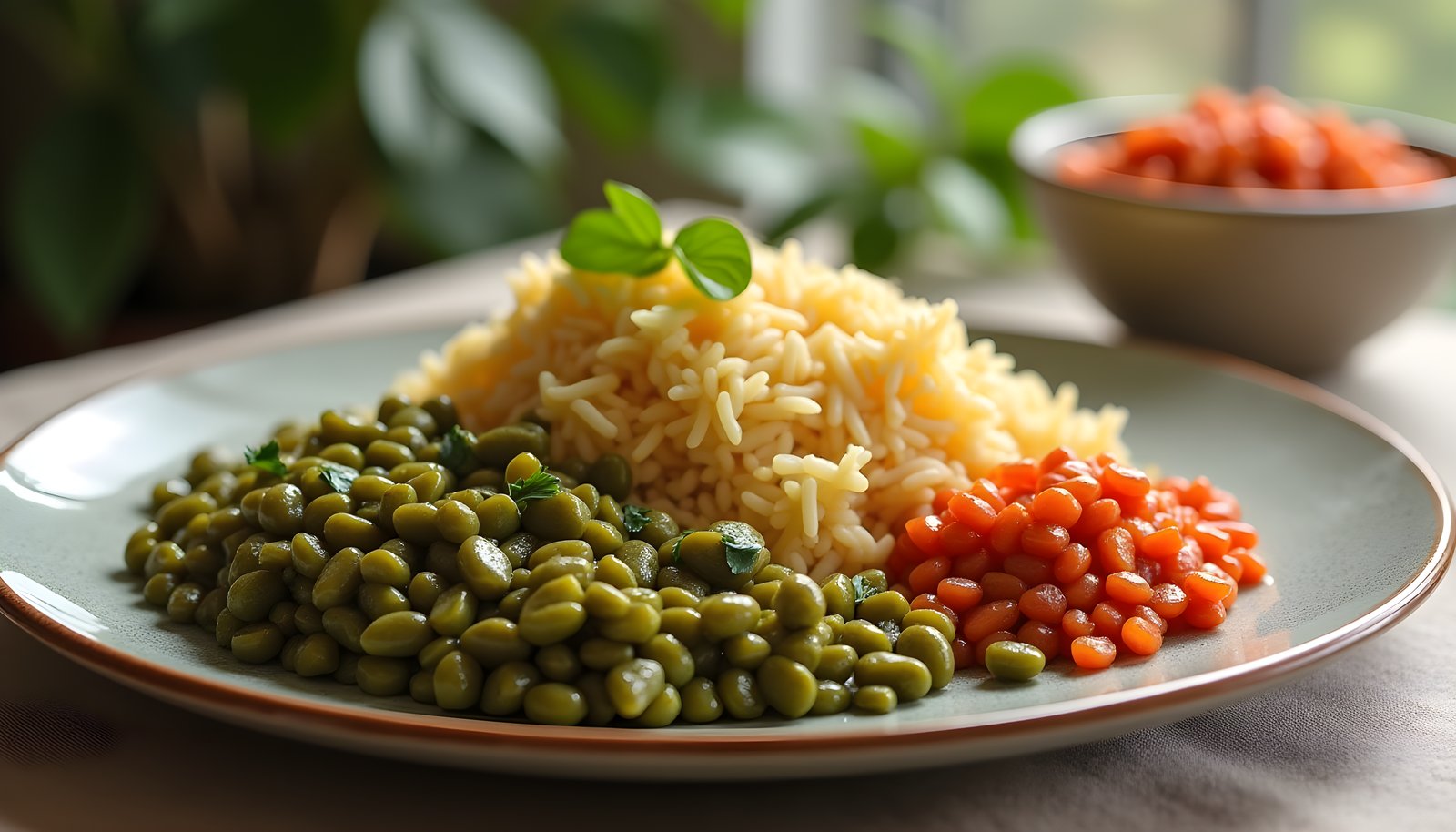
Picture a usual dinner of a cup of white rice under a stir fry. Swap half of that rice for a half cup of cooked lentils and the plate gains about 7.8 grams of fiber and roughly 9 grams of protein.
The same trick works for mashed potatoes. Fold a half cup of soft red lentils into the mash, and you keep the comfort food while borrowing some of the effect the Guelph team measured.
Want more ways to pair lentils with your favorite starches? Our recipe eBooks are packed with easy, high-fiber meals that do exactly that.
How lentils fit your week
Mayo Clinic recommends about 25 grams of fiber a day for women and 38 grams for men. One cup of lentils covers more than 60% of the women’s target and about 40% of the men’s.
The Dietary Guidelines for Americans suggest about 3 cups of legumes a week, according to Harvard’s Nutrition Source. Three cups of lentils alone would add nearly 47 grams of fiber to your week.
What lentil research still needs to show
The Guelph trial measured a single meal in healthy young adults. The obvious next questions are whether the same swap holds up in people with prediabetes or type 2 diabetes, and whether eating it daily changes longer term markers like A1C.
Research on legumes and diabetes risk is still mixed overall, Harvard’s Nutrition Source notes. Lentils’ strengths, though, are already well established: lots of fiber, plenty of protein and folate, and a gentler blood sugar curve when they share the plate with starch.
Lentils fiber: your questions
How much fiber is in a cup of cooked lentils?
About 15.6 grams, according to USDA FoodData Central. That’s more than half of the 28 gram Daily Value.
Do red lentils have less fiber than green lentils?
No. Raw red lentils have about 10.8 grams of fiber per 100 grams, nearly identical to the 10.7 grams in common brown and green lentils.
Can lentils help with blood sugar?
They may. In a 2018 trial, replacing half the rice or potato in a meal with lentils lowered the blood sugar response by about 20% and 35%.
Do lentils need to be soaked?
No. Lentils are small enough to cook without soaking. Rinse them and simmer until tender.
Are canned lentils as good as dried?
They’re a convenient choice. Drained and rinsed canned lentils also tend to be gentler on digestion, according to Monash University.
How much protein is in lentils?
About 18 grams per cooked cup, alongside 15.6 grams of fiber. That combination makes lentils one of the most filling plant foods.
How many lentils should I eat a week?
About 3 cups of legumes a week is a common guideline. Lentils can cover all or part of that and add close to 47 grams of fiber.
Sources
- Moravek D, Duncan AM, VanderSluis LB, et al. “Carbohydrate Replacement of Rice or Potato with Lentils Reduces the Postprandial Glycemic Response in Healthy Adults in an Acute, Randomized, Crossover Trial.” The Journal of Nutrition. 2018. doi.org
- U.S. Department of Agriculture, Agricultural Research Service. “FoodData Central.” 2026. fdc.nal.usda.gov
- U.S. Department of Agriculture and U.S. Department of Health and Human Services. “Food Sources of Dietary Fiber.” Dietary Guidelines for Americans, 2020 to 2025. 2020. dietaryguidelines.gov
- Harvard T.H. Chan School of Public Health. “Legumes and Pulses.” The Nutrition Source. 2024. nutritionsource.hsph.harvard.edu
- Collins L. “Including legumes on a low FODMAP diet.” Monash University FODMAP blog. 2016. monashfodmap.com
- Mayo Clinic Staff. “Dietary fiber: Essential for a healthy diet.” Mayo Clinic. 2024. mayoclinic.org