
In this article
- Edamame pasta fiber in five boxes
- What goes into edamame pasta
- Edamame pasta vs other high fiber pastas
- A high protein pasta without the isolates
- Is edamame pasta a low carb pasta?
- Edamame pasta vs a bowl of edamame
- A cold edamame noodle lunch, counted
- Cooking edamame pasta so it stays springy
- Who gets the most from a box
- Edamame pasta label checklist
- One caveat before you stock up
- Questions about edamame pasta
- Sources
A lot of people assume a pasta with this much protein must be built from powders and isolates. It isn’t: most edamame pasta is a single ingredient, and edamame pasta fiber runs about 11 to 14 grams per 2 ounce dry serving, according to USDA FoodData Central branded records.
That’s roughly four times the 3 grams in classic spaghetti, with 22 to 25 grams of protein riding along. Below are the numbers by brand, how edamame pasta stacks up against other bean pastas, and what to check on the label.
Edamame pasta fiber in five boxes
Each of these records was submitted to USDA by the manufacturer. Values are per dry serving of 56 or 57 grams, about 2 ounces:
| Pasta | Listed ingredient | Calories | Fiber | Protein | Carbs |
|---|---|---|---|---|---|
| Explore Cuisine Organic Edamame Spaghetti | Edamame bean flour (green soybeans) | 180 | 13 g | 24 g | 20 g |
| Explore Cuisine Edamame & Spirulina Spaghetti | Edamame flour, spirulina | 190 | 14 g | 24 g | 20 g |
| Seapoint Farms Organic Edamame Spaghetti | Organic soybeans | 200 | 12 g | 24 g | 21 g |
| The Only Bean Edamame Fettuccine | Organic edamame beans | 190 | 11 g | 25 g | 20 g |
| Liviva Organic Edamame Spaghetti | Organic edamame, water | 210 | 17 g | 22 g | 22 g |
| Barilla Classic Spaghetti (for comparison) | Semolina | 200 | 3 g | 8 g | 41 g |
Four of the five sit between 11 and 14 grams. Liviva’s record is the outlier at 17 grams, so plan around the typical range rather than the top number.
Measured against the FDA’s Daily Value of 28 grams, even the lowest box here covers about 39% of the day in one serving.
What goes into edamame pasta
Edamame are soybeans picked young and green, before they dry on the plant. Explore Cuisine’s record spells it out as “edamame bean flour (green soybeans),” and Seapoint Farms simply lists organic soybeans.
That’s why you’ll see edamame pasta filed under soybean pasta too. The flour is milled from the bean and shaped into noodles, with water the only other ingredient in some brands.
Because it’s soy, the FDA counts it among the nine major food allergens that must be declared on the label. Anyone avoiding soy needs to skip this aisle entirely.
Edamame pasta vs other high fiber pastas
Edamame pasta sits at the top of the high fiber pasta range. Here’s how it compares with other popular styles per dry serving, using USDA branded records:
| Pasta style | Fiber | Protein | Fiber per 100 calories |
|---|---|---|---|
| Explore Cuisine Edamame Spaghetti | 13 g | 24 g | 7.2 g |
| Explore Cuisine Black Bean Spaghetti (black soybean) | 11 g | 25 g | 6.1 g |
| Barilla Chickpea Spaghetti | 8 g | 12 g | 4.2 g |
| Barilla Red Lentil Penne | 6 g | 14 g | 3.2 g |
| Barilla Whole Grain Spaghetti | 6 g | 8 g | 3.3 g |
| Barilla Classic Spaghetti | 3 g | 8 g | 1.5 g |
Soy based pastas, green or black, lead on both fiber and protein. Chickpea and lentil pastas land in the middle, and whole grain wheat matches lentil on fiber but trails on protein.
Mayo Clinic’s fiber chart puts a cup of cooked whole wheat spaghetti at 6 grams. A single serving of edamame pasta roughly doubles that.
Trying to decide between edamame, chickpea and whole wheat boxes? Our comparison charts set the leading brands next to each other.
A high protein pasta without the isolates
At 22 to 25 grams per serving, edamame pasta is about three times as rich in protein as wheat spaghetti. For a sense of scale, USDA lists 3 ounces of roasted chicken breast at 26.4 grams.
The difference is what comes with it. Chicken brings no fiber at all, while the pasta brings 11 grams or more, plus minerals the records list per serving:
- Iron: 6.3 to 11 mg, about 35 to 61% of the Daily Value
- Potassium: 700 to 1,290 mg
- Calcium: 110 to 150 mg
- Sodium: 0 to 15 mg
Fat stays modest, 3 to 4 grams per serving, with saturated fat at 1 gram or less.
Is edamame pasta a low carb pasta?
Compared with wheat pasta, yes. Total carbohydrates run 20 to 22 grams per serving, about half of classic spaghetti’s 41.
Because so much of that is fiber, the remaining carbohydrate is small. Subtract fiber from total carbs and Explore Cuisine’s spaghetti leaves about 7 grams, Seapoint Farms about 9, and classic spaghetti about 38.
That makes edamame pasta one of the few noodles that fits a lower carb plate while still counting as a high fiber food. The FDA’s label rules treat 20% of the Daily Value per serving, about 5.6 grams, as high, and every box here more than doubles that.
Edamame pasta vs a bowl of edamame
Milling and drying concentrates the bean. USDA lists a full cup of prepared edamame, 155 grams, at 8.1 grams of fiber and 18.4 grams of protein for 188 calories.
A 2 ounce serving of Explore Cuisine’s edamame spaghetti, at 180 calories, lists 13 grams of fiber and 24 grams of protein. Per calorie, the pasta comes out ahead on both, though the cup of whole beans still brings plenty, and the Dietary Guidelines list a half cup at 4.1 grams.
Both have a place. The beans make an easy side or snack, while the pasta lets you build a full dinner around the same plant, and the two together in one bowl make the most of each.
A cold edamame noodle lunch, counted
Say you cook a serving of Explore Cuisine edamame spaghetti, chill it, and toss it with a cup of raw red bell pepper strips, a half cup of shelled edamame and a sesame ginger dressing.
Using USDA and Dietary Guidelines numbers, that’s 13 grams from the pasta, 3.1 from the pepper and 4.1 from the edamame, for about 20 grams of fiber. Protein lands above 30 grams before the dressing.
That one container covers about 70% of the fiber Daily Value. Packing it the night before makes it an easy desk lunch.
Want more noodle bowls and pasta salads along these lines? Our recipe eBooks are full of high-fiber lunches and dinners.
Cooking edamame pasta so it stays springy
Edamame pasta behaves differently from wheat pasta in the pot. It cooks quickly and goes from tender to mushy faster than semolina does.
- Use plenty of water and keep it at a steady boil
- Stir right after the noodles go in so they don’t clump
- Start tasting a few minutes before the package time
- Drain and toss with sauce straight away, since the strands stick as they cool
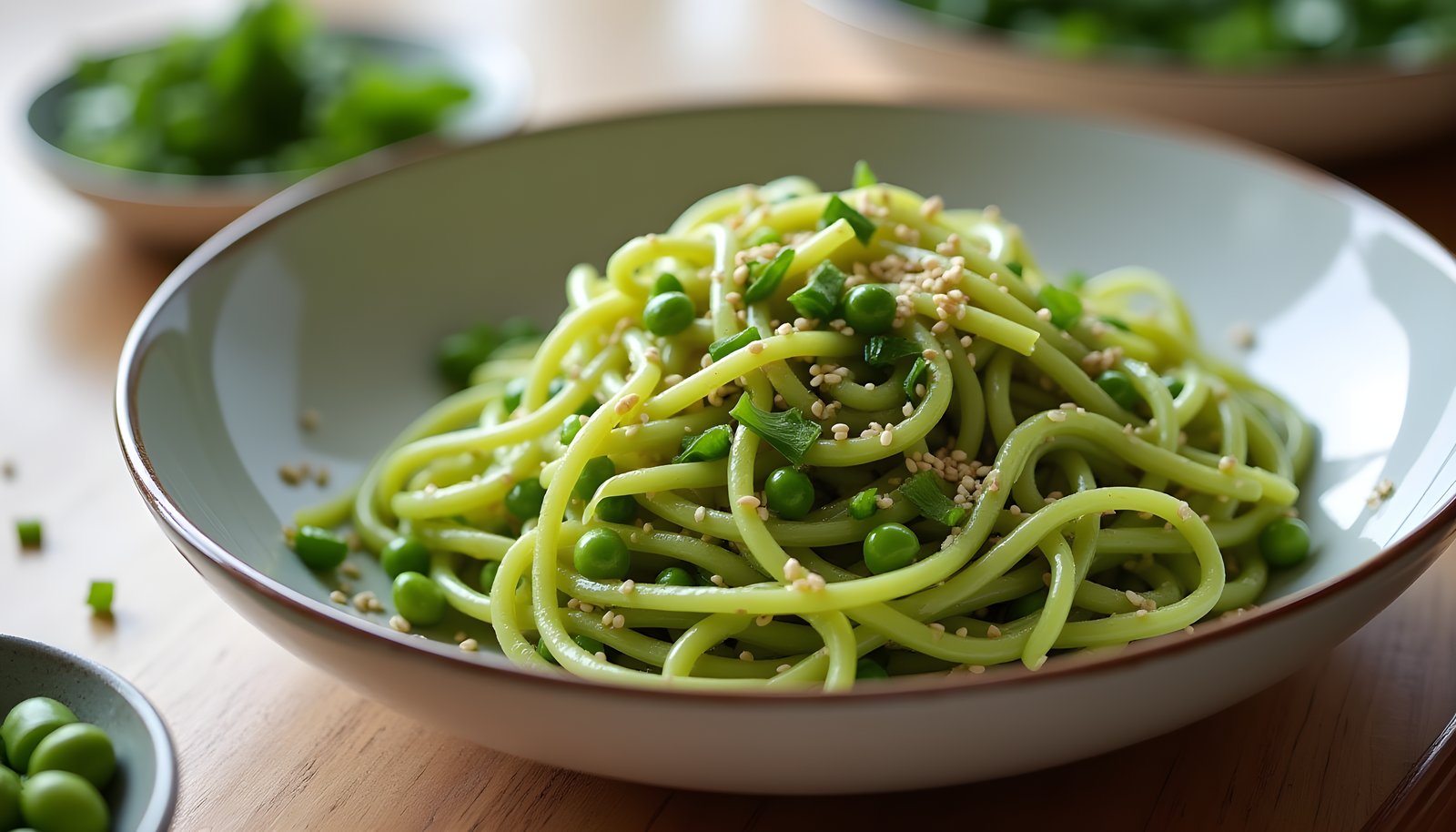
The flavor is mild and a little nutty, and the noodles keep a slight chew. Sesame and ginger, basil pesto, garlic with chili flakes, or a light tomato and vegetable sauce all suit it better than a heavy cream sauce.
If it’s your first box, try it in a dish where the sauce carries the flavor, like a stir fry or a cold noodle salad. The green color also looks right at home next to snap peas, broccoli or shredded cabbage.
Who gets the most from a box
Edamame pasta isn’t a must for everyone, but it fits a few situations especially well:
- Plant based eaters: one serving delivers about as much protein as a portion of chicken, plus fiber
- Anyone cutting back on starchy carbs: about 7 to 9 grams of carbohydrate remain after subtracting fiber
- Gluten free households: single ingredient boxes contain no wheat
- People who rarely reach 28 grams of fiber: one bowl can close almost half the gap
For families, mixing half edamame pasta with half regular spaghetti is a gentle way to raise the fiber of a familiar dinner without changing it completely.
Edamame pasta label checklist
Before you add a box to your cart, run through a few quick checks:
- Ingredient line: edamame or soybean flour first, ideally the only ingredient
- Serving size: compare at 56 or 57 grams so the numbers line up
- Fiber: look for 11 grams or more per serving
- Added ingredients: if a box lists other flours, compare its fiber line against the single ingredient boxes
- Allergen statement: soy will always be declared
Harvard’s Nutrition Source notes that legumes can cause gas and bloating in some people, and Mayo Clinic suggests raising fiber gradually over a few weeks with plenty of fluids. Going from a 3 gram pasta to a 13 gram one is a big step, so a half portion the first time is reasonable.
Wondering where 13 grams leaves you for the rest of the day? Our fiber calculator sets a personal target you can measure against.
One caveat before you stock up
The fiber numbers here are what manufacturers reported to USDA, some as far back as 2020, and recipes change. The 17 gram Liviva figure shows how much one record can stand out, so read the current box rather than trusting any single number, including ours.
The other limit is the soy itself. If soy is off your menu, chickpea pasta at 8 grams or a single ingredient black turtle bean penne such as O Organics at 10 grams are the closest high fiber swaps.
Questions about edamame pasta
How much fiber is in edamame pasta?
Most edamame pastas list 11 to 14 grams of fiber per 2 ounce dry serving. That’s about 39 to 50% of the 28 gram Daily Value.
Is edamame pasta the same as soybean pasta?
Yes, essentially. Edamame are young green soybeans, and brands list the ingredient as edamame flour, green soybeans or simply organic soybeans.
Is edamame pasta keto friendly?
It’s much lower in carbs than wheat pasta. Total carbs run 20 to 22 grams per serving, and after subtracting fiber about 7 to 9 grams remain.
Does edamame pasta have more protein than chicken?
Not quite, but close. A serving lists 22 to 25 grams, while 3 ounces of roasted chicken breast has 26.4 grams and no fiber.
Is edamame pasta gluten free?
Single ingredient edamame pastas contain no wheat. Check the box for a certified gluten free claim if you need to avoid gluten strictly.
Which pasta has the most fiber?
Soy based pastas lead. Edamame spaghetti from Explore Cuisine lists 13 grams per serving, compared with 8 for Barilla Chickpea and 3 for classic spaghetti.
What does edamame pasta taste like?
It tastes mild and slightly nutty, a bit like the beans themselves. Its green color and firmer bite pair well with sesame, garlic and pesto sauces.
Sources
- U.S. Department of Agriculture, Agricultural Research Service. “Branded Foods: Explore Cuisine Organic Edamame Pasta Spaghetti (2609055), Explore Cuisine Organic Pasta Edamame & Spirulina Spaghetti (2424270), Seapoint Farms Organic Edamame Spaghetti (2392297), The Only Bean Edamame Fettuccine (2385249), Liviva Organic Edamame Pasta Spaghetti (2607987), Explore Cuisine Organic Black Bean Pasta Spaghetti (2609053), O Organics Organic Black Bean Gluten Free Pasta Penne (1967695), Barilla Chickpea Spaghetti (2598847), Barilla Red Lentil Penne (2598839), Barilla Whole Grain Spaghetti (2549623), Barilla Classic Spaghetti; Edamame, frozen, prepared (168411); and Chicken, broilers or fryers, breast, meat only, cooked, roasted.” FoodData Central. 2020 to 2023. fdc.nal.usda.gov
- U.S. Food and Drug Administration. “Dietary Fiber.” Interactive Nutrition Facts Label. 2021. accessdata.fda.gov
- U.S. Food and Drug Administration. “Food Allergies: What You Need to Know.” 2023. fda.gov
- U.S. Department of Agriculture and U.S. Department of Health and Human Services. “Food Sources of Dietary Fiber.” Dietary Guidelines for Americans, 2020 to 2025. 2020. dietaryguidelines.gov
- Harvard T.H. Chan School of Public Health. “Legumes and Pulses.” The Nutrition Source. 2024. nutritionsource.hsph.harvard.edu
- Mayo Clinic Staff. “Chart of high-fiber foods.” Mayo Clinic. 2025. mayoclinic.org