
In this article
- Finding the plant milk with most fiber: how we ranked
- Oat, almond, soy milk fiber comparison and more
- The vegan milk ranking, one by one
- Blends, barista and kids versions
- Why even the winners stay under 2 grams
- One cup of cereal, two ways
- How to choose a plant milk for your goal
- Where plant milk fits in your fiber day
- When the ranking can flip
- Plant milk fiber: what people ask
- Sources
Two grams. That’s the ceiling for fiber in a cup of plant milk across the roughly 30 labels and USDA records we checked, and only a handful of cartons reach it.
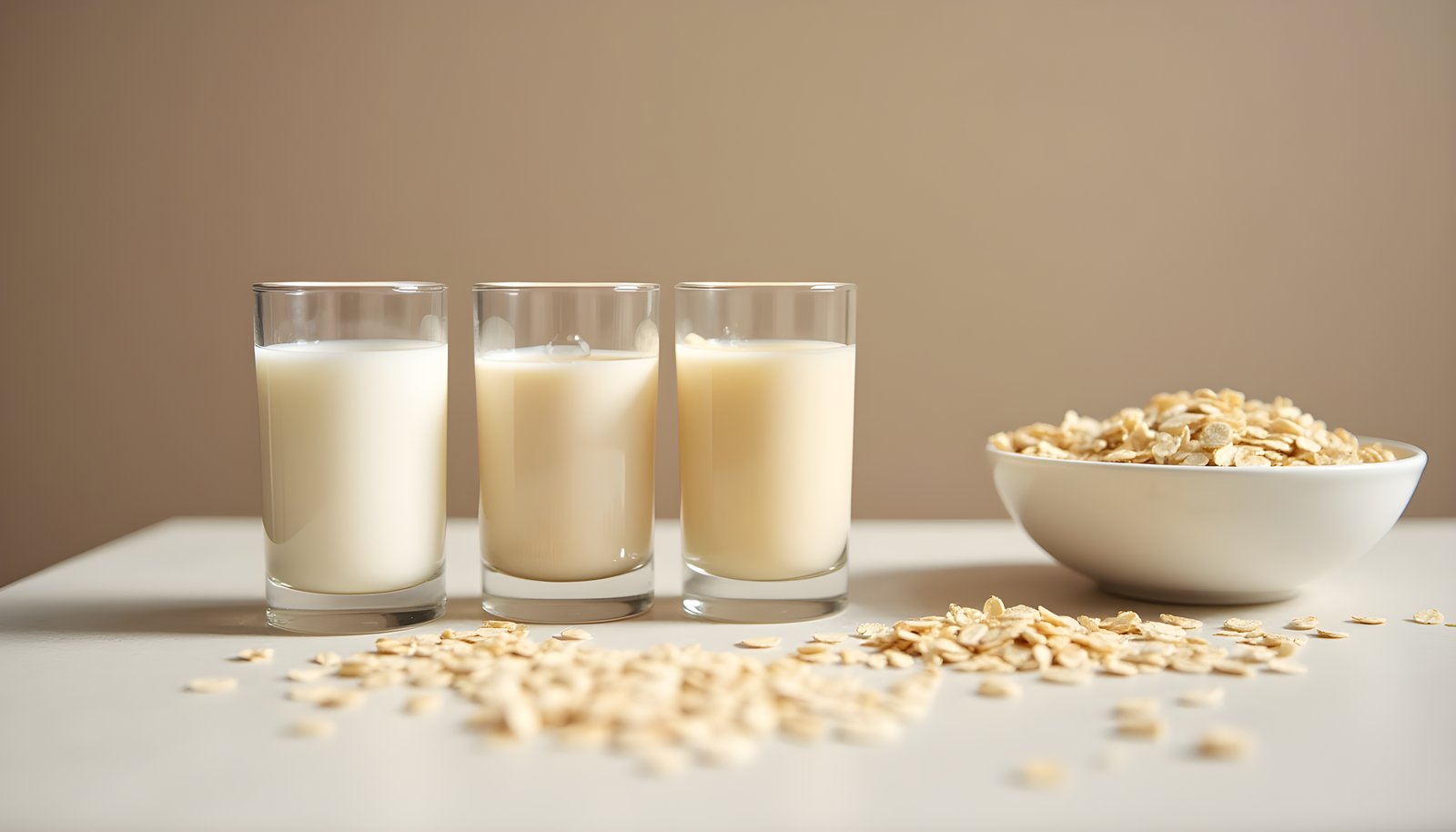
If you want the plant milk with most fiber, oat milk is the most reliable pick, with soy milk a close second. Everything else mostly lands under 1 gram per cup.
Finding the plant milk with most fiber: how we ranked
We started from USDA FoodData Central, which holds both lab analyzed reference values and the labels brands submit. Each milk type was ranked on two things: its typical fiber per cup and the best label in its category.
A milk that reaches 2 grams only through an added fiber ingredient, or one unusual brand, ranks below a milk that gets there more consistently. Protein, calcium and sugar come in as tie breakers, since they change what the carton does for you.
Oat, almond, soy milk fiber comparison and more
All values are per cup (about 240 milliliters) unless noted. Oatly’s 330 milliliter carton was scaled to a cup.
| Rank | Plant milk | Typical fiber per cup | Best label we found | Protein per cup |
|---|---|---|---|---|
| 1 | Oat milk | 1.2 g (USDA) | about 2 g (Elmhurst, Oatly) | 1.6 to 4 g |
| 2 | Soy milk | 0 to about 1 g (USDA) | 2 g (Silk Unsweetened Organic, Silk Original) | 7 to 9 g |
| 3 | Hemp milk | under 1 g | 2 g (Elmhurst Vanilla, with oats) | 2 g |
| 4 | Pea milk | under 1 g | 2 g (Ripple Kids, added corn fiber) | 8 g |
| 5 | Almond milk | 0.5 g (USDA) | 1 g (Almond Breeze Original) | 1 g |
| 6 | Rice milk | 0.7 g (USDA) | 0 g on Rice Dream labels | under 1 g |
| 7 | Coconut milk beverage | 0 g (USDA) | under 1 g (So Delicious) | 0.5 g |
| 8 | Cashew milk | 0 g | 0 g | 1 to 4 g |
| 9 | Flax milk | not declared | not declared (Good Karma Vanilla) | 0 g |
Even the winner covers only about 7% of the 28 gram Daily Value for fiber that FDA uses on Nutrition Facts labels. The gap between first and last place is about 2 grams.
The vegan milk ranking, one by one
1. Oat milk
Oat milk wins because even USDA’s reference value, 1.2 grams per cup, beats the typical value for every other type. Elmhurst Milked Oats lists 2 grams per cup, and Oatly The Original lists 3 grams per 330 milliliter carton, or about 2.2 grams per cup.
Best for: cereal, coffee and anyone who wants the most fiber from the carton itself. Drawbacks: protein is low, around 2 to 4 grams, and sweetened versions like Elmhurst add 4 grams of sugar.
2. Soy milk
Soy milk’s labels match oat milk at the top. Silk Unsweetened Organic and Silk Original both list 2 grams per cup, though USDA’s own analysis of an unsweetened soy milk found about 0.97 grams.
Best for: protein, with 7 to 9 grams per cup, close to dairy’s 8 grams. Drawbacks: fiber depends heavily on the brand, and USDA’s general soy milk entries list 0 grams.
3. Hemp milk
Most hemp milks list under 1 gram. Elmhurst Vanilla Milked Hemp reaches 2 grams per cup, and its ingredients add whole grain oats to the hemp cream.
Best for: people who want a nut free, soy free option with some unsaturated fat. Drawbacks: protein sits around 2 grams, and the 2 gram carton owes its fiber to oats.
4. Pea milk
Ripple’s pea milks list under 1 gram per cup, except Ripple Kids Original at 2 grams per 240 milliliters, which lists soluble corn fiber, an added fiber ingredient.
Best for: protein, at 8 grams per cup, with calcium as high as 440 milligrams in Ripple Unsweetened. Drawbacks: the fiber comes from an additive rather than the peas themselves.
5. Almond milk
USDA lists about 0.5 grams per cup of unsweetened almond milk, and Almond Breeze Original reaches 1 gram. Silk Unsweetened Almondmilk lists 0 grams.
Best for: a low calorie carton, at about 30 to 40 calories per cup unsweetened. Drawbacks: about 1 gram of protein, and sweetened versions carry 7 grams of sugar for that extra gram of fiber.
6. Rice milk
Rice milk is an oddity. USDA’s reference value is about 0.7 grams per cup, a little higher than almond milk’s, yet Rice Dream’s labels show 0 grams.
Best for: people avoiding soy, nuts and dairy at once. Drawbacks: USDA’s unsweetened rice milk still lists 12.7 grams of sugar per cup, and protein is under 1 gram.
7. Coconut milk beverage
USDA’s fortified coconut milk beverage lists 0 grams of fiber, and So Delicious Organic Unsweetened lists under 1 gram. Canned coconut milk is a cooking ingredient rather than a drink, so we left it out of the ranking.
Best for: a creamy, nut free carton with calcium, at 459 milligrams in USDA’s fortified version. Drawbacks: 5.1 grams of saturated fat per cup in that same entry.
8. Cashew milk
Every cashew milk we checked lists 0 grams, from Harris Teeter’s 25 calorie unsweetened carton to Elmhurst’s 130 calorie barista version.
Best for: creamy texture in coffee and sauces. Drawbacks: no fiber at all, and protein stays at 1 to 4 grams.
9. Flax milk
Ground flaxseed has 2.8 grams of fiber per tablespoon by the Dietary Guidelines, but flax milk isn’t made from whole seeds. Good Karma Vanilla lists filtered water and flax oil first, doesn’t declare fiber and lists 11 grams of sugar per serving.
Best for: people who want a seed based carton with no nuts or soy. Drawbacks: no seed fiber and 0 grams of protein.
Comparing cartons for protein and calcium as well as fiber? Our comparison charts line up the major plant milks side by side.
Blends, barista and kids versions
Blends rarely beat their best ingredient. Ripple’s Oatmilk + Protein mixes oats and pea protein yet lists under 1 gram, while the plain oat cartons above reach 2 grams.
Barista versions are built for foam, not fiber. Elmhurst’s barista cashew milk carries 10 grams of fat and 0 grams of fiber, so treat these as coffee milks rather than fiber sources.
Kids versions are worth a look only if you check why the number is higher. In Ripple Kids, the extra fiber is soluble corn fiber, alongside 5 grams of added sugar.
Why even the winners stay under 2 grams
Mayo Clinic notes that processed foods usually carry less fiber than the whole foods they come from. Plant milks are a clear case: most are a small amount of grain, nut or seed blended with a lot of water, and many are strained.
That’s why the whole foods outrank every carton. Half a cup of dry rolled oats has 4.0 grams, an ounce of almonds has 3.5 grams and half a cup of cooked edamame has 4.1 grams.
When a carton does reach 2 grams, read the ingredients. Oats in the base help, and so do added fibers like soluble corn fiber, which count on the label even though they don’t come from the plant on the front.
One cup of cereal, two ways
Picture a bowl of bran flakes with a cup of milk. Swap unsweetened almond milk for Elmhurst oat milk and the bowl gains about 1.5 grams of fiber, about as much as any milk switch can do.
Keep the almond milk and add a cup of blackberries instead. The Dietary Guidelines put those berries at 7.6 grams, five times what the milk swap gave you, on top of the 5.5 grams in three quarters of a cup of bran flakes.
Want more breakfasts that pair plant milk with high fiber foods? Our recipe eBooks are packed with quick ideas.
How to choose a plant milk for your goal
- If fiber from the carton matters most: choose an unsweetened oat milk that lists at least 1 to 2 grams per cup.
- If protein matters too: choose soy milk, which can match oat milk’s fiber with 7 grams of protein or more, or pea milk at 8 grams.
- If calories matter most: choose unsweetened almond or cashew milk and get your fiber from what you pour it over.
- If you avoid soy, nuts and dairy: oat, hemp or pea milk keep fiber higher than rice or coconut milk.
Where plant milk fits in your fiber day
Mayo Clinic suggests about 25 grams of fiber a day for women and 38 grams for men up to age 50. Two cups of the top oat milk bring about 4 grams, around a sixth of the lower target.
Mayo Clinic also recommends adding fiber gradually and drinking plenty of fluids. Moving from a low fiber milk to a high fiber breakfast in one jump can bring gas or bloating, so build up over a few weeks.
Want a fiber target matched to your age and sex? Our fiber calculator works it out in seconds.
When the ranking can flip
A single ingredient can move a carton up or down this list. Ripple Kids jumps to 2 grams with soluble corn fiber, Elmhurst’s hemp milk does it with oats, and some soy labels list 2 grams while USDA’s soy entries list none.
Serving size is the other trap. Oatly’s 3 grams looks like a winner until you notice it’s per 330 milliliters, so always scale to the amount you actually pour before comparing.
Plant milk fiber: what people ask
Which plant milk has the most fiber?
Oat milk, with the best cartons listing about 2 grams per cup. Some soy milks match it, but soy labels vary more by brand.
Does oat milk have more fiber than almond milk?
Yes. USDA lists about 1.2 grams per cup for oat milk and about 0.5 grams for unsweetened almond milk.
Is soy milk high in fiber?
Not high, but some labels reach 2 grams per cup. Its bigger strength is protein, at 7 to 9 grams per cup.
Which plant milk has the least fiber?
Cashew and flax milks. Every cashew milk we checked lists 0 grams, and the flax milk we found is made from flax oil and doesn’t declare fiber.
Can plant milk cover my daily fiber?
Not on its own. The best carton covers about 7% of the 28 gram Daily Value per cup, so most of your fiber still has to come from food.
Does sweetened plant milk have more fiber?
Sometimes slightly, but not because of the sugar. Almond Breeze Original lists 1 gram with 7 grams of sugar, while Silk Original soy matches its unsweetened organic sibling at 2 grams.
What is the best way to get fiber with plant milk?
Pour it over high fiber foods. A cup of blackberries has 7.6 grams, far more than the difference between any two plant milks.
Sources
- USDA Agricultural Research Service. FoodData Central reference entries for oat milk (2705412), unsweetened almond milk (174832), soy milk (2705405, 175223), rice milk (171942), fortified coconut milk beverage (2705413), rolled oats, almonds and edamame, plus branded records for Elmhurst Milked Oats, Oatly The Original, Silk Unsweetened Organic and Original soymilk, Elmhurst Vanilla Milked Hemp, Ripple Unsweetened Original and Kids Original, Almond Breeze Original, Silk Unsweetened Almondmilk, Rice Dream, So Delicious Organic Unsweetened Coconutmilk, Harris Teeter and Elmhurst cashew milks and Good Karma Vanilla Flax Milk (2026). fdc.nal.usda.gov
- U.S. Food and Drug Administration. “Daily Value on the Nutrition and Supplement Facts Labels.” 2024. fda.gov
- U.S. Department of Agriculture and U.S. Department of Health and Human Services. “Food Sources of Dietary Fiber.” Dietary Guidelines for Americans, 2020 to 2025. dietaryguidelines.gov
- Mayo Clinic Staff. “Dietary fiber: Essential for a healthy diet.” Mayo Clinic. 2025. mayoclinic.org