

In this article
- Brussels sprouts fiber by form and serving
- Brussels sprouts vs other high fiber vegetables
- Brussels sprouts nutrition: the vitamin K and C story
- Brussels sprouts on a low carb plate
- What cruciferous veggies do for digestion
- One side dish, counted
- Cooking Brussels sprouts so you actually want seconds
- Fresh or frozen: a quick decision rule
- The one catch worth knowing
- What people also ask about Brussels sprouts
- Sources
6.4 grams. That’s how much fiber the Dietary Guidelines list for one cooked cup of Brussels sprouts, nearly a quarter of the 28 gram Daily Value in a side dish that runs just 65 calories.
So yes, Brussels sprouts are high in fiber. Among everyday vegetables, only a handful beat them by the cup, and none of those do it with fewer calories. Brussels sprouts fiber is the reason these little cabbages deserve more than a holiday appearance.
Brussels sprouts fiber by form and serving
USDA FoodData Central lists raw Brussels sprouts at 3.8 grams of fiber per 100 grams. The amount you get per serving depends on whether they’re raw, boiled fresh or cooked from frozen, mostly because of how tightly they pack into a measuring cup.
| Brussels sprouts form | Serving | Fiber | % DV (28 g) | Calories |
|---|---|---|---|---|
| Raw, whole or shaved | 1 cup (88 g) | 3.3 g | 12% | 38 |
| Boiled fresh | 1/2 cup (78 g) | 2.0 g | 7% | 28 |
| Boiled fresh | 1 cup (156 g) | 4.1 g | 15% | 56 |
| Cooked from frozen | 1 cup | 6.4 g | 23% | 65 |
| Raw | 100 g | 3.8 g | 14% | 43 |
The frozen figure from the Dietary Guidelines is the highest of the group, so a bag of frozen sprouts is no compromise on fiber. It’s actually the most generous cup in the table.
A raw cup of shaved sprouts in a salad gives you less fiber than a cooked cup simply because it’s mostly air. Weigh the same 100 grams and raw comes out ahead, at 3.8 grams versus 2.6 grams for boiled fresh sprouts in USDA’s records.
That gap matters if you count portions by the plate rather than the cup. A generous handful of roasted sprouts can easily reach the 6 gram range.
Brussels sprouts vs other high fiber vegetables
The Dietary Guidelines’ Food Sources of Dietary Fiber list makes it easy to see where Brussels sprouts land among high fiber vegetables.
| Cooked vegetable (1 cup) | Fiber | Calories |
|---|---|---|
| Artichoke | 9.6 g | 89 |
| Green peas | 8.8 g | 134 |
| Brussels sprouts | 6.4 g | 65 |
| Broccoli | 5.2 g | 54 |
| Cauliflower | 4.9 g | 34 |
| Collard greens | 4.8 g | 63 |
| Kale | 4.7 g | 43 |
| Cabbage | 2.8 g | 34 |
Brussels sprouts sit third, behind artichokes and peas. They carry about half the calories of green peas, and they top every other cruciferous vegetable on the list, including broccoli by more than a gram.
The comparison with regular cabbage is the most surprising one. Brussels sprouts look like tiny cabbages, yet a cooked cup carries more than twice the fiber of a cup of cooked cabbage, at 6.4 grams versus 2.8 grams. The cup of sprouts does cost about 30 more calories, but the fiber gain far outpaces it.
Kale, often treated as the high fiber hero of the cruciferous family, also trails here. A cooked cup of kale lists 4.7 grams, so a cup of sprouts gives you roughly a third more.
Per 100 calories, cooked Brussels sprouts deliver close to 10 grams of fiber. That puts them in rare company for a vegetable this easy to find.
Mayo Clinic suggests about 21 to 25 grams of fiber a day for women and 30 to 38 grams for men. A single cooked cup covers roughly 26 to 30% of a woman’s target and 17 to 21% of a man’s.
Not sure where your own daily number falls in those ranges? Our fiber calculator gives you a personal target based on your age and sex.
Brussels sprouts nutrition: the vitamin K and C story
Fiber is only one reason to eat them. Brussels sprouts nutrition stands out most for two vitamins, and the amounts are bigger than most people realize.
Based on USDA’s record for boiled Brussels sprouts, one cooked cup (156 g) provides about:
- Vitamin K: 218 mcg, about 182% of the Daily Value
- Vitamin C: 97 mg, about 108% DV
- Folate: 94 mcg, about 23% DV
- Manganese: 0.36 mg, about 16% DV
- Potassium: 495 mg, about 11% DV
- Protein: about 4 grams
Vitamin K is a nutrient the NIH Office of Dietary Supplements describes as important for blood clotting and healthy bones. One cup of cooked sprouts covers nearly two days of it.
Raw sprouts hold a little more vitamin C per gram: USDA lists 85 mg per 100 grams raw versus 62 mg boiled. Even so, a cooked cup still clears a full day’s vitamin C.
The sugar is low too, at under 2 grams per 100 grams cooked.
Brussels sprouts on a low carb plate
If you watch carbs, Brussels sprouts fit better than their fiber count might suggest. A raw cup has about 7.9 grams of total carbohydrate, and 3.3 grams of it is fiber.
Subtract the fiber and you’re left with roughly 4.6 grams of net carbs, the part your body digests into sugar. Cooked sprouts land in a similar range per gram, with USDA listing 7.1 grams of carbs and 2.6 grams of fiber per 100 grams boiled.
Protein is another quiet bonus. A cooked cup brings about 4 grams, roughly double what you’d get from a raw cup of cauliflower, which makes sprouts a sturdier side for a lighter meal.
Pair them with a protein and a fat, like salmon roasted on the same tray, and you have a low carb dinner that still clears a fifth of your daily fiber.
What cruciferous veggies do for digestion
Brussels sprouts are cruciferous veggies, the same plant family as broccoli, kale, cabbage and cauliflower. Like the rest of the family, they bring a solid dose of fiber in a low calorie package.
Mayo Clinic explains that fiber increases stool weight and size, softens it and makes it easier to pass, which helps prevent constipation. It also helps you feel full, so meals with a big side of vegetables tend to keep you satisfied longer.
The same Mayo Clinic page links higher fiber diets with lower cholesterol, steadier blood sugar and a lower risk of heart disease. Brussels sprouts alone won’t do that, but they make reaching a fiber rich diet much easier.
Plenty of people find that a big bowl of sprouts leaves them gassy the first few times. Mayo Clinic’s advice for any fiber increase applies here: build up over a few weeks and drink enough water.
If your stomach tends to protest new foods, our gut health guides lay out a gentle, step by step plan.
One side dish, counted
Say you roast a bag of frozen Brussels sprouts for a weeknight dinner and serve yourself a cup alongside chicken and brown rice. The sprouts bring about 6.4 grams of fiber, and a cup of brown rice adds roughly 3.5 grams more.
That one plate lands near 10 grams of fiber, close to half of a 21 gram target, before you count breakfast, lunch or snacks. The sprouts did most of the heavy lifting.
Shave the leftovers raw into a lunch salad the next day and you add another 3 grams or so. Two meals, one vegetable, more than a third of a woman’s daily goal.
Cooking Brussels sprouts so you actually want seconds
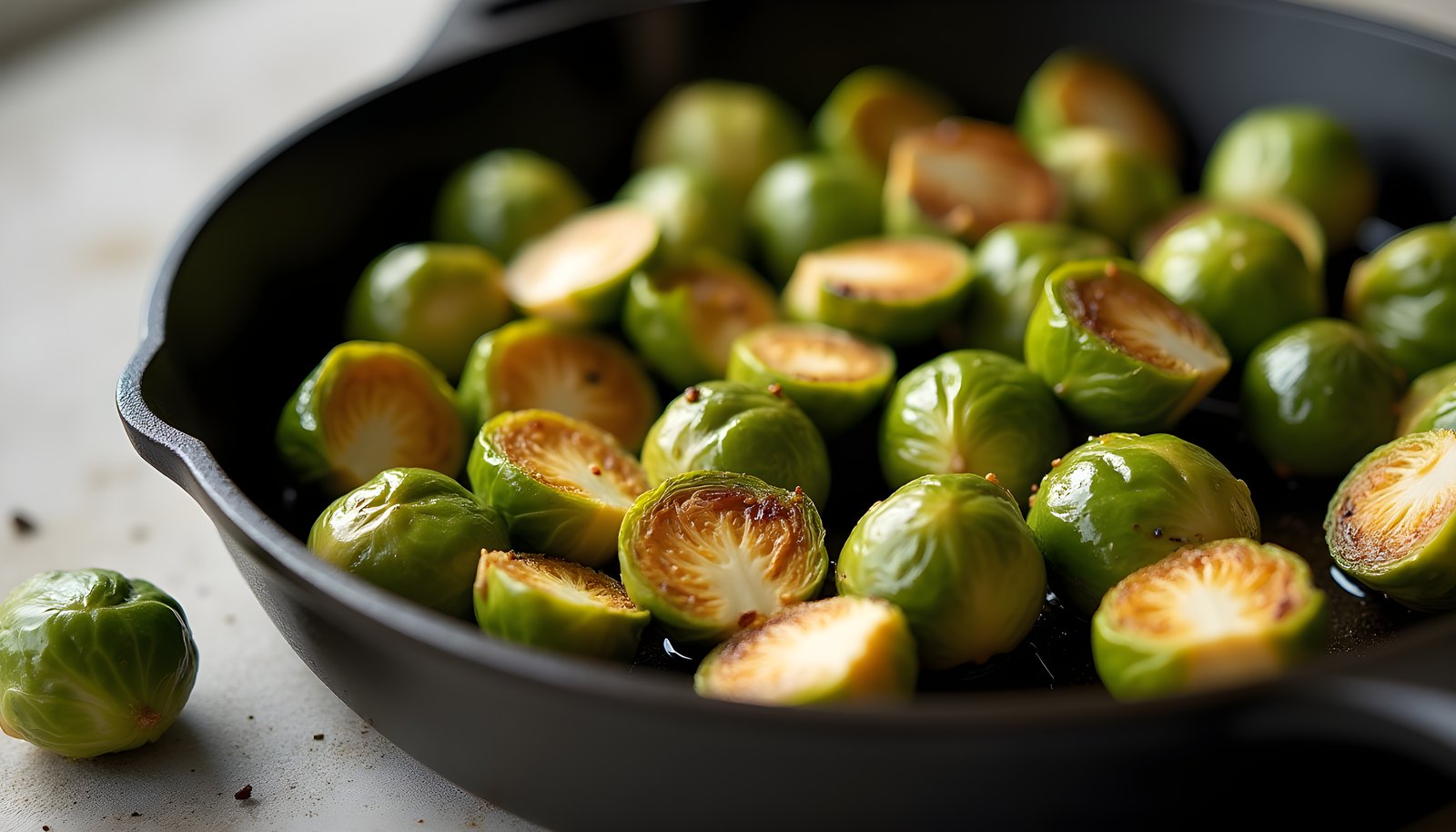
If boiled sprouts turned you off years ago, a different method may change your mind. High heat and a little fat bring out a nutty, sweet side that boiling never does.
- Roast: halve them, toss with a little oil and salt, and roast cut side down at high heat until the edges brown
- Shave: slice thinly and use raw in salads and slaws with a sharp dressing
- Sauté: cook halved sprouts in a pan until crisp, then add garlic or a squeeze of lemon
- Steam: cook just until a knife slides in, which keeps them bright green
- Mix in: fold roasted sprouts into grain bowls, pasta or a sheet pan dinner
Trim the dry stem end and peel off any loose or yellow outer leaves. The leaves that fall off during prep are worth keeping; they crisp up beautifully in the oven.
Hungry for more ways to work vegetables like these into your week? Our recipe eBooks are packed with easy, high fiber meals.
Fresh or frozen: a quick decision rule
Both are solid choices. Pick based on how you’ll cook them:
- If you want crisp, browned edges or raw shaved salads, buy fresh sprouts, ideally small, tight heads
- If you want the most fiber per cup with no prep, buy frozen, which the Dietary Guidelines list at 6.4 grams per cooked cup
- If you’re short on time on a weeknight, roast frozen sprouts straight from the bag at high heat
- If you’re comparing labels on seasoned frozen sprouts, check the sodium line, since sauces can add a lot
The one catch worth knowing
The biggest edge case with Brussels sprouts isn’t the fiber. It’s what ends up on them. Bacon, cheese sauces and honey glazes can multiply the calories in a 65 calorie cup, while the fiber stays exactly the same.
Keep the toppings light, a little oil, salt and maybe a splash of vinegar, and Brussels sprouts stay one of the best fiber per calorie deals in the produce aisle.
What people also ask about Brussels sprouts
How much fiber is in a cup of Brussels sprouts?
About 6.4 grams in a cup cooked from frozen, according to the Dietary Guidelines. A raw cup has about 3.3 grams, and a cup of boiled fresh sprouts about 4.1 grams.
Are Brussels sprouts higher in fiber than broccoli?
Yes, by about a gram per cup. The Dietary Guidelines list cooked Brussels sprouts at 6.4 grams and cooked broccoli at 5.2 grams.
Do roasted Brussels sprouts lose fiber?
No. Cooking doesn’t remove fiber, so roasted sprouts keep it. Some vitamin C drops with heat, but a cooked cup still provides more than a full day’s worth.
Are Brussels sprouts good for weight loss?
They can help. A cooked cup has about 65 calories and 6.4 grams of fiber, and Mayo Clinic notes that high fiber foods tend to keep you full longer.
Why do Brussels sprouts cause gas?
Adding a lot of fiber quickly can cause gas, bloating and cramping, according to Mayo Clinic. Building up over a few weeks and drinking enough water usually helps.
Is it okay to eat Brussels sprouts raw?
Yes. Shaved raw sprouts work well in salads, and a raw cup gives you about 3.3 grams of fiber and 75 mg of vitamin C.
Are Brussels sprouts low carb?
Fairly, yes. A raw cup has about 7.9 grams of carbohydrate, and 3.3 grams of that is fiber, leaving roughly 4.6 grams of net carbs.
Sources
- USDA Agricultural Research Service. FoodData Central: SR Legacy Brussels sprouts, raw (170383); Brussels sprouts, cooked, boiled, drained, without salt (169971); frozen, cooked, boiled, drained. 2019. fdc.nal.usda.gov
- U.S. Department of Agriculture and U.S. Department of Health and Human Services. “Food Sources of Dietary Fiber.” Dietary Guidelines for Americans, 2020 to 2025. dietaryguidelines.gov
- U.S. Food and Drug Administration. “Daily Value on the Nutrition and Supplement Facts Labels.” 2024. fda.gov
- Mayo Clinic Staff. “Dietary fiber: Essential for a healthy diet.” Mayo Clinic. 2025. mayoclinic.org
- National Institutes of Health Office of Dietary Supplements. “Vitamin K: Fact Sheet for Consumers.” 2021. ods.od.nih.gov

