
In this article
- Chocolate milk fiber, bottle by bottle
- Where the fiber in cocoa milk comes from
- Flavored milk nutrition: the sugar side
- What chocolate milk still brings to the table
- Whole or reduced fat chocolate milk?
- Chocolate oat milk: the most fiber, the least protein
- Homemade cocoa milk with more fiber and less sugar
- Cocoa’s other perks: minerals alongside fiber
- Cocoa beyond the glass
- Chocolate milk for kids: fiber in the bigger picture
- A post workout glass, counted
- A quick label checklist for chocolate milk
- Where chocolate milk fits in your fiber day
- One thing to try today
- Chocolate milk fiber: what people ask
- Sources
Most people assume chocolate milk is plain milk with sugar stirred in, and therefore has no fiber. USDA’s data says otherwise: a cup of reduced fat chocolate milk lists 1.75 grams of fiber, while the same amount of plain 2% milk lists 0.
That small amount of chocolate milk fiber comes entirely from cocoa, which is surprisingly rich in fiber on its own. The catch is everything else that comes along with it in a typical bottle.
Chocolate milk fiber, bottle by bottle
Here’s how chocolate milks compare per cup, using USDA FoodData Central records and branded labels:
| Drink | Fiber | Calories | Total sugars | Protein | Calcium |
|---|---|---|---|---|---|
| Plain 2% milk (USDA) | 0 g | 120 | 12 g | 8 g | 290 mg |
| Reduced fat chocolate milk (USDA) | 1.75 g | 190 | 24 g | 7.5 g | 273 mg |
| Whole chocolate milk (USDA) | 2 g | 208 | 24 g | 8 g | 280 mg |
| Fairlife Chocolate 2% Ultra-filtered | Under 1 g | 140 | 12 g | 13 g | 400 mg |
| Oatly Chocolate Oatmilk | 3 g | 150 | 16 g | 3 g | 350 mg |
The two traditional chocolate milks land around 2 grams per cup. Fairlife lists under a gram, and Oatly’s chocolate oat milk leads at 3 grams, helped by the oats in its base.
Where the fiber in cocoa milk comes from
Mayo Clinic describes fiber as the parts of plant foods your body can’t digest. Milk has none, but cocoa comes from the cacao bean, a plant.
Unsweetened cocoa powder is remarkably high in fiber. USDA lists it at 37 grams of fiber per 100 grams, which works out to about 2 grams in a single tablespoon.
Bottled chocolate milks only use a small amount of cocoa. Fairlife lists less than 1% alkalized cocoa, which helps explain why its fiber stays under a gram.
Flavored milk nutrition: the sugar side
Sugar is the biggest difference between plain and chocolate milk. A cup of reduced fat chocolate milk has about 24 grams of total sugar, twice the 12 grams in plain 2% milk.
Since plain milk’s sugar is the natural lactose, that extra 12 grams or so comes from added sweeteners. Using the FDA’s 50 gram Daily Value for added sugar, that’s roughly a quarter of the day’s limit in one glass.
Spread over a week, a daily glass adds up to about 84 grams of added sugar. A smaller glass, or mixing chocolate milk half and half with plain milk, cuts that quickly.
Fairlife takes a different route. Its chocolate milk lists 12 grams of total sugar and sweetens with a mix of sugar, acesulfame potassium and sucralose, which keeps the sugar level close to plain milk.
What chocolate milk still brings to the table
Chocolate milk keeps most of what makes milk useful. A cup of reduced fat chocolate milk gives you about 7.5 grams of protein, 273 milligrams of calcium and 3 micrograms of vitamin D.
Against the FDA’s Daily Values, that’s about 21% of calcium and 15% of vitamin D. It also brings 423 milligrams of potassium, about 9% of the Daily Value.
Ultra-filtered milk raises the protein further. Fairlife’s chocolate 2% lists 13 grams of protein and 400 milligrams of calcium per cup, with 140 calories.
Choosing between dairy, ultra-filtered and plant based chocolate milks? Our comparison charts set the main options side by side.
Whole or reduced fat chocolate milk?
The fiber difference between whole and reduced fat chocolate milk is tiny, 2 grams versus 1.75 per cup. The real gap is in fat.
Whole chocolate milk lists about 5 grams of saturated fat per cup, a quarter of the FDA’s 20 gram Daily Value, compared with about 3 grams in reduced fat. Calories run 208 versus 190.
Protein, calcium and sugar are nearly identical between the two. So pick the fat level you prefer, knowing it won’t change your fiber.
Chocolate oat milk: the most fiber, the least protein
Oatly’s chocolate oat milk is made from water and oats with cane sugar and cocoa, and it lists 3 grams of fiber per cup. That’s about 11% of the 28 gram Daily Value, the highest in our comparison.
It also lists 16 grams of added sugar and only 3 grams of protein. If you’re choosing it for fiber, you’re trading away most of the protein that dairy chocolate milk provides.
Its 350 milligrams of calcium, about 27% of the Daily Value, comes from added calcium carbonate rather than milk. That puts it close to dairy on calcium, even though the protein falls short.
Homemade cocoa milk with more fiber and less sugar
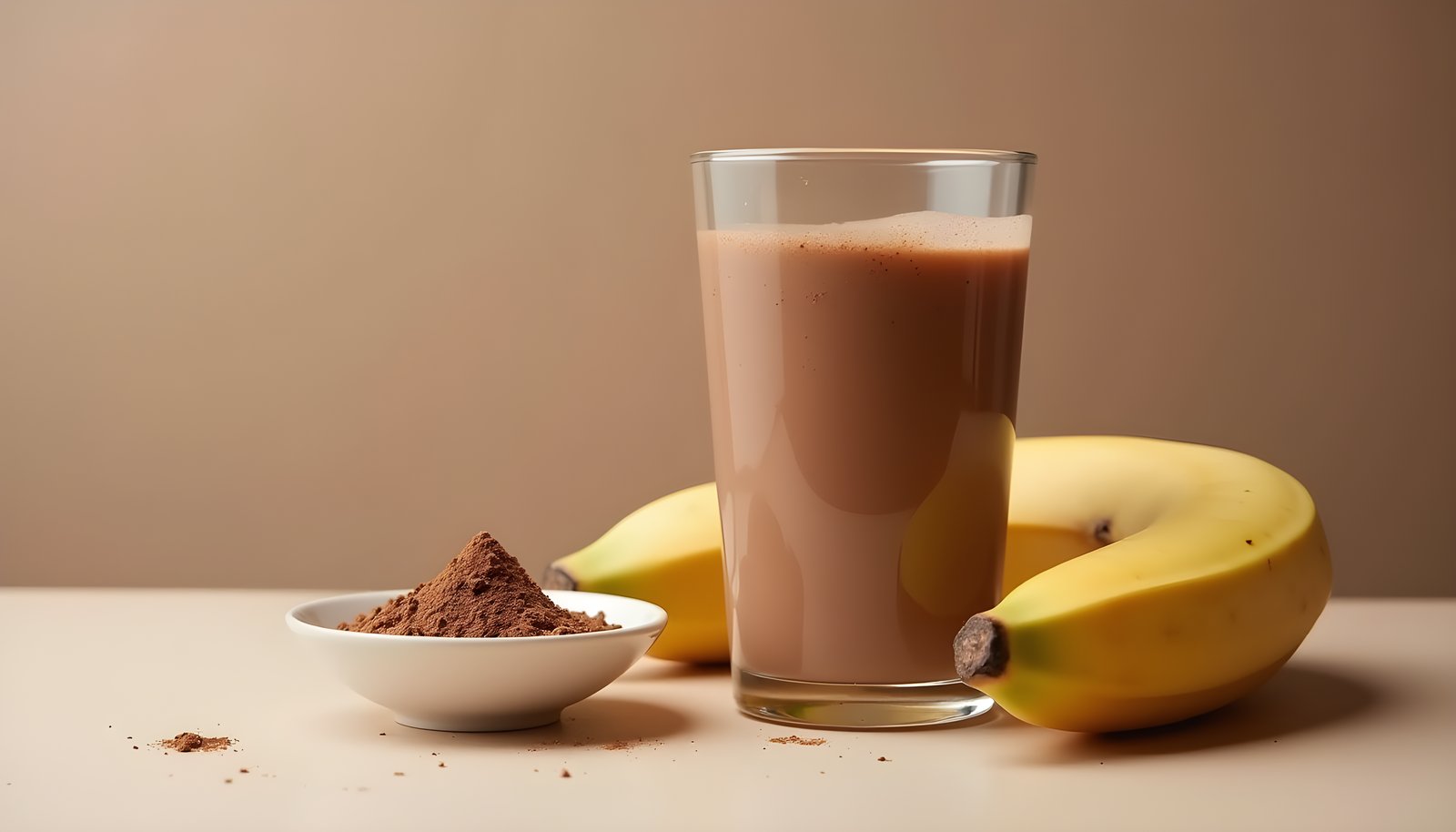
Making your own lets you control both numbers. Whisk 1 tablespoon of unsweetened cocoa powder into a cup of warm or cold milk, then sweeten it lightly to taste.
The cocoa adds about 2 grams of fiber, matching or beating bottled versions. Because you choose the sweetener, you can keep the added sugar well under the roughly 12 grams in a typical bottle.
For a thicker, higher fiber drink, blend in a medium banana. Using Dietary Guidelines numbers, that adds 3.2 grams, bringing the glass to over 5 grams of fiber.
Cocoa’s other perks: minerals alongside fiber
A tablespoon of unsweetened cocoa does more than add fiber. USDA lists about 27 milligrams of magnesium and 0.75 milligrams of iron in that spoonful, roughly 6% and 4% of the FDA’s Daily Values.
For comparison on fiber, a tablespoon of cocoa’s 2 grams sits between a tablespoon of flax seeds at 2.8 grams and chia seeds at 4.1. For about 12 calories, that’s a lot of fiber in a small scoop.
Cocoa beyond the glass
Once you know cocoa carries fiber, it’s easy to use in other places. Stir a tablespoon into half a cup of oat bran cereal for 4.9 grams of fiber, then top it with a cup of raspberries for 8 grams more.
Chocolate chia pudding is another easy win. Two tablespoons of chia seeds and a tablespoon of cocoa soaked overnight in a cup of milk give you about 10.2 grams of fiber with a chocolate milk flavor.
A spoonful of cocoa also works in a banana smoothie or over a bowl of plain yogurt with berries. In each case, the cocoa adds fiber and flavor without needing the sugar of a bottled drink.
Chocolate milk for kids: fiber in the bigger picture
Chocolate milk often shows up at lunch and after school. It brings calcium and protein, but at 2 grams or less, it isn’t a meaningful source of fiber for kids drinks.
Pairing makes the difference. A glass of chocolate milk with a medium apple gives a child 4.8 extra grams of fiber, and an ounce of whole wheat crackers adds another 2.9.
Want more snack and breakfast ideas that kids actually enjoy? Our recipe eBooks are full of easy, high fiber options.
A post workout glass, counted
Plenty of people reach for chocolate milk after exercise, since one glass carries both carbohydrate and protein. Picture a cup of reduced fat chocolate milk after a run: 190 calories, 7.5 grams of protein and 1.75 grams of fiber.
Add a banana and a tablespoon of ground flaxseed and blend it into a shake. Using Dietary Guidelines numbers, that adds 3.2 and 2.8 grams, so the glass now carries about 7.75 grams of fiber.
That’s more than a quarter of the Daily Value in one drink, with the same chocolate flavor you started with.
A quick label checklist for chocolate milk
When you compare bottles, these four lines tell you the most:
- Dietary fiber: 2 grams or more usually means more cocoa or an oat base
- Added sugars: look for the lowest number that still tastes good to you
- Protein: dairy versions run 7.5 to 13 grams per cup, oat milk about 3
- Calcium and vitamin D: both should be listed with a percent Daily Value
If two bottles look similar, the added sugar line is usually the best tiebreaker. Fiber differences between chocolate milks are small, while sugar differences can be large.
Where chocolate milk fits in your fiber day
Mayo Clinic suggests about 25 grams of fiber a day for women and 38 grams for men up to age 50. One glass of chocolate milk covers about 7% of the lower target, a helpful bonus but not a foundation.
Mayo Clinic also suggests raising fiber gradually and drinking plenty of fluids as you do. A homemade cocoa milk with a banana is an easy step up, since it adds fiber and fluid in the same glass.
Not sure what your own fiber number should be? Our fiber calculator gives you a personal target in seconds.
One thing to try today
Next time you want chocolate milk, make it yourself with a tablespoon of unsweetened cocoa and a light hand on the sweetener. You’ll get about 2 grams of fiber, all the calcium and protein of the milk you use, and far less added sugar than most bottles. Keep a tin of cocoa beside the milk so the homemade glass is as easy as the bottle.
Chocolate milk fiber: what people ask
Does chocolate milk have fiber?
Yes, a little. A cup of reduced fat chocolate milk has about 1.75 grams of fiber, and whole chocolate milk about 2 grams, all from the cocoa.
Why does chocolate milk have fiber but plain milk doesn’t?
Because cocoa comes from a plant. Unsweetened cocoa powder has about 37 grams of fiber per 100 grams, while milk itself has none.
Which chocolate milk has the most fiber?
Oat based versions lead. Oatly’s chocolate oat milk lists 3 grams of fiber per cup, though it has only 3 grams of protein.
How much sugar is in chocolate milk?
About 24 grams per cup for reduced fat chocolate milk, twice the 12 grams in plain 2% milk.
Is chocolate milk good after a workout?
It brings both carbohydrate and protein. A cup of reduced fat chocolate milk has about 30 grams of carbohydrate, 7.5 grams of protein and 190 calories.
Can I make chocolate milk with more fiber?
Yes. Whisk a tablespoon of unsweetened cocoa into milk for about 2 grams of fiber, or blend in a banana for 3.2 grams more.
Is chocolate milk a good source of calcium?
Yes. A cup of reduced fat chocolate milk has about 273 milligrams of calcium, around 21% of the Daily Value.
Sources
- USDA Agricultural Research Service. FoodData Central, SR Legacy entries for reduced fat chocolate milk (170880), whole chocolate milk (170879), reduced fat 2% milk (171267) and unsweetened cocoa powder (169593), plus branded records for Fairlife Chocolate 2% Reduced Fat Ultra-filtered Milk (2023) and Oatly Chocolate Oatmilk (2020). fdc.nal.usda.gov
- U.S. Food and Drug Administration. “Daily Value on the Nutrition and Supplement Facts Labels.” 2024. fda.gov
- U.S. Department of Agriculture and U.S. Department of Health and Human Services. “Food Sources of Dietary Fiber.” Dietary Guidelines for Americans, 2020 to 2025. dietaryguidelines.gov
- Mayo Clinic Staff. “Dietary fiber: Essential for a healthy diet.” Mayo Clinic. 2025. mayoclinic.org