

In this article
- Bean chips fiber per ounce
- Why bean chips carry more fiber
- Black bean chips fiber vs white bean chips
- Why most bean chips also contain rice
- Healthy snack chips fiber per calorie
- Bean chips vs other legume snacks
- A game night bowl, counted
- Calories and fat: where bean chips match regular chips
- A quick bean chip label checklist
- Ways to enjoy bean chips
- Who gets the most from switching
- Bean chips and your gut
- The caveat: a better chip is still a chip
- Bean chip questions
- Sources
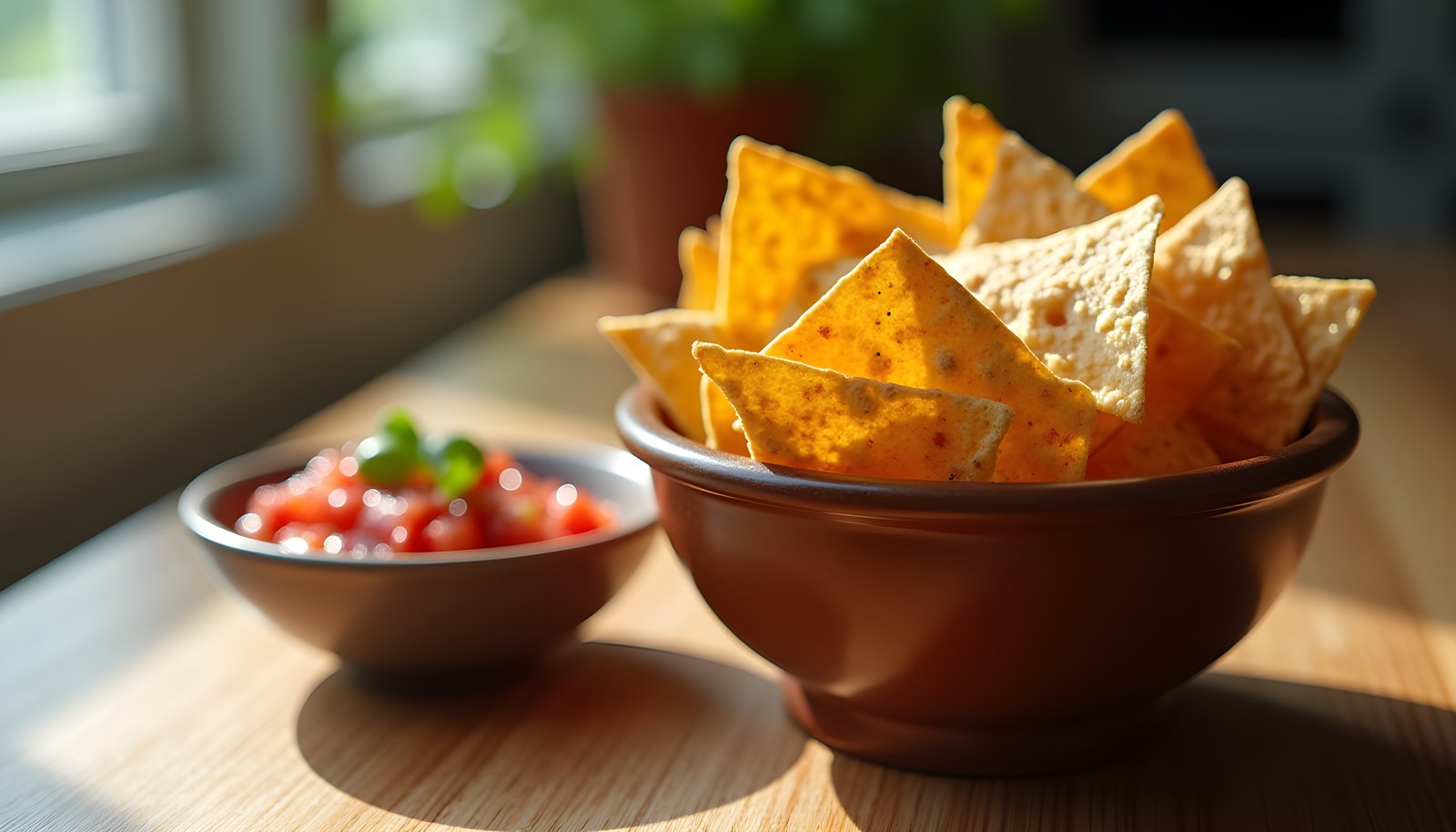
Picture a bowl of chips on the coffee table during a game. If it’s a bag of Beanfields black bean chips, every ounce brings about 6 grams of fiber; if it’s plain tortilla chips, the same handful brings about 1.5.
Bean chips fiber comes from beans being the first ingredient, usually followed by rice and oil. That swap triples or quadruples the fiber, though the chips are still fried snacks with calories to match.
Bean chips fiber per ounce
USDA FoodData Central lists both brand records and a generic bean chip record. Here’s an ounce of each, next to regular chips:
| Chip (1 oz, 28 g) | Calories | Fiber | Protein | Fat | Sodium |
|---|---|---|---|---|---|
| Beanfields Black Bean & Rice | 140 | 6 g | 5 g | 6 g | 95 mg |
| Beanitos Black Bean Original | 140 | 5 g | 5 g | 7 g | 85 mg |
| Beanitos White Bean Nacho Cheese | 140 | 5 g | 5 g | 7 g | 130 mg |
| USDA generic bean chips | 125 | 2.7 g | 4.1 g | 6.0 g | 115 mg |
| USDA plain tortilla chips | 132 | 1.5 g | 2.0 g | 5.8 g | 92 mg |
| USDA plain potato chips | 151 | 0.9 g | 1.8 g | 9.6 g | 149 mg |
Branded bean chips list 5 to 6 grams per ounce, about 18 to 21% of the FDA’s 28 gram Daily Value. That clears the FDA’s 20% high mark for Beanfields and comes close for Beanitos.
USDA’s generic bean chip record is lower, at 2.7 grams per ounce. That suggests some bean chips on the market use less bean and more corn or rice than the brands above.
Why bean chips carry more fiber
Regular tortilla chips start with corn, and potato chips start with sliced potatoes. Neither is a strong fiber source once it’s been fried into a thin chip.
Bean chips put beans first. Beanitos lists whole black beans ahead of oil and rice, and Beanfields lists black beans ahead of brown rice and oil.
Whole beans bring both fiber and protein. Harvard’s Nutrition Source describes legumes as a source of protein, folate, iron and phosphorus, and much of that carries through to the chip.
Black bean chips fiber vs white bean chips
Beanitos makes both black bean and white bean versions, and the fiber line matches at 5 grams per ounce. Navy beans lead the white bean chips, while black beans lead the original.
Flavor coatings make little difference to fiber. The Nacho Cheese chips add dairy ingredients and a bit more sodium, 130 milligrams versus 85, but keep the same 5 grams of fiber.
If you need to avoid milk, the plain black bean chips are the simpler pick. The cheese flavors list milk, cheddar, whey and buttermilk among their ingredients.
Why most bean chips also contain rice
Almost every bean chip on the shelf pairs beans with rice. Both Beanitos and Beanfields list rice right behind the beans, and the rice gives the chip much of its familiar light crunch.
The ratio matters for fiber. Beanfields and Beanitos both list beans first, so beans make up the largest share by weight, while rice and oil follow.
A chip that lists rice or corn first may still say bean on the front of the bag. In that case, expect fiber closer to USDA’s generic 2.7 grams than to the 5 or 6 grams of the bean first brands.
Healthy snack chips fiber per calorie
Fiber per 100 calories shows how much fiber each chip delivers for its energy:
- Beanfields Black Bean & Rice: about 4.3 grams
- Beanitos Black Bean Original: about 3.6 grams
- USDA generic bean chips: about 2.2 grams
- Plain tortilla chips: about 1.1 grams
- Plain potato chips: about 0.6 grams
The best bean chips deliver roughly four times the fiber per calorie of tortilla chips and seven times that of potato chips. That’s a meaningful gap for a snack people eat by the handful.
Weighing bean chips against other better for you snacks? Our comparison charts line up popular options side by side.
Bean chips vs other legume snacks
Bean chips aren’t the only legume snack on the shelf. Plain roasted chickpeas from Pulse list 5 grams of fiber per ounce for 110 calories, and Brami lupini snack packs list 7 grams for 60 calories in a 50 gram pouch.
Bean chips land close to roasted chickpeas on fiber but carry more fat, at 6 to 7 grams per ounce compared with 2 grams for Pulse. Lupini lead on both fiber and protein per calorie.
Where bean chips win is familiarity. They scoop salsa and dip just like tortilla chips, which makes them an easy swap for people who’d never reach for a pouch of lupini.
A game night bowl, counted
Say you set out an ounce of Beanfields black bean chips with a quarter cup of fat free refried bean dip. Old El Paso’s fat free refried beans list 6 grams of fiber per half cup, so the quarter cup adds 3.
That snack reaches about 9 grams of fiber and roughly 200 calories. The same ounce of tortilla chips with the same dip comes to about 4.5 grams.
Doubling the portion to 2 ounces of chips is common at a party. That pushes the bean chip bowl to about 15 grams of fiber, more than half the Daily Value, along with around 340 calories.
Calories and fat: where bean chips match regular chips
Bean chips are still fried or baked in oil. At 140 calories and 6 to 7 grams of fat per ounce, they sit right alongside tortilla chips, which list about 132 calories and 5.8 grams of fat.
Sodium is moderate in most bean chips, at 85 to 130 milligrams per ounce. That’s about 4 to 6% of the FDA’s 2,300 milligram Daily Value.
So the switch doesn’t save calories. It upgrades what comes with them: more fiber, more protein and usually a similar or lower sodium count.
If calories matter to you, portion is the lever. An ounce is a modest handful, so pouring it into a bowl instead of eating from the bag keeps the numbers where the label puts them, and the fiber comes along at the same rate.
Baked versions, where you find them, may trim some of the fat. Compare the fat line on the label rather than relying on the word baked on the front of the bag.
A quick bean chip label checklist
- First ingredient: beans, not corn or rice
- Fiber: 4 grams or more per ounce
- Protein: 4 to 5 grams per ounce is typical for a bean first chip
- Sodium: 150 milligrams or less per ounce keeps it moderate
- Allergens: check cheese flavors for milk
A chip that passes all five gives you a real fiber upgrade over regular chips. If the fiber line shows 2 or 3 grams, the bag is probably more corn or rice than bean.
Ways to enjoy bean chips
Bean chips work anywhere tortilla chips do. Use them for nachos, crush them over chili or soup, or serve them with salsa, guacamole and bean dip.
For a higher fiber nacho plate, layer bean chips with black beans, salsa, onions and a little cheese. The chips and beans together carry most of the fiber.
Want more snack and party recipes that sneak in extra fiber? Our recipe eBooks are full of easy ideas.
Who gets the most from switching
Bean chips make the most sense for people who already eat chips several times a week. Swapping one ounce of tortilla chips for bean chips five times a week adds about 20 grams of fiber over the week without changing the habit.
They also suit anyone who wants more plant protein from snacks. Each ounce brings about 5 grams, more than double what tortilla or potato chips provide.
For people who rarely eat chips, there’s less to gain. A handful of roasted chickpeas, a piece of fruit or a few vegetables with bean dip will bring as much fiber for fewer calories.
Families with kids can use bean chips as a bridge food. Served with a familiar salsa or cheese dip, they look and crunch much like the chips kids already know.
Bean chips and your gut
Harvard’s Nutrition Source notes that legumes can cause gas in some people. Bean chips usually bring a smaller dose of beans than a bowl of chili, but a big party bowl can add up.
Mayo Clinic recommends raising fiber gradually over a few weeks and drinking plenty of fluids. An ounce at a time is an easy place to start.
The caveat: a better chip is still a chip
The strongest catch with bean chips is that their calories and fat match ordinary chips almost exactly. It’s easy to think of them as a light snack and eat twice as much.
Treat bean chips as a smarter version of the chips you already enjoy, not as a vegetable. If you portion an ounce into a bowl and pair it with salsa or bean dip, you get the fiber benefit without overshooting your snack.
Bean chip questions
Are bean chips high in fiber?
Many are. Beanfields black bean chips list 6 grams per ounce and Beanitos list 5 grams, compared with about 1.5 grams in plain tortilla chips.
Do bean chips have fewer calories than tortilla chips?
No. Bean chips list about 140 calories per ounce, close to the 132 in plain tortilla chips.
Are black bean chips higher in fiber than white bean chips?
Not in Beanitos’ case. Both the black bean and white bean versions list 5 grams per ounce.
How much protein is in bean chips?
About 4 to 5 grams per ounce, roughly double plain tortilla chips.
Are bean chips gluten free?
Many are made from beans, rice, oil and salt, which contain no gluten. Check flavored versions for added ingredients.
Are bean chips better than potato chips?
For fiber and protein, yes. An ounce of plain potato chips has under 1 gram of fiber and more fat than most bean chips.
Why does the USDA bean chip record show less fiber?
USDA’s generic record lists about 2.7 grams per ounce, likely reflecting chips with less bean in the recipe than leading brands.
Sources
- U.S. Department of Agriculture, Agricultural Research Service. “Bean chips (2707428); Tortilla chips, plain (2708202); Snacks, potato chips, plain, salted (169677); Branded Foods: Beanfields Bean & Rice Chips, Black Bean (1905954), Beanitos Black Bean Chips, the Original (1880160), Beanitos White Bean Chips, Nacho Cheese (1875977), Pulse Roasted Chickpeas Original (2053244), Brami Lupini Snack, Sea Salt (2137397), Old El Paso Fat Free Refried Beans (2740595).” FoodData Central. 2017 to 2025. fdc.nal.usda.gov
- U.S. Food and Drug Administration. “Daily Value on the Nutrition and Supplement Facts Labels.” 2024. fda.gov
- Harvard T.H. Chan School of Public Health. “Legumes and Pulses.” The Nutrition Source. 2024. nutritionsource.hsph.harvard.edu
- Mayo Clinic Staff. “Chart of high-fiber foods.” Mayo Clinic. 2025. mayoclinic.org

