
In this article
- Lupini beans fiber: the two sets of numbers
- Myth vs fact: lupini and fiber
- High protein beans fiber compared
- Lupini among plant protein foods
- Lupini as a Mediterranean snack
- An afternoon snack plate, counted
- Lupin flour, pasta and gluten free foods
- Two things to know before you eat lupini
- A quick lupini buying checklist
- Lupini and your gut
- Fitting lupini into your week
- The catch with lupini numbers
- Lupini bean questions
- Sources
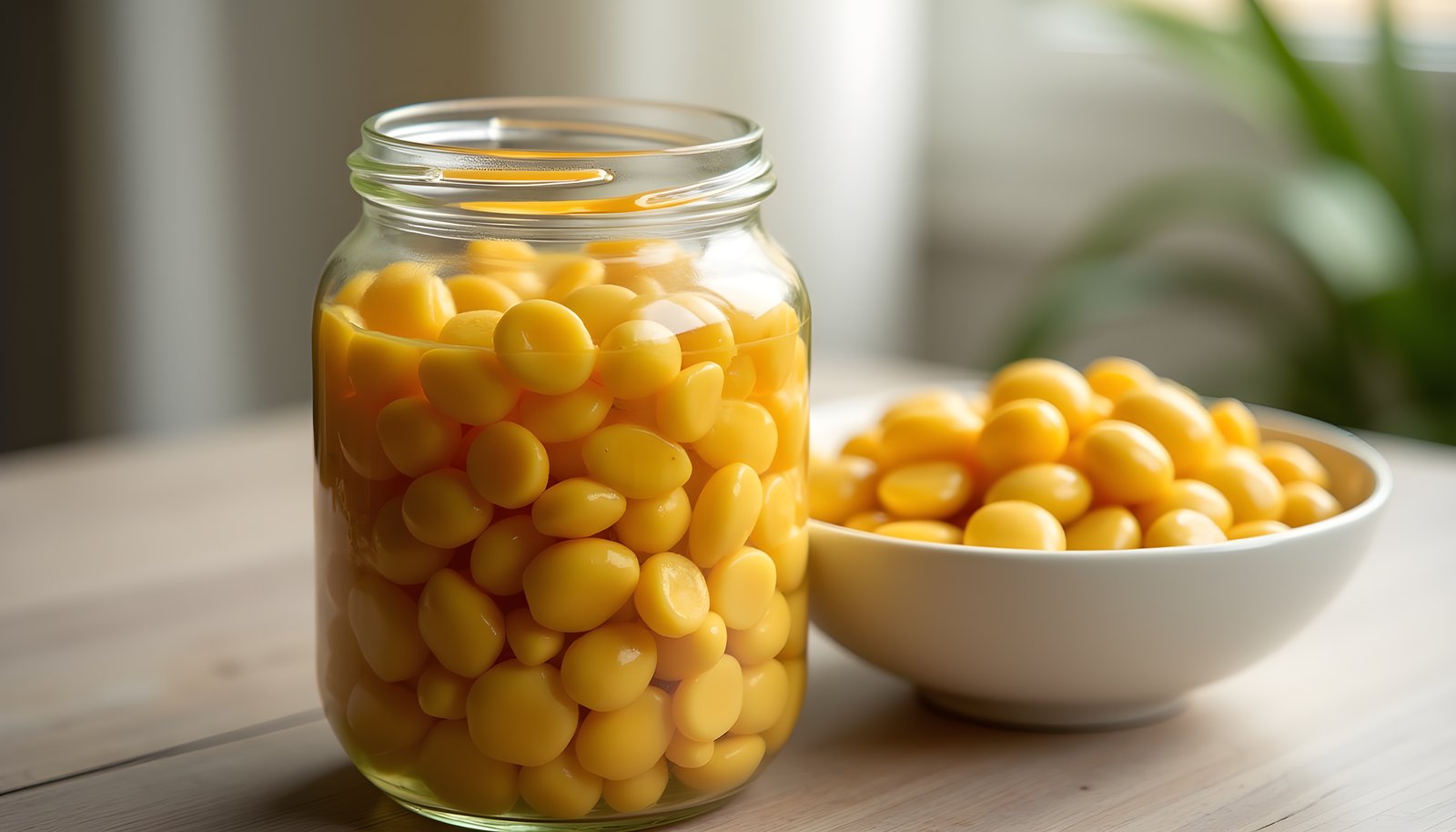
Picture a bowl of pale yellow beans set out with drinks at an Italian or Portuguese bar, salty, firm and meant to be popped from their skins. Those are lupini, and the big question for fiber fans is how much they actually deliver.
The honest answer: lupini beans fiber ranges from about 4.7 grams per cooked cup in USDA FoodData Central to about 7.8 grams per half cup in the Dietary Guidelines for Americans table. What isn’t in doubt is the protein, at roughly 26 grams per cup.
Lupini beans fiber: the two sets of numbers
USDA publishes more than one nutrient dataset, and for lupini the fiber figures don’t line up. Here’s what each one says:
| Source | Serving | Fiber | Calories | Protein |
|---|---|---|---|---|
| Dietary Guidelines fiber table | 1/2 cup cooked | 7.8 g | 115 | n/a |
| USDA FoodData Central | 1 cup cooked (166 g) | 4.7 g | 198 | 25.8 g |
| USDA FoodData Central | 100 grams cooked | 2.8 g | 119 | 15.6 g |
The Dietary Guidelines figure would put lupini among the top beans for fiber, level with lentils per half cup. The FoodData Central figure would put them near the bottom, below edamame.
Different samples, varieties and lab methods can all shift a fiber number. For a jarred or packaged product, the Nutrition Facts label on that brand is your best guide.
Myth vs fact: lupini and fiber
Myth: Lupini are a fiber powerhouse, just like other beans.
Fact: Lupini are first and foremost a protein food. Even on the more generous Dietary Guidelines number, their fiber lands in the same range as lentils, and on the FoodData Central number they carry less fiber than most beans.
That doesn’t make them a poor choice. It just means they earn their place for a different reason than navy beans or split peas.
High protein beans fiber compared
This is where lupini stand apart. Using USDA FoodData Central values per cooked cup, here’s how they compare with other high protein beans:
| Legume, 1 cup cooked | Protein | Fiber | Calories | Protein per 100 calories |
|---|---|---|---|---|
| Lupini | 25.8 g | 4.7 g | 198 | 13.0 g |
| Edamame | 18.4 g | 8.1 g | 188 | 9.8 g |
| Soybeans | 28.6 g | 10.3 g | 298 | 9.6 g |
| Lentils | 17.9 g | 15.6 g | 230 | 7.8 g |
| Black beans | 15.2 g | 15.0 g | 227 | 6.7 g |
| Chickpeas | 14.5 g | 12.5 g | 269 | 5.4 g |
Lupini give you more protein for each calorie than any bean on this list, even soybeans. Lentils and black beans, on the other hand, deliver roughly three times the fiber per cup by these figures.
So the smart move is pairing, not picking. A handful of lupini alongside a lentil salad or bean soup covers both goals at once.
Curious how much fiber you need alongside all that protein? Our fiber calculator gives you a personal target in seconds.
Lupini among plant protein foods
Harvard’s Nutrition Source describes legumes as an inexpensive source of protein, vitamins, complex carbohydrates and fiber. Lupini lean heavily toward the protein end of that list.
A cooked cup also brings, by USDA values:
- Manganese: about 1.1 milligrams, around 49% of the Daily Value
- Copper: about 0.38 milligrams, around 42% of the Daily Value
- Magnesium: about 90 milligrams, around 21% of the Daily Value
- Zinc: about 2.3 milligrams, around 21% of the Daily Value
Lupini also carry a little more fat than most beans, about 4.9 grams per cup, and fewer carbohydrates at about 16 grams.
Lupini as a Mediterranean snack
In Italy, Portugal, Spain and across the Middle East, lupini are usually sold brined in jars and eaten as a salty snack. Many people pinch the skin and pop the bean out, though the skin is edible too.
As Mediterranean snacks go, they stack up well. Half a cup brings roughly 13 grams of protein, which is a lot for something you eat by the handful.
Brined lupini can be salty, so rinsing them before serving is a simple way to cut back. They also work beyond the snack bowl:
- Toss rinsed lupini into green salads or grain bowls
- Blend them with garlic, lemon and tahini for a hummus style dip
- Roast them with olive oil and paprika for a crunchy snack
- Add them to pasta salads for a protein boost
Looking for more ways to work high protein legumes into your meals? Our recipe eBooks are full of easy, high-fiber ideas.
An afternoon snack plate, counted
Here’s a realistic test. Picture half a cup of rinsed lupini, a medium pear and a small handful of almonds as a mid afternoon plate.
By FoodData Central values, the lupini bring about 13 grams of protein and roughly 2.3 grams of fiber. The Dietary Guidelines table lists a medium pear at 5.5 grams of fiber and an ounce of almonds at 3.5 grams.
That puts the plate at around 11 grams of fiber, or closer to 17 if you go by the higher Dietary Guidelines lupini figure. The protein mostly comes from the beans, and most of the fiber from the fruit and nuts.
It’s a good example of how lupini work best: as one part of a plate, alongside foods that carry more fiber.
Lupin flour, pasta and gluten free foods
Lupini don’t only come in jars. The FDA notes that lupin flour is increasingly used in baked goods and pasta, especially gluten free products.
That’s worth knowing for two reasons. Lupin can show up in foods where you wouldn’t expect a legume, and the allergy note above applies to those products too.
When you see lupin flour on an ingredient list, check the Nutrition Facts label for protein and fiber. Processed lupin products can differ quite a bit from the whole cooked bean.
Two things to know before you eat lupini
Lupini come with two safety notes that most other beans don’t.
The first is allergy. The FDA explains that lupin belongs to the same plant family as peanuts, and people with a peanut allergy may also react to lupin, sometimes severely. Lupin isn’t required to be labeled as a major allergen in the United States, so check ingredient lists for the word “lupin.”
The second is bitterness. Germany’s Federal Institute for Risk Assessment (BfR) notes that bitter lupin varieties can contain quinolizidine alkaloids, which can cause poisoning that affects the nervous, circulatory and digestive systems if not removed.
The BfR advises buying sweet lupins or ready debittered products rather than trying to debitter bitter lupins at home. It also warns never to drink or cook with bitter tasting soaking water.
A quick lupini buying checklist
Before you add lupini to your cart, run through these points:
- Choose jarred, ready to eat lupini or products clearly labeled as sweet lupins
- Skip raw, bitter lupin seeds unless you know exactly how to process them
- Check the ingredient list for lupin if anyone at your table has a peanut allergy
- Compare sodium on the label, and rinse brined beans before eating
- Read the fiber line on the Nutrition Facts label, since brands vary
A jar that passes all five checks is a safe, simple way to start eating lupini regularly, whether as a snack or a salad topper.
Lupini and your gut
Like other legumes, lupini contain fermentable carbohydrates that gut bacteria break down. Harvard’s Nutrition Source notes this can cause gas and bloating in some people.
Mayo Clinic recommends increasing fiber gradually and drinking plenty of water. Because lupini are lower in fiber than most beans on the FoodData Central numbers, they can be a gentle way to bring more legumes into your week.
If you’re working on building a more comfortable gut, our gut health guides walk you through it step by step.
Fitting lupini into your week
Mayo Clinic sets daily fiber targets at about 25 grams for women and 38 grams for men. Lupini won’t cover that on their own, so think of them as a protein anchor rather than a fiber workhorse.
A practical pattern: lupini as a snack two or three afternoons a week, and a lentil or black bean dish on the other days. You get the protein from one and the fiber from the other, and the Dietary Guidelines goal of about 3 cups of legumes a week, which Harvard highlights, becomes easy to reach.
Put numbers on it and the split is clear. Three half cup lupini snacks add roughly 39 grams of protein over the week, while two cups of cooked lentils add about 31 grams of fiber.
Together, that’s 2.5 cups of legumes, most of the weekly goal, with each bean doing the job it does best. Swap the lentils for black beans or split peas any week you want variety.
The catch with lupini numbers
The biggest caveat is the data itself. Until the two USDA datasets agree, any single fiber figure for lupini comes with a wide margin.
If fiber is your main goal, don’t build your day around lupini. Lean on lentils, split peas or black beans for fiber, and use lupini where they truly shine: as a high protein, low carb snack with a little fiber on the side.
Lupini bean questions
How much fiber is in lupini beans?
It depends on the data. USDA FoodData Central lists about 4.7 grams per cooked cup, while the Dietary Guidelines table lists about 7.8 grams per half cup.
Are lupini beans high in protein?
Yes. A cooked cup has about 26 grams of protein for about 198 calories, more protein per calorie than any other common bean.
Are lupini beans low carb?
Yes, for a legume. A cooked cup has about 16 grams of carbohydrate, compared with about 40 grams or more for most beans.
Can you eat lupini bean skins?
Yes. The skin is edible, though many people pinch it off and eat just the bean.
Are lupini beans safe for people with peanut allergies?
Not always. The FDA notes that people allergic to peanuts may also react to lupin, so check labels carefully.
Do you have to soak lupini beans?
Raw bitter lupins need debittering, and Germany’s BfR advises buying sweet or ready debittered lupini instead of doing it at home.
Are lupini a good Mediterranean snack?
Yes. Rinsed brined lupini are high in protein, offer some fiber and make a filling alternative to chips.
Sources
- U.S. Department of Agriculture, Agricultural Research Service. “Lupins, mature seeds, cooked, boiled, without salt (FDC 172424).” FoodData Central. 2019. fdc.nal.usda.gov
- U.S. Department of Agriculture and U.S. Department of Health and Human Services. “Food Sources of Dietary Fiber.” Dietary Guidelines for Americans, 2020 to 2025. 2020. dietaryguidelines.gov
- U.S. Food and Drug Administration. “Consumer Advice on Lupin.” 2018. fda.gov
- German Federal Institute for Risk Assessment (BfR). “Lupin seeds: health impairments possible with bitter taste.” 2017. bfr.bund.de
- Harvard T.H. Chan School of Public Health. “Legumes and Pulses.” The Nutrition Source. 2024. nutritionsource.hsph.harvard.edu
- Mayo Clinic Staff. “Dietary fiber: Essential for a healthy diet.” Mayo Clinic. 2024. mayoclinic.org