
In this article
- Fava beans fiber in dried, fresh and canned form
- Broad beans fiber per calorie: where favas shine
- What else comes with the fiber
- Who should skip fava beans
- Fava beans and lectins
- Fava beans in Mediterranean and Middle Eastern cooking
- Fava beans vs other fiber rich foods
- A plate of ful medames, counted
- Prepping fresh favas, step by step
- Favas and your gut
- Fresh, dried or canned: which to pick
- Where fava research is heading
- Fava bean fiber, answered
- Sources
A cup of cooked fava beans holds about 9.2 grams of fiber, according to USDA FoodData Central. That’s a bit behind lentils or black beans, which is why favas rarely top the high fiber lists.
The surprise is what that cup costs you: only about 187 calories, fewer than almost any other dried bean. This guide looks at fava beans fiber from every angle, including fresh versus dried, how broad beans compare with other legumes, and the one group of people who need to skip them entirely.
Fava beans fiber in dried, fresh and canned form
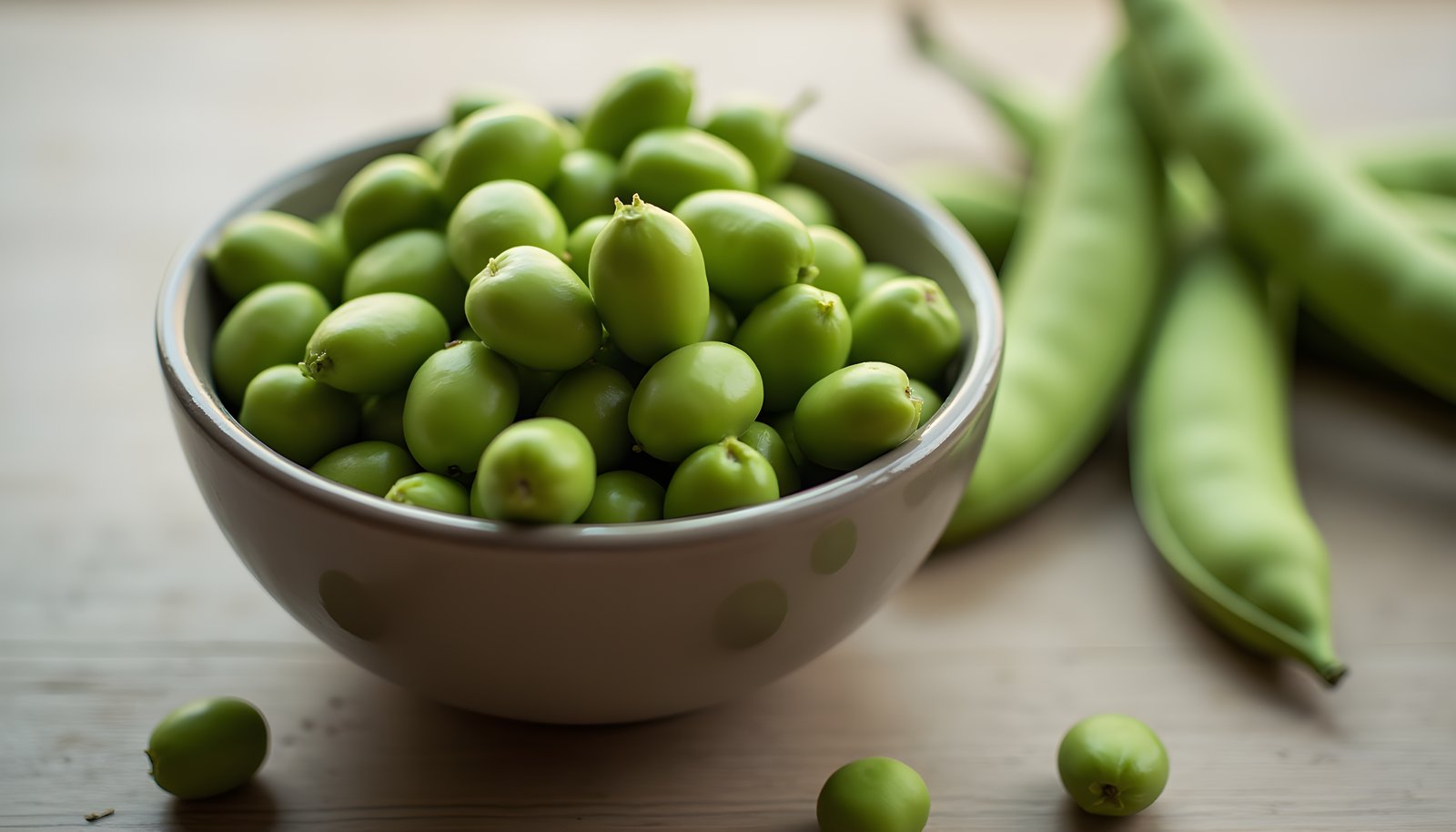
Fava beans, also called broad beans, are sold three ways: as large dried beans, as fresh green beans in long pods, and canned. The fiber changes with each.
| Fava beans | Serving | Fiber | Calories | Protein |
|---|---|---|---|---|
| Mature, cooked from dry | 1/2 cup | 4.6 g | 94 | about 6.5 g |
| Mature, cooked from dry | 1 cup (170 g) | 9.2 g | 187 | 12.9 g |
| Mature, cooked from dry | 100 grams | 5.4 g | 110 | 7.6 g |
| Fresh green (immature), boiled | 100 grams | about 4 g | 62 | 4.8 g |
Half cup values come from the Dietary Guidelines for Americans fiber table, and the rest from USDA FoodData Central. Fresh green favas carry more water, so they’re lighter in both fiber and calories gram for gram.
A cup of cooked dried favas covers about a third of the 28 gram Daily Value. That puts them comfortably in the high fiber range, even if they aren’t the leader.
Broad beans fiber per calorie: where favas shine
Most bean comparisons stop at fiber per serving. Look at calories too, and favas move up the table. These half cup portions come from the Dietary Guidelines list:
| Legume, 1/2 cup cooked | Fiber | Calories | Fiber per 100 calories |
|---|---|---|---|
| Navy beans | 9.6 g | 128 | 7.5 g |
| Lentils | 7.8 g | 115 | 6.8 g |
| Black beans | 7.5 g | 114 | 6.6 g |
| Chickpeas | 6.3 g | 135 | 4.7 g |
| Kidney beans | 5.7 g | 113 | 5.0 g |
| Fava beans | 4.6 g | 94 | 4.9 g |
| Edamame | 4.1 g | 94 | 4.4 g |
Favas and edamame tie for the fewest calories in this table. Per calorie, favas trail navy beans, lentils and black beans, run about level with kidney beans and beat chickpeas and edamame.
That makes them useful if you want the protein and fiber of beans in a lighter dish. A full cup of favas comes in under 200 calories, where a cup of chickpeas runs closer to 270.
Wondering where a cup of favas leaves you for the day? Our fiber calculator sets a personal target for you in seconds.
What else comes with the fiber
By USDA values, a cooked cup of mature fava beans also gives you roughly:
- Folate: about 175 micrograms, around 44% of the Daily Value
- Copper: about 0.4 milligrams, around 44% of the Daily Value
- Manganese: about 0.7 milligrams, around 30% of the Daily Value
- Magnesium: about 75 milligrams
- Potassium: about 460 milligrams
Folate is the standout. Harvard’s Nutrition Source lists folate among the key nutrients legumes supply, along with iron, phosphorus and protein, and favas are a good example of that pattern.
Who should skip fava beans
Fava beans are the one legume with a well known genetic warning attached. People with G6PD deficiency, an inherited shortage of an enzyme that protects red blood cells, can react badly to them.
The Singapore Food Agency explains that favas contain two natural compounds, vicine and convicine. In people with G6PD deficiency, they can trigger favism, where red blood cells break down faster than normal, causing jaundice, dark urine and anemia.
These compounds are heat stable, so cooking does not remove them. The agency estimates about 500 million people worldwide have G6PD deficiency, and advises them to avoid favas entirely, including plant based meats made with fava bean protein.
If you don’t have G6PD deficiency, none of this applies to you. Favas are a normal, everyday bean for everyone else.
Fava beans and lectins
Raw kidney beans are known for a lectin called phytohaemagglutinin, or PHA, that causes stomach upset if beans are undercooked. Favas contain far less of it.
Kansas State University puts fava beans at about 5 to 10% of the PHA in red kidney beans. Thorough cooking still matters, but favas are much more forgiving than red kidneys.
Fava beans in Mediterranean and Middle Eastern cooking
Favas are a long standing staple from Italy to Egypt. In Egypt, slow cooked favas become ful medames, a breakfast of mashed beans with olive oil, lemon, garlic and cumin.
In Italy, fresh spring favas are eaten with pecorino cheese or tossed through pasta. Dried favas turn into thick purees and soups in kitchens around the Mediterranean.
Those dishes tend to pair favas with olive oil, herbs and vegetables. The result is a meal built on legume fiber and protein rather than meat.
Looking for ways to bring more of these dishes home? Our recipe eBooks are packed with easy, high-fiber Mediterranean meals.
Fava beans vs other fiber rich foods
Beans aren’t the only way to hit your fiber target, so it helps to see favas next to other fiber rich foods. These portions all come from the Dietary Guidelines for Americans fiber table:
| Food and portion | Fiber | Calories |
|---|---|---|
| Artichoke, 1 cup cooked | 9.6 g | 89 |
| Raspberries, 1 cup | 8.0 g | 64 |
| Popcorn, 3 cups | 5.8 g | 169 |
| Pear, 1 medium | 5.5 g | 103 |
| Avocado, 1/2 cup | 5.0 g | 120 |
| Fava beans, 1/2 cup cooked | 4.6 g | 94 |
| Chia seeds, 1 tablespoon | 4.1 g | 58 |
A half cup of favas lands right alongside a pear or half an avocado. A full cup, at 9.2 grams, matches a cooked artichoke and beats a cup of raspberries.
What favas add that fruit and popcorn can’t is protein. Those 13 grams per cup make them a main dish ingredient, not just a side or a snack.
A plate of ful medames, counted
Ful medames makes a good real world test. Picture a breakfast plate of one cup of cooked favas mashed with olive oil, lemon and cumin, topped with chopped tomato and parsley.
The beans alone bring about 9.2 grams of fiber. Add a 1 ounce whole wheat flatbread for scooping, which the Dietary Guidelines put at about 2.8 grams for a whole wheat tortilla, and the plate reaches roughly 12 grams.
That’s over 40% of the 28 gram Daily Value before lunch, plus about 13 grams of protein from the beans. For comparison, a half cup of oat bran, often pitched as a high fiber breakfast, has about 2.9 grams.
Prepping fresh favas, step by step
Fresh favas take a little work, because each bean sits inside a thick pod and its own pale skin. The usual routine:
- Split the pods and pop out the beans
- Blanch the beans in boiling water for 1 to 2 minutes
- Drop them into ice water to stop the cooking
- Pinch each bean to slip off the pale outer skin
- Use the bright green inner beans in salads, pastas or spreads
Dried favas skip the pod but usually still need a long soak. Harvard recommends soaking dried beans for at least three hours, then cooking until tender.
Canned favas are the fastest route. Drain and rinse them, and they’re ready for ful medames or a quick bean salad.
Favas and your gut
Like all legumes, favas give you a mix of soluble and insoluble fiber. Mayo Clinic notes that soluble fiber can help lower cholesterol and steady blood sugar, while insoluble fiber adds bulk and helps with regularity.
Favas also carry fermentable carbohydrates that gut bacteria break down, which can mean some gas at first. Harvard’s Nutrition Source notes that soaking and cooking dried beans may help reduce this.
Mayo Clinic recommends adding fiber gradually and drinking plenty of water. A half cup of favas a few times a week is an easy place to start.
If your gut needs a gentler ramp up, our gut health guides walk you through it one step at a time.
Fresh, dried or canned: which to pick
Each form of fava beans suits a different goal:
- For the most fiber per serving: dried favas, cooked from scratch, at about 9 grams per cup
- For spring salads and pasta: fresh green favas, lighter at about 4 grams per 100 grams
- For speed: canned favas, rinsed, for ful medames or a weeknight side
- If you have G6PD deficiency: skip favas altogether and use lentils, chickpeas or black beans, which bring as much or more fiber per half cup
Every form adds real fiber and protein, so pick the one that matches the meal you’re actually going to cook this week.
Where fava research is heading
Fava beans are moving from the side dish into the ingredient list. The Singapore Food Agency notes that fava bean protein is now used in some plant based meat products, which is why it specifically tells people with G6PD deficiency to check labels.
As more products use fava protein, expect more interest in how these processed forms compare with the whole bean, especially for fiber. For now, the whole bean is the version with the clearest nutrition numbers behind it.
Fava bean fiber, answered
How much fiber is in a cup of fava beans?
About 9.2 grams in a cup of cooked mature fava beans. That’s about a third of the 28 gram Daily Value, for around 187 calories.
Are broad beans and fava beans the same?
Yes. Broad bean is the common British name for the fava bean, the same plant and the same beans.
Do fresh fava beans have as much fiber as dried?
No. Fresh green favas have about 4 grams of fiber per 100 grams, compared with about 5.4 grams for cooked dried favas.
Are fava beans low in calories?
Yes, for a bean. A half cup has about 94 calories, the same as edamame and fewer than navy beans, lentils or chickpeas.
Who should not eat fava beans?
People with G6PD deficiency. Favas contain vicine and convicine, which can trigger favism, and cooking does not remove them.
Do you have to peel fava beans?
For fresh favas, yes. Most cooks remove both the pod and the pale skin on each bean for a tender, bright green result.
Are fava beans high in protein?
Yes. A cooked cup has about 13 grams of protein along with 9 grams of fiber.
Sources
- U.S. Department of Agriculture, Agricultural Research Service. “FoodData Central.” 2026. fdc.nal.usda.gov
- U.S. Department of Agriculture and U.S. Department of Health and Human Services. “Food Sources of Dietary Fiber.” Dietary Guidelines for Americans, 2020 to 2025. 2020. dietaryguidelines.gov
- Soon FM. “The Arch-Enemy of G6PD Deficient Individuals: Fava Beans.” Singapore Food Agency. 2023. sfa.gov.sg
- Blakeslee K. “Cooking dry beans safely.” Kansas State University. 2017. k-state.edu
- Harvard T.H. Chan School of Public Health. “Legumes and Pulses.” The Nutrition Source. 2024. nutritionsource.hsph.harvard.edu
- Mayo Clinic Staff. “Dietary fiber: Essential for a healthy diet.” Mayo Clinic. 2024. mayoclinic.org