
In this article
- Why meats fiber content starts at zero
- Meat foods ranked by fiber per serving
- What puts the pot pie on top
- Myth vs fact: meat with vegetables counts as a fiber food
- Animal protein fiber per 100 calories
- What it takes to get 10 grams from meat foods
- Zero fiber foods across the meat counter
- Reading the fiber line on meat labels
- What meat brings instead of fiber
- Building fiber around a plain cut
- Two freezer dinners, side by side
- A decision rule for meat and fiber
- Meat and fiber: what people want to know
- Sources
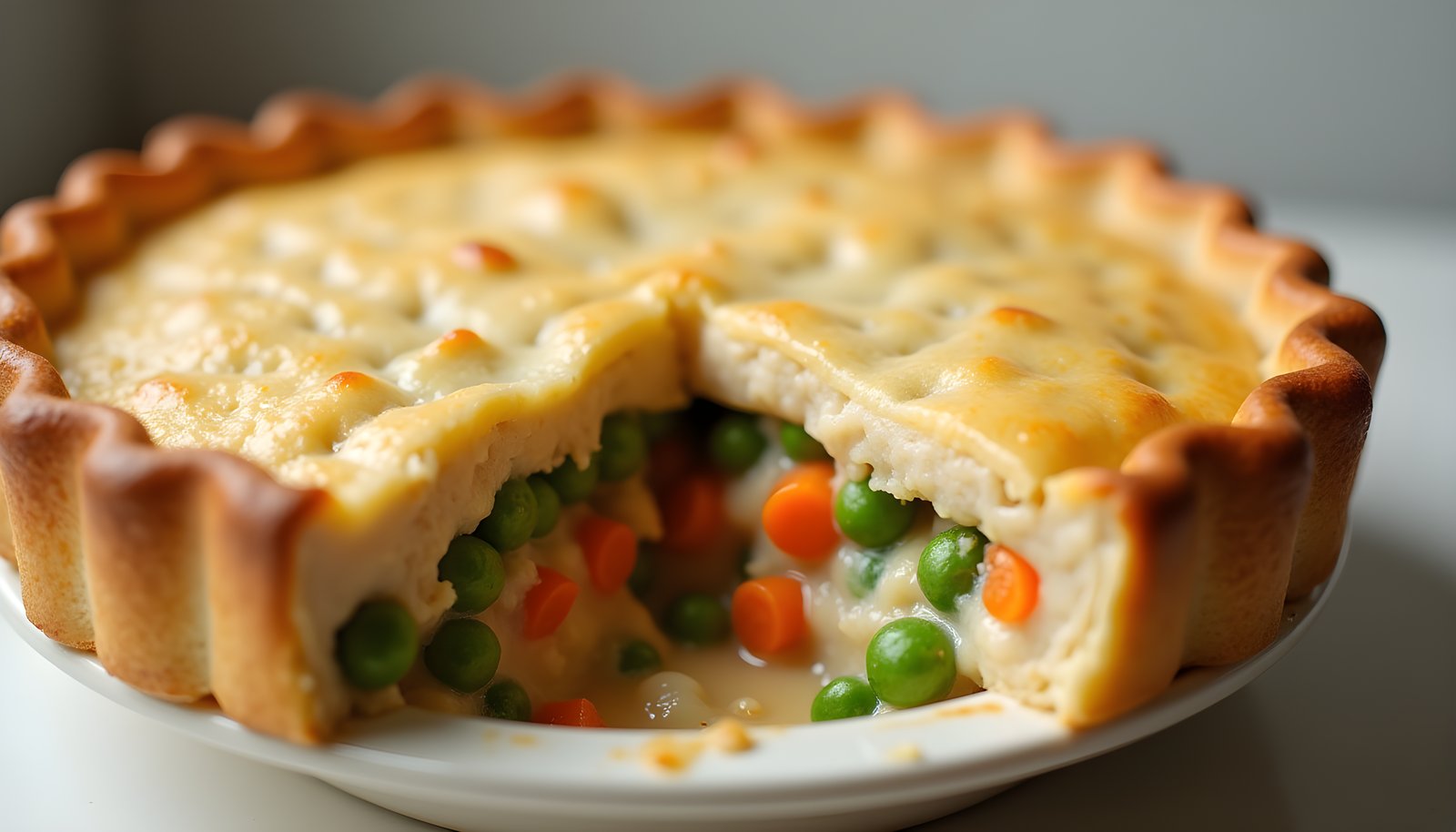
No plain meat has any fiber, so the real winners are meat foods with plants mixed in. In USDA FoodData Central, the top scorer per serving is a frozen turkey pot pie, at 4.4 grams, thanks to its crust and vegetables.
That twist explains every number on the list below. Meats fiber content tracks the flour, grains and vegetables in a product, never the meat itself.
Below you’ll find the full ranking, what each item delivers for protein and sodium, and how the best of them compares with a plate that gets its fiber on purpose.
Why meats fiber content starts at zero
Mayo Clinic defines dietary fiber as the parts of plant foods your body can’t digest or absorb. Muscle, fat and organ tissue from animals contain none of it.
So the answer to “do meats have fiber” is the same for every cut. A roasted chicken breast, a broiled 85 percent lean beef patty and a salmon fillet all list 0 grams in FoodData Central.
Fiber only appears once a recipe adds something that grew from the ground: breading, a crust, a starchy filler or a handful of vegetables.
Meat foods ranked by fiber per serving
This ranking uses USDA serving weights where they exist, and 3 ounces (85 grams) where they don’t.
| Meat food | Serving | Fiber | Protein | Sodium |
|---|---|---|---|---|
| Turkey pot pie, frozen | 1 pie, 397 g | 4.4 g | 25.8 g | 1,390 mg |
| Chicken nuggets, whole grain breaded (school lunch) | 5 pieces, 88 g | 1.9 g | 14 g | 450 mg |
| Beef stew, canned | 1 cup, 196 g | 1.8 g | 8.6 g | 760 mg |
| Chicken tenders, frozen breaded, prepared | 3 oz, 85 g | 1.4 g | 12.4 g | 448 mg |
| Chicken pot pie, frozen | 1 pie, 100 g | 1.1 g | 5.1 g | 393 mg |
| Meat loaf | 1 slice, 108 g | 0.4 g | 18.9 g | 449 mg |
| Fried chicken breast, batter dipped | 3 oz, 85 g | 0.3 g | 21.1 g | 234 mg |
| Chicken tenders, fast food | 3 oz, 85 g | 0 g | 16.3 g | 654 mg |
| Chicken breast, roasted | 3 oz, 85 g | 0 g | 26.4 g | 63 mg |
| Ground beef, 85% lean, broiled | 3 oz, 85 g | 0 g | 22 g | 60 mg |
Even first place covers only 16 percent of the FDA’s 28 gram Daily Value for fiber. Everything below it brings 2 grams or less.
Notice the two chicken tender rows. A frozen breaded version lists 1.7 grams per 100 grams, while the fast food version lists none, so the coating recipe decides the number.
What puts the pot pie on top
Per 100 grams, the turkey pot pie and chicken pot pie are identical for fiber, at 1.1 grams each. The turkey pie wins only because its serving weighs nearly four times as much.
That fiber comes from the pastry crust and the vegetables in the filling. The turkey contributes protein, not fiber.
The size that wins on fiber also brings 699 calories and 1,390 milligrams of sodium. It’s a reminder that a higher fiber line on a meat product often travels with a much bigger portion.
Myth vs fact: meat with vegetables counts as a fiber food
Myth: a meat dish with vegetables in it, like stew or pot pie, is a good fiber source.
Fact: a cup of canned beef stew has 1.8 grams of fiber, about 6 percent of the Daily Value. The vegetables are there, but in small amounts and spread through a lot of broth and meat.
For comparison, a cup of cooked lentils carries 15.6 grams of fiber with 17.9 grams of protein. That’s more than eight times the stew’s fiber in the same cup.
Animal protein fiber per 100 calories
Looking at fiber per 100 calories shows how thinly the fiber is spread in these foods:
- Beef stew, canned: 0.9 g
- Whole grain breaded nuggets: 0.8 g
- Frozen breaded tenders: 0.7 g
- Turkey pot pie: 0.6 g
- Chicken pot pie: 0.5 g
- Meat loaf: 0.2 g
- Plain chicken, beef, pork, lamb and fish: 0 g
Lentils reach about 6.8 grams per 100 calories and black beans about 6.6. Even the best meat food carries roughly one seventh of that density.
Curious how many grams your own day should hold? Our fiber calculator sets a personal target so you can see how far a meat meal gets you.
What it takes to get 10 grams from meat foods
Another way to judge these products is to ask how much you’d have to eat to reach 10 grams of fiber, a bit over a third of the Daily Value.
| Food | Amount for 10 g fiber | Calories | Sodium |
|---|---|---|---|
| Whole grain breaded nuggets | about 26 pieces | about 1,230 | about 2,320 mg |
| Canned beef stew | about 5.7 cups | about 1,100 | about 4,310 mg |
| Turkey pot pie | about 2.3 pies | about 1,600 | about 3,180 mg |
| Cooked lentils | about 2/3 cup | about 150 | under 10 mg |
The meat foods would take 1,100 to 1,600 calories to deliver what two thirds of a cup of lentils does. The sodium climbs past the 2,300 milligram Daily Value in every case.
This is why coated or mixed meat products work better as a small bonus than as a fiber strategy. The grams are real, but they arrive with too much else attached.
Zero fiber foods across the meat counter
Most of the meat counter sits on the zero fiber foods list, whatever the cut or cooking method. That includes:
- Fresh poultry: chicken breast, thighs, wings and turkey
- Red meat: beef steaks and roasts, pork chops, lamb and veal
- Fish and shellfish: salmon, cod, tuna and shrimp
- Organ meats such as liver
Grilling, roasting, braising or smoking changes flavor and texture, but none of those methods can create fiber. Only an added plant ingredient can.
Reading the fiber line on meat labels
If a packaged meat shows fiber, the ingredient list will tell you why. Look for these clues:
- Whole grain flour or crumbs in the breading
- A pastry crust or biscuit topping
- Vegetables such as peas, carrots or potatoes in a filling
- Fillers like breadcrumbs, oats or rice in ground meat products
A rounded label can also hide small amounts. Meat loaf’s detailed USDA data shows 0.43 grams per slice, but its rounded label reads 0 grams.
What meat brings instead of fiber
Plain meats earn their place through protein density. Three ounces of roasted chicken breast delivers 26.4 grams of protein for about 140 calories, with only 63 milligrams of sodium.
Harvard’s Nutrition Source calls this the “protein package”: the fats, fiber, sodium and other nutrients that come along with each protein source. It points to poultry and seafood as better picks than red and processed meats.
Red meat brings its own set of nutrients. A 3 ounce broiled 85 percent lean beef patty covers about 92 percent of the Daily Value for vitamin B12 and 49 percent for zinc.
Harvard also notes that research linked replacing red meat with plant proteins such as beans and nuts to better heart disease risk factors. That’s worth weighing alongside fiber.
Looking for weeknight dinners that pair chicken or beef with beans, grains and vegetables? Our recipe eBooks have plenty of high fiber ideas.
Building fiber around a plain cut
Because plain meat starts at zero, the side dishes do all the work. A 3 ounce chicken breast with one cup of black beans gives you about 15 grams of fiber and over 41 grams of protein.
Compare that with the pot pie’s 4.4 grams. The plain cut plus beans brings more than three times the fiber, with a fraction of the sodium.
Swapping the beans for lentils works just as well, and so does a cup of whole grains with a vegetable side. The point is that the fiber has to come from the plate, not the cut.
Mayo Clinic suggests about 25 grams of fiber a day for women and 38 grams for men up to age 50. One bean side can cover more than half of the lower target.
Two freezer dinners, side by side
Picture two quick dinners with nearly the same calories. The first is a 100 gram frozen chicken pot pie, at 204 calories, 1.1 grams of fiber and 5.1 grams of protein.
The second is 3 ounces of roasted chicken breast with half a cup of cooked green peas from the freezer. That plate comes to roughly 202 calories, 3.6 grams of fiber and about 30 grams of protein.
Same freezer, same calorie budget. The plain cut with a vegetable side brings more than three times the fiber and about six times the protein of the pie.
A decision rule for meat and fiber
When you’re choosing between meats for fiber, a short rule keeps it simple:
- If you want the most fiber from a meat product, pick one with whole grain breading or a vegetable filling, and expect 1 to 4 grams
- If you want the most protein with the least sodium, pick a plain cut and accept 0 grams of fiber
- If you want both, pair the plain cut with beans, lentils or whole grains, and let the side carry the fiber
Meat and fiber: what people want to know
Which meat has the most fiber?
No plain meat has fiber. Among meat foods in USDA data, a frozen turkey pot pie leads with 4.4 grams per serving, all from its crust and vegetables.
Do meats have fiber?
No. Chicken, beef, pork, lamb, fish and organ meats all have 0 grams, because fiber comes only from plants.
Do chicken nuggets have fiber?
Some do. School lunch nuggets with whole grain breading have about 2 grams per 5 pieces, while many fast food versions list 0 grams.
Does beef stew have fiber?
A little. Canned beef stew has about 1.8 grams of fiber per cup, mostly from its vegetables.
Does meat loaf have fiber?
Barely. USDA data shows about 0.4 grams per slice, likely from fillers such as breadcrumbs, which rounds to 0 grams on a label.
What are zero fiber foods?
Zero fiber foods include plain meat, poultry, fish, eggs, milk and cheese. Any fiber in a product made from them comes from added plant ingredients.
How do I add fiber to a meat meal?
Add beans, lentils, whole grains or vegetables on the side. A cup of black beans with a chicken breast adds about 15 grams of fiber.
Sources
- U.S. Department of Agriculture, Agricultural Research Service. “FoodData Central” (turkey pot pie, frozen 172092; chicken pot pie, frozen, prepared 173331; school lunch chicken nuggets, whole grain breaded 170795; beef stew, canned 173330; chicken tenders, frozen breaded, prepared 173346; chicken tenders, fast food 173321; meat loaf 2706579; chicken breast, batter fried 171475; chicken breast, roasted 171477; ground beef 85% lean, broiled 174032; lentils; black beans; green peas, frozen, cooked 170105). 2026. fdc.nal.usda.gov
- U.S. Food and Drug Administration. “Daily Value on the Nutrition and Supplement Facts Labels.” 2024. www.fda.gov
- Mayo Clinic Staff. “Dietary fiber: Essential for a healthy diet.” Mayo Clinic. 2025. mayoclinic.org
- Harvard T.H. Chan School of Public Health. “Protein.” The Nutrition Source. 2025. nutritionsource.hsph.harvard.edu