
In this article
- Nuts with most fiber per ounce
- A fairer nut fiber comparison at 200 calories
- High fiber nuts list in three tiers
- Protein snacks that bring fiber too
- Nut snacks that reach 5 grams or more
- How nuts stack up against seeds and popcorn
- Checklist for picking a high fiber nut
- How nuts fit a high fiber day
- The nut that breaks the pattern
- Nuts and fiber: what people want to know
- Sources
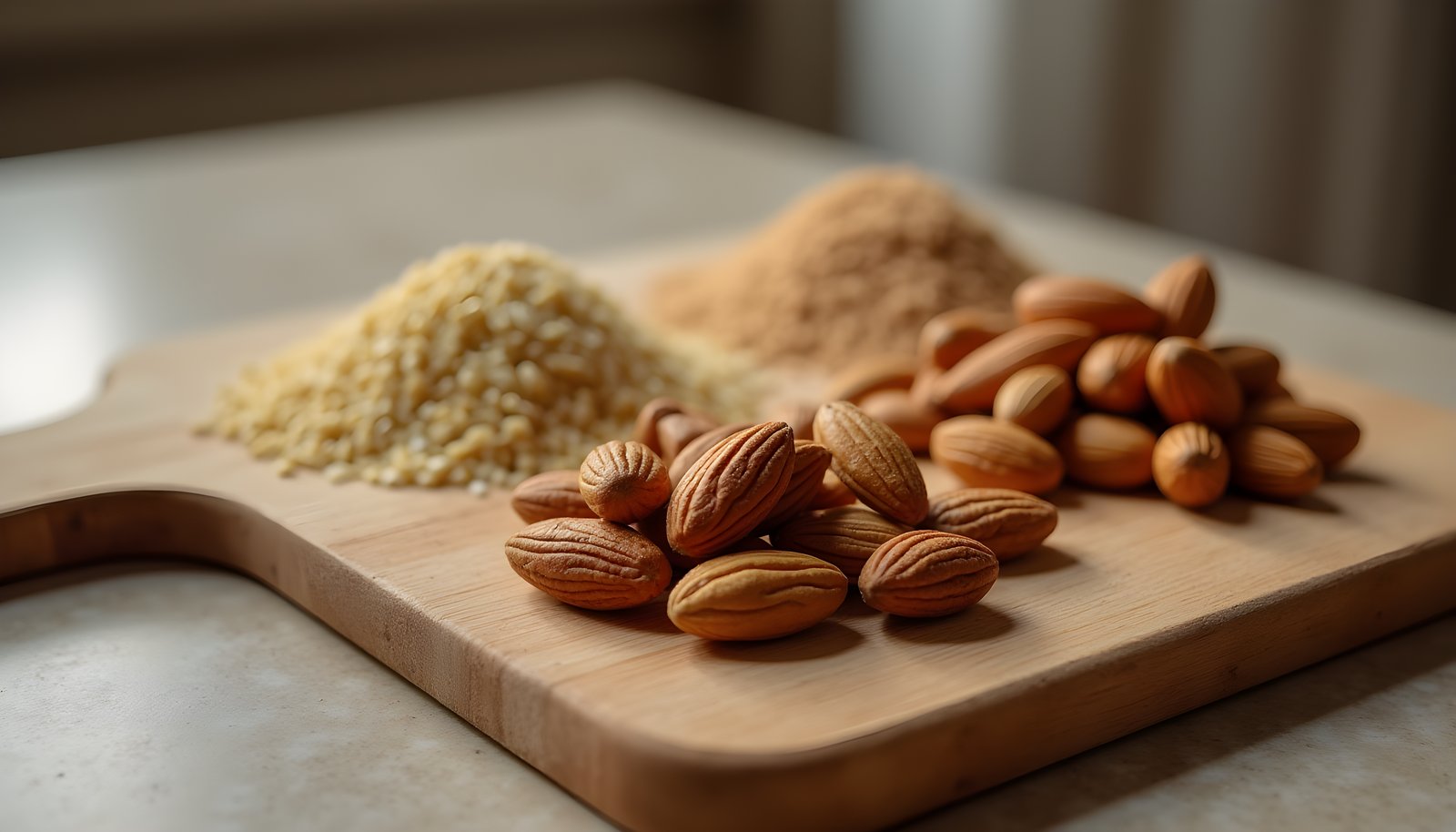
Walnuts have a big reputation as a health food, so it’s easy to assume they’re also among the nuts with most fiber. They aren’t: an ounce of walnuts has 1.9 grams of fiber, while the same ounce of almonds has 3.5 grams, according to USDA FoodData Central.
That gap matters if you reach for nuts partly to help your fiber total. The best choice also depends on whether you count by the handful or by calories, since nuts range from about 157 to 204 calories an ounce.
This guide ranks ten common nuts both ways, adds protein to the picture, and shows which ones make the best high fiber snacks.
Nuts with most fiber per ounce
An ounce (28 grams) is the standard serving used for nuts in USDA data. The table lists each nut raw or dried, in that portion.
| Nut (1 oz) | Fiber | % Daily Value | Protein | Calories |
|---|---|---|---|---|
| Almonds | 3.5 g | 13% | 6.0 g | 164 |
| Pistachios | 3.0 g | 11% | 5.7 g | 159 |
| Hazelnuts | 2.7 g | 10% | 4.2 g | 178 |
| Pecans | 2.7 g | 10% | 2.6 g | 196 |
| Macadamia nuts | 2.4 g | 9% | 2.2 g | 204 |
| Peanuts | 2.4 g | 9% | 7.3 g | 161 |
| Brazil nuts | 2.1 g | 8% | 4.1 g | 187 |
| Walnuts | 1.9 g | 7% | 4.3 g | 185 |
| Pine nuts | 1.0 g | 4% | 3.9 g | 191 |
| Cashews | 0.9 g | 3% | 5.2 g | 157 |
The Daily Value column uses the FDA’s label reference of 28 grams of fiber a day. Even the top nut covers about an eighth of it, so nuts work best as a steady contributor rather than a main source.
The spread is still wide. Almonds carry nearly four times the fiber of cashews in the same ounce.
A fairer nut fiber comparison at 200 calories
Nuts don’t share the same energy density. A 200 calorie snack is about 36 grams of cashews but only 28 grams of macadamias, so ranking by the ounce gives fattier nuts a small head start.
Matching every nut to the same 200 calories shows what you actually get for that energy:
| Nut (200 calories) | Weight | Fiber | Protein |
|---|---|---|---|
| Almonds | 35 g | 4.3 g | 7.3 g |
| Pistachios | 36 g | 3.8 g | 7.2 g |
| Hazelnuts | 32 g | 3.1 g | 4.8 g |
| Peanuts | 35 g | 3.0 g | 9.1 g |
| Pecans | 29 g | 2.8 g | 2.7 g |
| Macadamia nuts | 28 g | 2.4 g | 2.2 g |
| Brazil nuts | 30 g | 2.3 g | 4.3 g |
| Walnuts | 31 g | 2.0 g | 4.7 g |
| Cashews | 36 g | 1.2 g | 6.6 g |
| Pine nuts | 30 g | 1.1 g | 4.1 g |
Almonds and pistachios hold the top two places on both measures. Peanuts climb past pecans, because their lower calorie count buys a slightly bigger portion.
Walnuts barely move. At 200 calories they give 2.0 grams of fiber, still below every nut except cashews and pine nuts.
Pecans and macadamias slip. Their fiber per ounce looks respectable, but each one packs so many calories into that ounce that the fiber per calorie drops.
High fiber nuts list in three tiers
If you’d rather not memorize decimals, group the ten nuts by how much fiber an ounce gives you:
- Top tier, 3 grams or more: almonds and pistachios.
- Middle tier, 2 to 3 grams: hazelnuts, pecans, macadamias, peanuts and Brazil nuts.
- Low tier, under 2 grams: walnuts, pine nuts and cashews.
Walnuts sit at the top of the low tier, just short of 2 grams. Pine nuts and cashews barely reach 1 gram, so they add flavor and protein more than fiber.
Peanuts are technically legumes, and FoodData Central files them with beans and peas. On a nutrition label they act like tree nuts, landing mid list on fiber with more protein than any nut here.
Protein snacks that bring fiber too
Nuts are a go to protein snack, and a few deliver both nutrients well. Add the fiber and protein columns from the ounce table together and three nuts stand out:
- Peanuts: 7.3 grams of protein and 2.4 grams of fiber, about 9.7 grams combined.
- Almonds: 6.0 grams of protein and 3.5 grams of fiber, about 9.5 grams combined.
- Pistachios: 5.7 grams of protein and 3.0 grams of fiber, about 8.7 grams combined.
At the same 200 calories, peanuts pull further ahead on protein, with 9.1 grams against 7.3 grams for almonds and 7.2 grams for pistachios. Almonds keep the edge on fiber, 4.3 grams to 3.0 grams.
Cashews show why it pays to look at both numbers. They match pistachios closely on protein, but give less than a third of the fiber.
Weighing nut snacks against bars, jerky and other protein snacks? Our comparison charts line up the popular choices so you can see fiber and protein side by side.
Nut snacks that reach 5 grams or more
Because a single ounce tops out around 3.5 grams, the easiest way to build a real fiber snack is to pair nuts with a high fiber food. The Dietary Guidelines’ fiber list makes a few combinations easy:
- Pistachios and raspberries: 3.0 grams plus 8.0 grams from a cup of berries, about 11 grams.
- Almonds and a medium apple: 3.5 grams plus 4.8 grams, a little over 8 grams.
- Hazelnuts and a quarter cup of dried figs: 2.7 grams plus 3.7 grams, about 6 grams.
- Peanuts and a cup of blueberries: 2.4 grams plus 3.6 grams, about 6 grams.
Each pairing also brings protein from the nuts. That makes them more filling than fruit alone, without needing a packaged bar.
Not sure how far a snack like that moves you toward your daily goal? Our fiber calculator gives you a personal target to measure it against.
How nuts stack up against seeds and popcorn
Nuts are not the only crunchy snack on the Dietary Guidelines’ fiber list. Several seeds and one whole grain snack beat even almonds:
| Snack | Portion | Fiber | Calories |
|---|---|---|---|
| Popcorn | 3 cups | 5.8 g | 169 |
| Pumpkin seeds | 1 oz | 5.2 g | 126 |
| Chia seeds | 1 Tbsp | 4.1 g | 58 |
| Almonds | 1 oz | 3.5 g | 164 |
| Sunflower seeds | 1 oz | 3.1 g | 165 |
| Pistachios | 1 oz | 3.0 g | 159 |
| Flaxseed | 1 Tbsp | 2.8 g | 55 |
Pumpkin seeds give about 50% more fiber than almonds per ounce, with fewer calories. Three cups of popcorn top the list for a similar calorie count.
That doesn’t make nuts a poor choice. It means the best fiber snack might be a mix: a small handful of almonds stirred into pumpkin seeds, or pistachios eaten alongside a bowl of air popped popcorn.
Picture your usual 3 pm snack as an ounce of cashews, under a gram of fiber. Swap it for half an ounce of almonds plus half an ounce of pumpkin seeds and you land near 4.4 grams for about the same calories.
Checklist for picking a high fiber nut
Use these quick checks in the snack aisle or at home:
- Look for almonds or pistachios first when fiber is the goal.
- Check the serving size on the label before comparing two packs side by side.
- Check the fiber line on mixed nut tins, which shifts with how many cashews or peanuts are in the blend.
- Choose a mix with almonds near the top of the ingredient list for more fiber per handful.
- Pair a low tier nut, like cashews, with fruit if you still want the snack to count toward fiber.
Mayo Clinic suggests women 50 and younger aim for about 25 grams of fiber a day and men in that range about 38 grams. A daily ounce of almonds covers 14% of the lower target, and pairing it with fruit pushes that well past a quarter.
Looking for more ways to use almonds, pistachios and hazelnuts beyond snacking? Our recipe eBooks are full of easy, high fiber meals that work them in.
How nuts fit a high fiber day
Nuts rarely carry a day on their own. Two ounces of almonds would give you 7 grams of fiber, but also about 330 calories, which is more than many people want from a snack.
Ten grams of fiber from almonds alone would take close to three ounces, or nearly 500 calories. A better plan is to let nuts supply 3 to 4 grams and leave the rest to beans, whole grains, fruit and vegetables.
They do their best work alongside other foods. A sprinkle of chopped almonds on oatmeal, pistachios in a grain salad or hazelnuts over roasted vegetables adds a few grams of fiber to meals that already have some.
Mayo Clinic also recommends adding fiber gradually and drinking enough water as you go. That applies to nuts as much as to beans or bran.
The nut that breaks the pattern
One nut on the government’s fiber list doesn’t follow the rules above. Roasted chestnuts give 3.3 grams of fiber per ounce for just 106 calories, according to the Dietary Guidelines.
That nearly matches almonds on fiber at about two thirds of the calories, which puts chestnuts ahead of every nut in this guide on fiber per calorie. If you’re counting energy closely, a handful of roasted chestnuts in winter may be the most efficient nut snack you can pick.
Nuts and fiber: what people want to know
Which nut has the most fiber per ounce?
Almonds do, with 3.5 grams of fiber in an ounce, followed by pistachios at 3.0 grams. That’s about 13% and 11% of the 28 gram Daily Value.
Do walnuts have a lot of fiber?
No, not compared with other nuts. An ounce of walnuts has 1.9 grams of fiber, about half the amount in almonds.
Which nuts have the least fiber?
Cashews and pine nuts have the least, at about 0.9 and 1.0 gram per ounce. They are better known for protein and flavor than fiber.
Are pistachios or almonds better for fiber?
Almonds have slightly more, 3.5 grams per ounce against 3.0 grams for pistachios. At the same 200 calories, almonds give 4.3 grams and pistachios 3.8 grams.
Which nut is best for protein and fiber together?
Almonds and peanuts are close. Peanuts give 7.3 grams of protein and 2.4 grams of fiber per ounce, while almonds give 6.0 grams of protein and 3.5 grams of fiber.
Are mixed nuts high in fiber?
It depends on the blend. Mixes heavy in almonds land near 3 grams per ounce, while those packed with cashews fall lower.
Are chestnuts a good source of fiber?
Yes. Roasted chestnuts give 3.3 grams of fiber per ounce for 106 calories, close to almonds on fiber with fewer calories.
Sources
- U.S. Department of Agriculture, Agricultural Research Service. “FoodData Central,” SR Legacy (almonds 170567, pistachios 170184, peanuts 172430, hazelnuts 170581, pecans 170182, walnuts 170187, cashews 170162, macadamia nuts 170178, Brazil nuts 170569, pine nuts 170591). 2019. fdc.nal.usda.gov
- U.S. Department of Agriculture and U.S. Department of Health and Human Services. “Food Sources of Dietary Fiber.” Dietary Guidelines for Americans, 2020 to 2025. dietaryguidelines.gov
- U.S. Food and Drug Administration. “Daily Value on the Nutrition and Supplement Facts Labels.” 2024. fda.gov
- Mayo Clinic Staff. “Dietary fiber: Essential for a healthy diet.” Mayo Clinic. 2025. mayoclinic.org