
In this article
- How much fiber in cantaloupe, from one wedge to the whole melon
- Does cantaloupe have fiber worth counting?
- Cantaloupe, honeydew and watermelon side by side
- Fruits with fiber that outpace cantaloupe
- Where cantaloupe earns its place
- Cantaloupe’s sugar and your blood sugar
- A melon cup, rebuilt for fiber
- Your next cantaloupe: pick it, scrub it, then cut it
- Cantaloupe and fiber: what people ask
- Sources
Does cantaloupe have fiber? Yes, about 1.4 grams per cup of cubes, according to USDA FoodData Central. That’s modest, but the same cup gives you roughly two thirds of a day’s vitamin C for just 54 calories.
So cantaloupe isn’t the fruit you pick to load up on fiber. It’s the one you pick for vitamins, sweetness and water, and then pair with something that carries the fiber.
How much fiber in cantaloupe, from one wedge to the whole melon
USDA lists cantaloupe in nearly every way you might cut it. Here’s what each portion holds:
| Portion | Weight | Fiber | Calories | Sugar |
|---|---|---|---|---|
| 1 medium wedge (1/8 melon) | 69 g | 0.6 g | 23 | 5.5 g |
| 1 large wedge (1/8 melon) | 102 g | 0.9 g | 35 | 8.1 g |
| 10 melon balls | 138 g | 1.2 g | 47 | 10.9 g |
| 1 cup cubes | 160 g | 1.4 g | 54 | 12.6 g |
| 1 cup balls | 177 g | 1.6 g | 60 | 14.0 g |
| 1 small melon | 441 g | 4.0 g | 150 | 34.8 g |
| 1 medium melon | 552 g | 5.0 g | 188 | 43.6 g |
Per 100 grams, cantaloupe has 0.9 grams of fiber and about 90 grams of water. That high water content is why the fiber number stays small even when the portion looks generous.
A cup of balls weighs a bit more than a cup of cubes because round pieces pack together differently. The difference is small, about 0.2 grams of fiber.
What counts as one serving of cantaloupe?
The standard serving size USDA uses for nutrition labels is 134 grams, a little less than a cup of cubes. That serving has about 1.2 grams of fiber and 46 calories.
A wedge is the easiest portion to misjudge. One eighth of a medium melon is only 69 grams, so a single wedge on a breakfast plate adds just 0.6 grams of fiber, while two or three wedges get you close to a full cup.
Does cantaloupe have fiber worth counting?
Not really. The FDA uses 5% of the Daily Value or less per serving as its marker for low, and a cup of cantaloupe cubes, at 1.4 grams, lands right on that line at about 5% of 28 grams.
To reach the full 28 grams from cantaloupe alone, you’d need about five and a half medium melons. That would also bring roughly 240 grams of sugar, which shows why one fruit can’t do all the work.
A more realistic portion is two cups of cubes, a generous side at brunch. That brings you to about 2.9 grams, or roughly 10% of the Daily Value.
Per calorie, cantaloupe looks a little better. It gives you about 2.6 grams of fiber per 100 calories, which is in the same range as dates, though far behind raspberries at about 12.5.
Not sure how a cup of melon fits into your own daily target? Our fiber calculator gives you a personal number in a few seconds.
Cantaloupe, honeydew and watermelon side by side
Among the three melons most people buy, cantaloupe holds its own on fiber and pulls far ahead on vitamins. Here’s one cup of each, using USDA values and FDA Daily Values:
| Melon (1 cup) | Fiber | Calories | Vitamin C | Vitamin A |
|---|---|---|---|---|
| Cantaloupe, cubes (160 g) | 1.4 g | 54 | 59 mg (65% DV) | 270 mcg (30% DV) |
| Honeydew, diced (170 g) | 1.4 g | 61 | 31 mg (34% DV) | 5 mcg (under 1%) |
| Watermelon, diced (152 g) | 0.6 g | 46 | 12 mg (14% DV) | 43 mcg (5% DV) |
Sugar is close across all three. A cup of honeydew has about 13.8 grams, cantaloupe 12.6 grams and watermelon about 9.4 grams, so none of the three is dramatically sweeter than the others. Cantaloupe also edges honeydew on potassium, with about 427 milligrams per cup versus 388.
Cantaloupe and honeydew tie on fiber, while watermelon has less than half as much. The real gap is vitamin A: a cup of cantaloupe has more than 50 times the vitamin A of a cup of honeydew.
That vitamin A comes from beta-carotene, the orange plant pigment your body converts into vitamin A. Per USDA, 100 grams of cantaloupe carries about 2,020 micrograms of it, which is what gives the flesh its color.
Fruits with fiber that outpace cantaloupe
If you’re looking at fruits with fiber as a group, cantaloupe sits near the bottom of the list. Here’s how a cup compares with common fruits from the Dietary Guidelines list of fiber sources:
| Fruit | Serving | Fiber | Calories |
|---|---|---|---|
| Raspberries | 1 cup | 8.0 g | 64 |
| Blackberries | 1 cup | 7.6 g | 62 |
| Pear | 1 medium | 5.5 g | 103 |
| Kiwifruit | 1 cup | 5.4 g | 110 |
| Apple, with skin | 1 medium | 4.8 g | 104 |
| Orange | 1 medium | 3.7 g | 73 |
| Blueberries | 1 cup | 3.6 g | 84 |
| Strawberries | 1 cup | 3.0 g | 49 |
| Cantaloupe, cubes | 1 cup | 1.4 g | 54 |
A cup of raspberries has almost six times the fiber of a cup of cantaloupe for only 10 more calories. Even strawberries, at 49 calories a cup, double it.
This doesn’t make cantaloupe a poor choice. It just means the berries and pears do the fiber lifting, while cantaloupe adds color, vitamins and a sweetness that makes a fruit bowl feel like a treat.
Where cantaloupe earns its place
A cup of cantaloupe covers about 65% of the Daily Value for vitamin C and 30% for vitamin A. It also brings about 427 milligrams of potassium, roughly 9% of the Daily Value.
Cleveland Clinic registered dietitian Julia Zumpano points to several ways those nutrients may help. Lutein and zeaxanthin, two pigments in cantaloupe, may lower the risk of cataracts and age related macular degeneration, and vitamin A helps keep your eyes moist.
Zumpano also notes that the body uses beta-carotene to make vitamin A, which supports immune health. Cantaloupe contains an antioxidant called cucurbitacin, which she says helps lower overall inflammation.
Vitamin C does double duty in Zumpano’s list. She notes it helps block cytokines, the signaling proteins that drive inflammation, and that getting enough of it during a cold may shorten the illness.
A cup of cantaloupe also adds about 34 micrograms of folate, roughly 8% of the Daily Value, based on USDA numbers. It’s a small share, but it adds up across a day of fruits and vegetables.
Fiber plays a supporting role here too. Zumpano notes that fiber helps protect against digestive tract cancers, so even cantaloupe’s modest 1.4 grams counts toward that total.
Cantaloupe’s sugar and your blood sugar
A cup of cantaloupe has about 12.6 grams of natural sugar. That sugar comes packaged with about 144 grams of water and some fiber, which changes how it lands.
Zumpano says cantaloupe’s fiber and water may help reduce blood sugar spikes. She suggests pairing it with a protein to blunt its effect on blood sugar even more.
A practical way to do that is to serve cantaloupe alongside cottage cheese, Greek yogurt or a handful of nuts. You get the sweetness of the melon with a snack that stays with you longer.
If you’re adding more fiber to calm your digestion or keep things regular, our gut health guides show you how to build up slowly so your stomach keeps pace.
A melon cup, rebuilt for fiber
Picture the fruit cup from a coffee shop counter: mostly cantaloupe and honeydew cubes, maybe a few grapes on top. A cup of that mix gives you about 1.4 grams of fiber, which is pleasant but won’t carry you far.
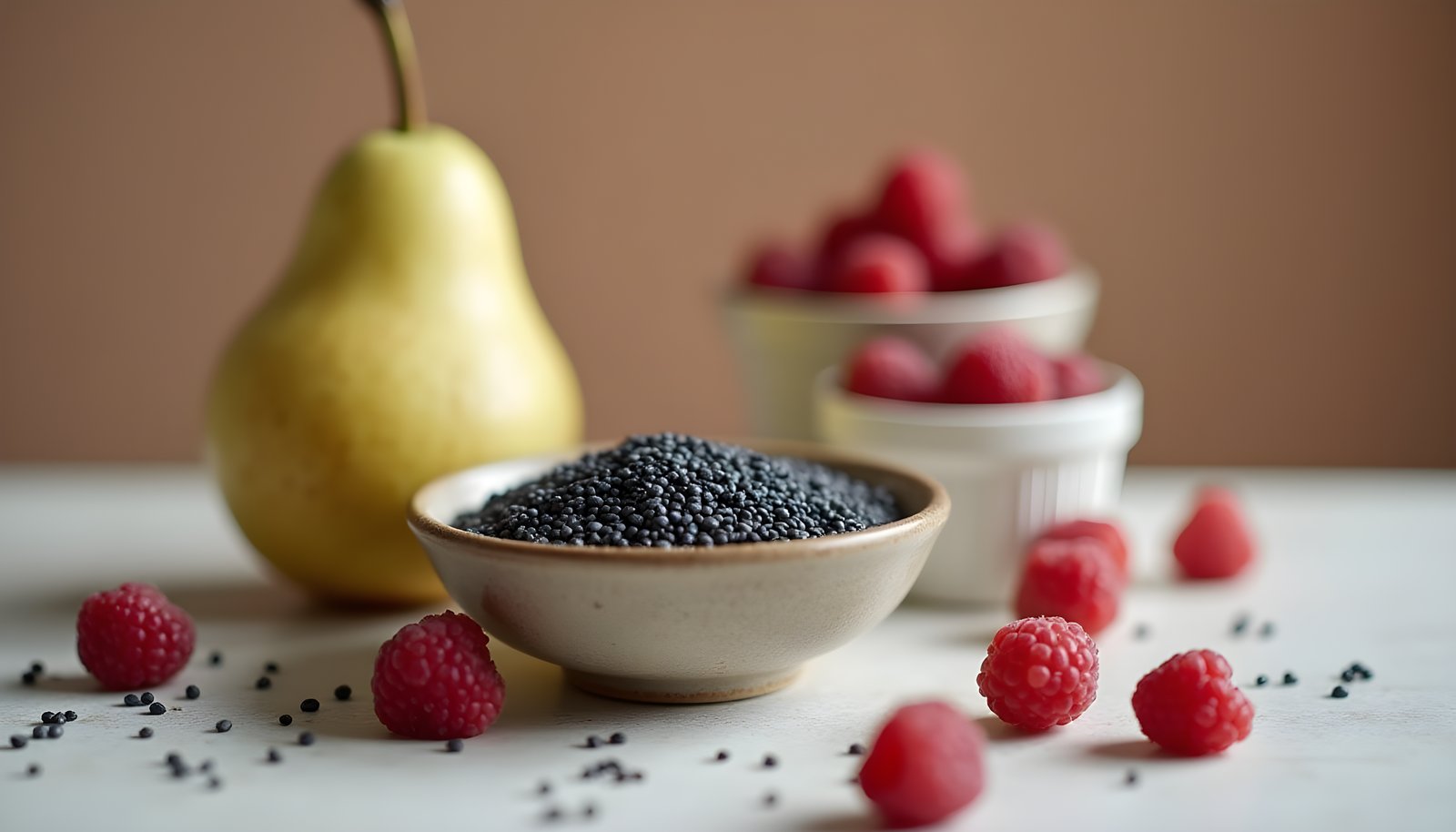
Now build it at home. Start with a cup of cantaloupe, add half a cup of raspberries for about 4 grams, and sprinkle on a tablespoon of chia seeds for another 4.1 grams.
That bowl has about 9.5 grams of fiber, a third of the Daily Value, and it still tastes mostly like sweet melon. The cantaloupe sets the flavor while the berries and seeds supply the fiber.
Or swap the raspberries for a full cup of blackberries and the bowl climbs to about 9 grams of fiber without the chia at all. Either way, the melon stays the star of the bowl.
Cleveland Clinic also suggests blending cantaloupe into smoothies, tossing it into salads, chopping it into tiny cubes for salsa or pairing it with tomatoes in a summer salad.
Want more ways to work melon into breakfasts, salads and snacks? Our recipe eBooks are packed with easy, high-fiber combinations.
Your next cantaloupe: pick it, scrub it, then cut it
Start at the store. Zumpano says a cantaloupe that smells sweet is probably a winner, and since cantaloupes don’t keep ripening once they’re picked, skip any that don’t.
Buy the melon whole instead of grabbing pre-cut cubes or halves. Cleveland Clinic notes that pre-sliced fruit containers and pre-cut melon halves are common sources of food poisoning.
At home, wash and rinse the rind before you slice into it, even though you won’t eat the outside. Then cut, cube and keep a container ready in the fridge with a bag of frozen raspberries nearby, so the high fiber version of your melon bowl is the easy one to make.
Cantaloupe and fiber: what people ask
How much fiber is in a cup of cantaloupe?
A cup of cantaloupe cubes has about 1.4 grams of fiber, according to USDA. A cup of melon balls has slightly more, about 1.6 grams, because the pieces pack in more weight.
Is cantaloupe high in fiber?
No. At about 5% of the Daily Value per cup, cantaloupe sits at the FDA’s low marker, though it’s high in both vitamin C and vitamin A.
Does cantaloupe have more fiber than watermelon?
Yes. A cup of cantaloupe has about 1.4 grams, more than twice the 0.6 grams in a cup of diced watermelon.
Is cantaloupe or honeydew healthier?
They’re tied on fiber at about 1.4 grams per cup. Cantaloupe has nearly twice the vitamin C and far more vitamin A, so it comes out ahead on vitamins.
Can you eat too much cantaloupe?
Cleveland Clinic dietitian Julia Zumpano says about a cup a day is generally fine for most people. Eating much more may lead to stomachaches, cramps or diarrhea.
Is cantaloupe good for constipation?
It helps a little, thanks to its water and 1.4 grams of fiber per cup. Pairing it with higher fiber fruits like raspberries or a pear does far more.
How much fiber is in a whole cantaloupe?
A medium cantaloupe, about 5 inches across, has roughly 5 grams of fiber. A small one has about 4 grams.
Sources
- USDA Agricultural Research Service. FoodData Central, SR Legacy entries for melons, cantaloupe, raw (169092); melons, honeydew, raw (169911); and watermelon, raw (167765). 2019. fdc.nal.usda.gov
- U.S. Department of Agriculture and HHS. “Food Sources of Dietary Fiber.” Dietary Guidelines for Americans, 2020 to 2025. dietaryguidelines.gov
- U.S. Food and Drug Administration. “Daily Value on the Nutrition and Supplement Facts Labels.” 2024. fda.gov
- Cleveland Clinic. “4 Health Benefits of Cantaloupe.” 2025. health.clevelandclinic.org