
In this article
- Plant protein fiber foods, ranked by fiber per cup
- The familiar leaders: navy beans, split peas, lentils and black beans
- Adzuki and mung beans: the small beans with big numbers
- Black-eyed peas, pigeon peas and fava beans
- Minerals that come with the fiber
- Myth and fact: the highest protein legumes
- Green peas: the vegetable that counts as protein
- What a half cup gives you
- How plant protein fiber foods feed your gut
- How much to aim for each week
- Getting more meatless protein sources into your week
- What researchers are learning about legume fiber
- Plant protein and fiber: what readers ask
- Sources
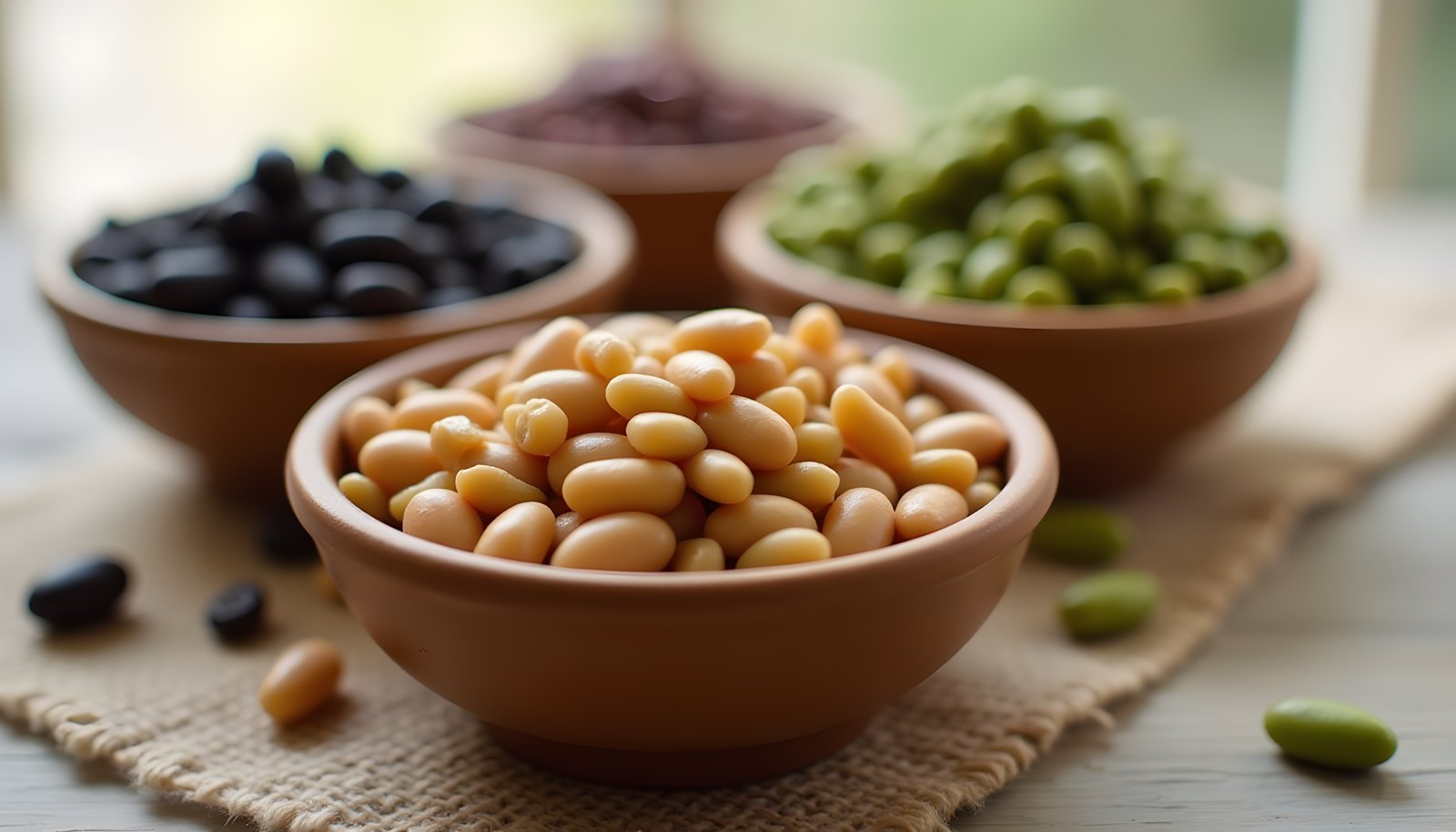
Navy beans top the USDA list of plant protein fiber foods with 19 grams of fiber per cooked cup. The surprise is in second place: adzuki beans, a small red bean most home cooks have never bought, with almost 17 grams of fiber and 17 grams of protein.
Plenty of other overlooked legumes deserve a spot in your rotation, from mung beans and black-eyed peas to pigeon peas and lupini. Below are 12 meatless protein sources ranked by fiber, with what each one brings and how to use it.
Plant protein fiber foods, ranked by fiber per cup
All values are for one cup cooked, from USDA FoodData Central.
| Food (1 cup cooked) | Fiber | Protein | Calories |
|---|---|---|---|
| Navy beans | 19.0 g | 15.0 g | 255 |
| Adzuki beans | 16.8 g | 17.3 g | 294 |
| Split peas | 16.3 g | 16.3 g | 231 |
| Lentils | 15.6 g | 17.9 g | 230 |
| Black beans | 15.0 g | 15.2 g | 227 |
| Mung beans | 15.0 g | 14.0 g | 212 |
| Pigeon peas | 11.3 g | 11.4 g | 203 |
| Black-eyed peas | 11.2 g | 13.3 g | 200 |
| Soybeans | 10.3 g | 28.6 g | 298 |
| Fava beans | 9.2 g | 12.9 g | 187 |
| Green peas (frozen) | 8.8 g | 8.2 g | 125 |
| Lupini beans | 4.7 g | 25.9 g | 198 |
Six of the twelve deliver 15 grams of fiber or more in a single cup. Even the lowest, lupini beans, give you 4.7 grams along with more protein than most of the others.
The familiar leaders: navy beans, split peas, lentils and black beans
These four are the easiest to find and the most reliable fiber sources on the list. Navy beans lead with 19 grams of fiber, while lentils carry the most protein of the group at 17.9 grams.
They’re also the most flexible in the kitchen. Navy beans go into soups and dips, split peas into soup, lentils into almost anything, and black beans into bowls and tacos.
Adzuki and mung beans: the small beans with big numbers
Adzuki beans
Adzuki beans match lentils on protein and beat them on fiber, with 16.8 grams of fiber and 17.3 grams of protein per cup. They’re also one of the richest sources of potassium here, at about 1,224 mg, or 26% of the FDA Daily Value.
In East Asian cooking, adzuki beans often turn up in sweet red bean paste. For a savory high fiber vegan protein, cook them like any small bean and use them in rice bowls, stews or salads.
Mung beans
Mung beans bring 15 grams of fiber and 14 grams of protein for just 212 calories per cup. They also carry about 320 mcg of folate, 80% of the Daily Value.
Whole mung beans cook down soft and work well in soups and curries. They’re a good bean to try if you find larger beans too heavy.
Black-eyed peas, pigeon peas and fava beans
This middle group gives you 9 to 11 grams of fiber per cup and around 200 calories. That’s still a generous amount of fiber from one serving.
- Black-eyed peas have 11.2 grams of fiber and 13.3 grams of protein, plus about 358 mcg of folate, close to 90% of the Daily Value.
- Pigeon peas carry 11.3 grams of fiber and 11.4 grams of protein, with about 645 mg of potassium.
- Fava beans offer 9.2 grams of fiber and 12.9 grams of protein for 187 calories, the lightest of the three.
Want more ways to cook beans you don’t usually buy? Our recipe eBooks are full of easy, high fiber meals built around legumes.
Minerals that come with the fiber
Branching out also pays off in minerals. Several of these legumes are strong sources of folate, potassium and iron, as these USDA values per cooked cup show:
| Food (1 cup cooked) | Folate | Potassium | Iron |
|---|---|---|---|
| Lentils | 358 mcg (90% DV) | 731 mg (16% DV) | 6.6 mg (37% DV) |
| Black-eyed peas | 358 mcg (89% DV) | 478 mg (10% DV) | 4.3 mg (24% DV) |
| Mung beans | 320 mcg (80% DV) | 540 mg (11% DV) | Not listed |
| Adzuki beans | 278 mcg (70% DV) | 1,224 mg (26% DV) | 4.6 mg (26% DV) |
| Pigeon peas | 186 mcg (47% DV) | 645 mg (14% DV) | 1.9 mg (11% DV) |
| Fava beans | 177 mcg (44% DV) | 456 mg (10% DV) | 2.6 mg (14% DV) |
| Lupini beans | 98 mcg (24% DV) | 407 mg (9% DV) | 2.0 mg (11% DV) |
Lentils and black-eyed peas stand out for folate, each covering close to 90% of the Daily Value in a cup. Adzuki beans lead on potassium by a wide margin.
Myth and fact: the highest protein legumes
Myth: The legumes with the most protein must also have the most fiber.
Fact: The two protein champions sit near the bottom for fiber. Soybeans have 28.6 grams of protein per cup but 10.3 grams of fiber, and lupini beans have 25.9 grams of protein with only 4.7 grams of fiber.
Soybeans also carry about 15.4 grams of fat per cup, far more than other beans. They’re excellent protein foods, but if fiber is your goal, navy, adzuki or split peas will get you further.
Green peas: the vegetable that counts as protein
Green peas are often filed with vegetables, but a cup of cooked frozen peas still gives you 8.8 grams of fiber and 8.2 grams of protein. At 125 calories, they have the fewest calories on the list.
They’re also the easiest to keep on hand. A bag of frozen peas can go straight into pasta, fried rice, soups or omelets with no soaking or long cooking.
What a half cup gives you
A full cup of beans is a big portion for many people. A half cup is easier to fit into a meal and still adds a meaningful amount of fiber and protein.
Half a cup of navy beans gives you about 9.5 grams of fiber. Half a cup of adzuki beans adds about 8.4 grams of fiber and 8.7 grams of protein.
Even half a cup of green peas brings about 4.4 grams of fiber. Adding two different half cup portions across a day is often more comfortable than one large serving.
How plant protein fiber foods feed your gut
Harvard’s Nutrition Source explains that legumes contain fiber, resistant starch and non digestible carbohydrates called oligosaccharides. Resistant starch isn’t digested and reaches the colon, where it acts as a prebiotic, a food for beneficial bacteria such as Bifidobacteria.
As those bacteria ferment resistant starch and oligosaccharides, they produce gas, which can cause bloating and cramping in some people. That’s the trade off that comes with the gut health benefits.
Harvard notes that soaking dried beans for at least three hours and then cooking them may help reduce that side effect. Mayo Clinic also recommends increasing fiber gradually and drinking plenty of water.
If beans tend to leave you uncomfortable, our gut health guides walk you through a gentle way to build up your tolerance.
How much to aim for each week
Harvard’s legumes page lays out a few benchmarks. The Dietary Guidelines for Americans suggest about 3 cups of legumes a week for adults, and the DASH eating plan suggests 4 to 5 half cup servings a week.
The EAT-Lancet planetary health diet goes further, at about 50 grams of legumes a day. Any of these targets is easy to reach by rotating the foods in the table.
Harvard’s fiber page puts the average American intake at about 15 grams a day. A single cup of navy beans would more than double that for most people.
Getting more meatless protein sources into your week
You don’t need to cook all twelve. Picking three or four and rotating them is enough to add variety and keep meals interesting.
- Cook a pot of adzuki or mung beans on the weekend and use them in two or three meals.
- Keep frozen green peas and canned black-eyed peas in the pantry for fast weeknight dinners.
- Swap navy beans for chickpeas in hummus or white bean dip.
- Use lupini or soybeans when you want extra protein, and pair them with a higher fiber food.
Harvard points out that legumes in their whole, unprocessed form are low in saturated fat and sodium. With plant based meat products, though, it advises watching for added sodium.
Not sure how much fiber your own target should be? Our fiber calculator gives you a personal daily number in seconds.
What researchers are learning about legume fiber
One of the more promising areas is what happens after fermentation. Harvard explains that gut bacteria break down legume fiber into a short chain fatty acid called butyrate, which may be associated with the prevention of colorectal cancer.
These bacteria also support normal bowel function and may reduce levels of cancer causing compounds, according to the same source. The research is still developing, but it adds another reason to include more plant protein fiber foods.
Plant protein and fiber: what readers ask
Which plant protein has the most fiber?
Navy beans lead, with about 19 grams of fiber per cooked cup. Adzuki beans, split peas and lentils follow at about 16 to 17 grams.
Are adzuki beans high in fiber?
Yes. A cooked cup of adzuki beans has about 16.8 grams of fiber and 17.3 grams of protein, plus about 1,224 mg of potassium.
Do soybeans have more fiber than other beans?
No. Soybeans have about 10.3 grams of fiber per cup, less than navy, black or adzuki beans, but they lead on protein at 28.6 grams.
How much fiber is in lupini beans?
About 4.7 grams per cooked cup, alongside 25.9 grams of protein. That makes lupini a high protein bean with modest fiber.
Are green peas a good meatless protein source?
Yes. A cup of cooked frozen green peas has about 8.2 grams of protein and 8.8 grams of fiber for 125 calories.
Do plant proteins help gut health?
Yes. Legumes contain resistant starch and oligosaccharides that feed beneficial bacteria, which then produce butyrate, a short chain fatty acid.
How can I reduce gas from beans?
Soak dried beans for at least three hours before cooking, and add legumes gradually while drinking plenty of water.
Sources
- U.S. Department of Agriculture, Agricultural Research Service. “FoodData Central” (navy, adzuki, black, mung, fava and soybeans, split peas, lentils, pigeon peas, black-eyed peas and lupins, mature seeds, cooked, boiled, without salt; green peas, frozen, cooked). 2026. fdc.nal.usda.gov
- Harvard T.H. Chan School of Public Health. “Legumes and Pulses.” The Nutrition Source. 2024. nutritionsource.hsph.harvard.edu
- U.S. Food and Drug Administration. “Daily Value on the Nutrition and Supplement Facts Labels.” 2024. fda.gov
- Harvard T.H. Chan School of Public Health. “Fiber.” The Nutrition Source. 2024. nutritionsource.hsph.harvard.edu
- Mayo Clinic Staff. “Dietary fiber: Essential for a healthy diet.” Mayo Clinic. 2025. mayoclinic.org