
In this article
- Inulin, explained without the chemistry class
- Whole inulin fiber foods, ranked
- Garlic, bananas, wheat and the rest of the list
- Chicory root: the inulin factory
- How chicory root fiber shows up on food labels
- Whole foods vs added inulin: how they compare
- What 4 to 10 grams looks like on a plate
- Myth vs fact: more inulin is always better for your gut
- What inulin does once it reaches your colon
- Does cooking change inulin?
- Which inulin source fits you
- The big exception: sensitive guts and IBS
- Inulin fiber foods: what people ask
- Sources
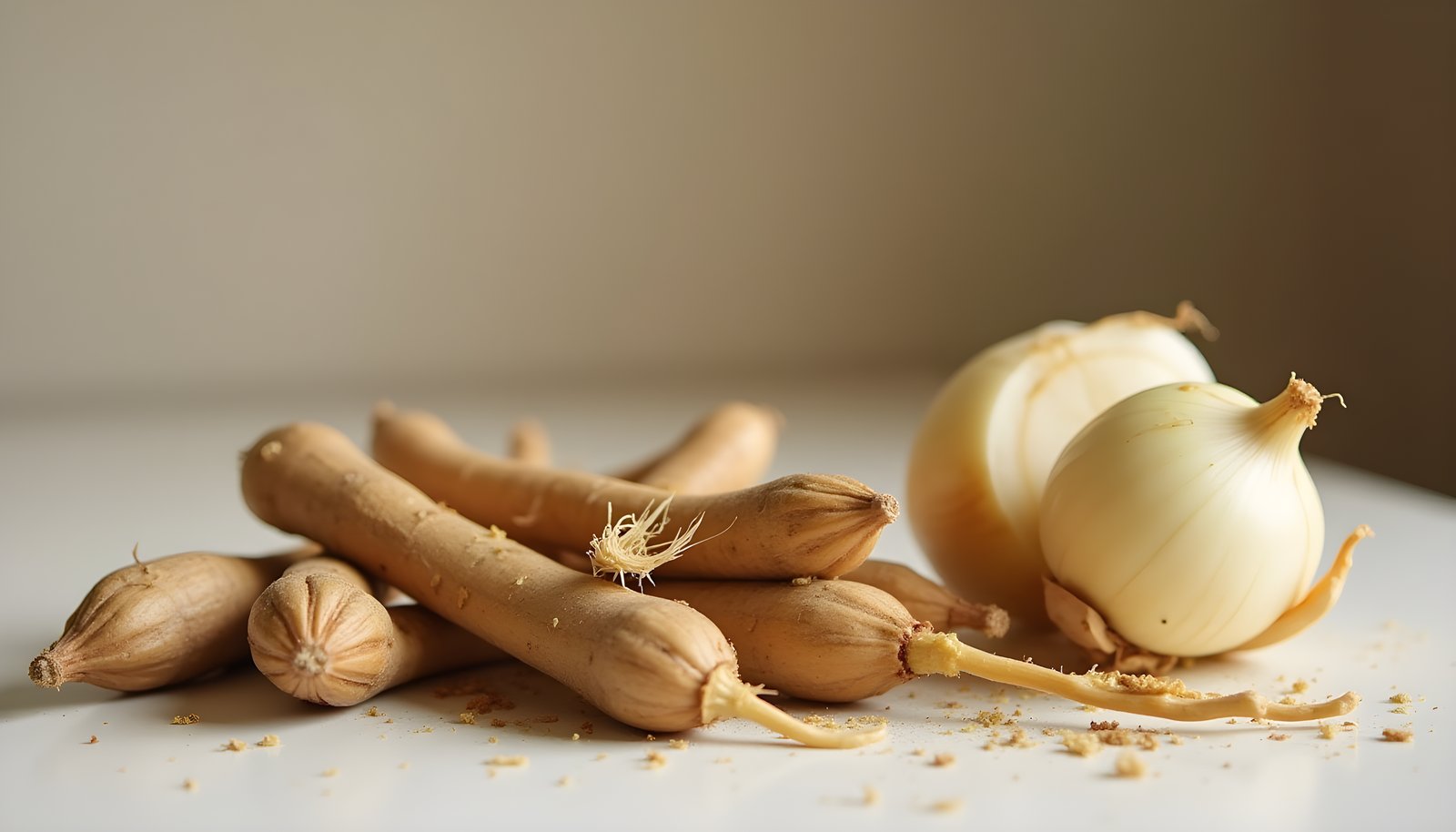
Flip over a high fiber snack bar and there’s a good chance you’ll see chicory root fiber near the top of the ingredient list. That’s inulin, and among inulin fiber foods in the produce aisle, the richest are salsify, globe artichokes, Jerusalem artichokes and onions, with garlic, leeks, bananas and wheat adding smaller amounts.
So you can get inulin two ways: from whole plants, or from chicory root extract added to processed foods. The amounts, the side effects and what comes along with the fiber differ a lot between those two routes.
Inulin, explained without the chemistry class
Cleveland Clinic describes inulin as a prebiotic fiber made by plants. Your body can’t digest it, so it travels to your colon, where it becomes food for gut bacteria.
Lab studies usually measure inulin as part of a wider group called fructans, which are chains of the sugar fructose. Inulin is the long chain version, while oligofructose is a shorter chain cousin often added to foods alongside it.
Despite the name, inulin has nothing to do with insulin. One is a plant fiber, the other is a hormone your pancreas makes.
Whole inulin fiber foods, ranked
The most useful lab data on whole vegetables comes from a 2017 Belgian study by Kalala and colleagues, which measured fructans in 29 raw and steamed vegetables. Here’s what the leaders held, expressed per 100 grams of raw vegetable:
| Vegetable, raw | Fructans per 100 g | Grams needed for about 4 g |
|---|---|---|
| Salsify | 15.6 g | about 26 g |
| Globe artichoke | 13.1 g | about 31 g |
| Jerusalem artichoke (sunchoke) | 11.6 g | about 34 g |
| Onion | 4.5 g | about 89 g |
Why 4 grams? That’s roughly what healthy UK adults ate in a 2011 King’s College London study by Dunn and colleagues, which measured about 4.0 grams of inulin a day plus about 3.8 grams of oligofructose.
The team tracked 66 adults with a seven day food diary and checked it against a short food frequency questionnaire. Both methods landed on the same average, which makes the 4 gram figure a reasonable benchmark for a typical diet.
The third column shows how little of the top vegetables it takes to match that. A small side of artichoke or sunchokes gets you there, while onion needs a more generous portion.
Beyond those four, the same study found far smaller amounts. Leeks averaged about 3 grams of fructans per 100 grams of dry matter (the weight left after water is removed), and carrots, parsnips and Brussels sprouts held 2 grams or less on that basis.
Garlic, bananas, wheat and the rest of the list
Cleveland Clinic’s inulin list goes well beyond the top vegetables. It names asparagus, bananas, burdock, chicory root, garlic, leeks, oats, onions, soybeans, wheat and wild yams.
The lab sources used here don’t give gram figures for garlic, bananas, oats or wheat. Treat those as small, everyday contributors rather than headline sources.
Want more ways to cook sunchokes, artichokes and onions? Our recipe eBooks are packed with easy, high fiber dishes.
Chicory root: the inulin factory
Chicory is a leafy plant with a long taproot, and that root is where most commercial inulin starts. Cleveland Clinic notes that inulin supplements tend to come from chicory root.
A chicory root flour reviewed in a 2018 notice filed with the FDA was described as 55 to 68% inulin. By that figure, a 10 gram spoonful of the flour would carry roughly 5.5 to 6.8 grams of inulin, more than a typical day’s intake in the Dunn study.
That concentration is the point of chicory products, and also the catch. It’s very easy to eat more inulin from a fortified bar or powder than you’d ever get from vegetables at one meal.
How chicory root fiber shows up on food labels
Cleveland Clinic explains that manufacturers use inulin as a fat substitute or sweetener, swap it in for eggs in some baked goods, and add it to ice cream. It also comes in capsules, gummies, tablets and powders.
In the US, the FDA says inulin and inulin-type fructans are on its list of fibers it intends to propose adding to the official definition of dietary fiber. Until that rulemaking is done, it allows manufacturers to count them in the dietary fiber line on the Nutrition Facts label.
So a bar that lists 10 grams of fiber may get much of that from chicory root. Look for chicory root fiber, inulin or oligofructose in the ingredients if you want to know.
Whole foods vs added inulin: how they compare
| Source | Inulin per serving | What else you get |
|---|---|---|
| Raw salsify or artichoke, 50 g | about 6 to 8 g fructans | Other fibers, vitamins and minerals, very few calories |
| Raw onion, 50 g | about 2 g fructans | Flavor for almost any savory dish |
| Chicory root flour, 10 g | about 5.5 to 6.8 g inulin | A concentrated, mostly single fiber ingredient |
| Fortified bars and snacks | varies by product | Whatever the rest of the product contains |
Whole foods spread the inulin across a meal and bring other nutrients with it. Fortified foods can deliver a big dose in a few bites, which is convenient but harder on some stomachs.
What 4 to 10 grams looks like on a plate
Using the Kalala fresh weight figures, it doesn’t take much produce to land in the range the Bonnema trial found comfortable. A few examples:
- 50 grams of globe artichoke, steamed: about 6.6 grams of fructans.
- 50 grams of raw onion in a salsa or sandwich: about 2.3 grams.
- 50 grams of sunchokes, steamed or simmered into soup: about 5.8 grams.
- Artichoke plus onion in one meal: close to 9 grams.
Compare that with the roughly 4 grams a day the UK adults in the Dunn study were eating. One deliberate inulin food at lunch or dinner can double a typical intake.
In the Bonnema trial, even 5 gram doses nudged gas up slightly. Starting with one inulin food a day and seeing how you feel is a simple, low risk test.
Myth vs fact: more inulin is always better for your gut
Myth: Since inulin feeds good bacteria, the more you eat, the better.
Fact: A 2010 University of Minnesota trial by Bonnema and colleagues gave 26 healthy adults 5 or 10 grams of native inulin or oligofructose at breakfast. Both raised gut symptoms a little, with gas the most common and bloating next.
The fiber was mixed into a plain breakfast of a bagel, cream cheese and orange juice, and symptoms were scored over the next 48 hours. That is a lot like eating a fiber fortified food alongside an ordinary meal.
The researchers concluded that up to 10 grams a day of native inulin and up to 5 grams a day of oligofructose were well tolerated. A 10 gram dose of oligofructose noticeably increased symptoms.
Cleveland Clinic lists constipation, cramping, diarrhea, gas and bloating as possible effects of too much. More isn’t automatically better, and the shorter chain form caused more symptoms at the same dose.
What inulin does once it reaches your colon
According to Cleveland Clinic, inulin can stimulate bowel movements and help prevent constipation, and fiber can also firm up loose stools. It forms a gel that slows stomach emptying, which may help you feel full.
Cleveland Clinic adds that some studies suggest inulin may help lower cholesterol and increase the variety of good bacteria in your gut. Those links are promising but still being studied.
Not sure how much total fiber you should aim for? Our fiber calculator gives you a personal target in seconds.
Does cooking change inulin?
In the Kalala study, steaming barely moved fructan levels in the top vegetables. Salsify went from about 69.5 to 71.9 grams per 100 grams of dry matter, and onion stayed at about 32.6.
That means sunchoke soup or steamed artichokes still count. Roasting and frying weren’t tested, so there’s less certainty there.
Which inulin source fits you
- If you want inulin with the fewest side effects: get it from vegetables spread across meals, starting with onions and artichokes.
- If you want the biggest dose from the smallest portion: salsify, artichokes and sunchokes beat everything in the produce aisle.
- If you rely on fortified bars or powders: check the label for chicory root fiber and keep added native inulin under about 10 grams a day.
- If a product lists oligofructose: treat about 5 grams a day as a comfortable ceiling based on the Bonnema trial.
- If you’re building up: add one inulin food at a time so you can tell what your gut handles well.
If your gut needs a gentler ramp up, our guides walk you through adding prebiotic foods step by step.
The big exception: sensitive guts and IBS
The strongest caveat applies to people with irritable bowel syndrome. Cleveland Clinic warns that artificial sources of inulin can aggravate conditions like IBS, and recommends talking with a healthcare provider before starting a supplement.
For someone with IBS, the same chicory root fiber that makes a bar look healthy can be the reason it causes gas and cramping. In that case, whole foods in small portions, or a different fiber altogether, may serve you better than a concentrated inulin product.
Inulin fiber foods: what people ask
What food has the most inulin?
Chicory root products are the most concentrated, and a chicory flour in one FDA filing was 55 to 68% inulin. Among vegetables, salsify, globe artichokes and Jerusalem artichokes lead, at about 12 to 16 grams of fructans per 100 grams raw.
Is chicory root fiber the same as inulin?
Yes, for practical purposes. Chicory root fiber on an ingredient list is inulin extracted from chicory root, and it’s the main source of inulin in supplements.
Is inulin related to insulin?
No. Inulin is a plant fiber that feeds gut bacteria, while insulin is a hormone your body makes to manage blood sugar. The names are just similar.
How much inulin per day is safe?
In a trial of healthy adults, up to 10 grams a day of native inulin and up to 5 grams of oligofructose were well tolerated. A 10 gram dose of oligofructose noticeably raised gas and bloating.
How much inulin do people usually eat?
About 4 grams a day in one UK study of healthy adults, plus about 3.8 grams of oligofructose. That’s roughly what 30 grams of raw artichoke provides.
Does cooking destroy inulin?
No, at least not steaming. In a 2017 lab study, fructans in salsify, artichokes, sunchokes and onions held steady or rose slightly after steaming.
Why does inulin cause gas?
Gut bacteria ferment inulin, and gas is a byproduct. In one trial, gas was the most common symptom at 5 to 10 gram doses, followed by bloating.
Sources
- Kalala G, Kambashi B, Everaert N, et al. “Characterization of fructans and dietary fibre profiles in raw and steamed vegetables.” International Journal of Food Sciences and Nutrition, 2017. sites.uclouvain.be
- Bonnema AL, Kolberg LW, Thomas W, Slavin JL. “Gastrointestinal tolerance of chicory inulin products.” Journal of the American Dietetic Association, 2010. experts.umn.edu
- Dunn S, Datta A, Kallis S, et al. “Validation of a food frequency questionnaire to measure intakes of inulin and oligofructose.” European Journal of Clinical Nutrition, 2011. nature.com
- Weekley K. “Does Inulin Help Improve Gut Health?” Cleveland Clinic Health Essentials, 2022. health.clevelandclinic.org
- US Food and Drug Administration. “Questions and Answers on Dietary Fiber.” 2024. fda.gov
- Ramboll for Blue Prairie Brands. “GRAS Notice No. 830: Chicory Flour.” US Food and Drug Administration, 2018. fda.gov