
In this article
- Fennel fiber by serving
- Fennel bulb nutrition
- Fennel vs other crunchy vegetables
- Fennel as one of your digestive vegetables
- Fennel on a low carb plate
- A fennel lunch, counted
- A fennel prep checklist
- Raising your fiber intake with fennel
- One fennel move to make today
- Fennel questions people ask
- Sources
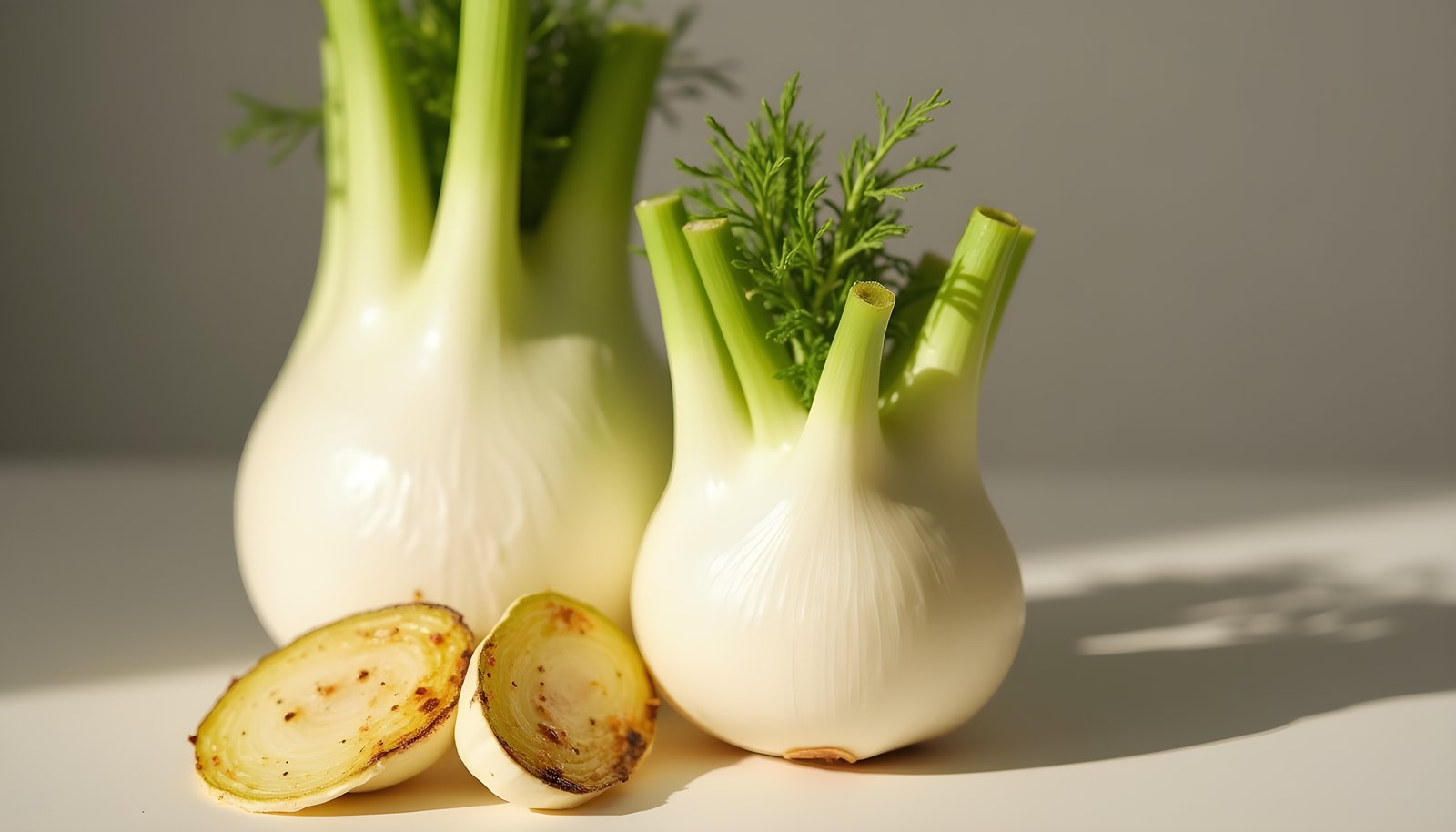
Fennel tends to get treated like a seasoning: a few shavings in a salad, a pinch of seeds in sausage, a frond on top for looks. That undersells it, because a cup of sliced raw fennel bulb has about 2.7 grams of fiber, and a whole bulb has about 7.3 grams.
That’s over a quarter of the Daily Value from one vegetable, for around 73 calories. Fennel fiber deserves a place in the conversation alongside carrots and peppers.
Fennel fiber by serving
USDA FoodData Central lists raw fennel bulb at 3.1 grams of fiber per 100 grams and 31 calories. A cup of sliced bulb weighs about 87 grams, and a whole bulb about 234 grams.
| Fennel | Serving | Fiber | % DV (28 g) | Calories |
|---|---|---|---|---|
| Raw bulb, sliced | 1/2 cup (44 g) | 1.4 g | 5% | 14 |
| Raw bulb, sliced | 1 cup (87 g) | 2.7 g | 10% | 27 |
| Raw bulb | 100 g | 3.1 g | 11% | 31 |
| Raw bulb | 1 whole bulb (234 g) | 7.3 g | 26% | 73 |
| Cooked bulb (USDA survey record) | 1 whole bulb (218 g) | 7.6 g | 27% | 135 |
| Fennel seed | 1 teaspoon (2 g) | 0.8 g | 3% | 7 |
USDA’s newer Foundation record for raw fennel bulb lists a little less, about 2.1 grams per 100 grams. Different samples and lab methods can explain gaps like this, so a cup realistically lands somewhere between about 1.8 and 2.7 grams.
The cooked figure comes from USDA’s food survey database and includes about 3 grams of fat per 100 grams, so the recipe behind it includes some added fat. That’s why its calories are higher, while the fiber stays close to the raw bulb.
Fennel seed is a different story. At about 40 grams of fiber per 100 grams it’s extremely concentrated, but you only use a teaspoon or so at a time.
Fennel bulb nutrition
Beyond fiber, one cup of sliced raw fennel (87 g) provides about:
- Vitamin K: 55 mcg, about 46% of the Daily Value
- Vitamin C: 10 mg, about 12% DV
- Potassium: 360 mg, about 8% DV
- Manganese: 0.17 mg, about 7% DV
- Folate: 24 mcg DFE, about 6% DV
- Calcium: 43 mg, about 3% DV
A whole raw bulb scales that up to roughly 147 mcg of vitamin K, more than the full Daily Value, and about 970 mg of potassium.
The NIH Office of Dietary Supplements explains that vitamin K helps blood clot and plays a role in bone health. Fennel isn’t a leafy green, but it carries a meaningful amount for a crunchy vegetable.
The bulb is mostly water, about 90 grams per 100. That’s part of why it delivers fiber and crunch for so few calories.
Fennel vs other crunchy vegetables
Fennel is usually eaten raw and sliced thin, so the fair comparison is with other vegetables people eat raw. Here’s how a cup stacks up, using the Dietary Guidelines figures for the others.
| Raw vegetable (1 cup) | Fiber | Calories |
|---|---|---|
| Jicama | 5.9 g | 46 |
| Kohlrabi | 4.9 g | 36 |
| Carrots | 3.6 g | 52 |
| Red bell pepper | 3.1 g | 39 |
| Celeriac | 2.8 g | 66 |
| Fennel bulb (USDA) | 2.7 g | 27 |
Fennel lands just behind red bell pepper and carrots per cup, but it has the fewest calories on the list. Per 100 calories it delivers about 10 grams of fiber, ahead of carrots at about 6.9 and red pepper at about 7.9.
Next to the alliums it often shares a pan with, fennel is a clear step up. Raw fennel has 3.1 grams of fiber per 100 grams, compared with 1.8 for raw leeks and 1.7 for raw onions, according to USDA.
Mayo Clinic suggests 21 to 25 grams of fiber a day for women and 30 to 38 grams for men. A whole fennel bulb covers about 29 to 35% of a woman’s daily target on its own.
Want a fiber target matched to you? Our fiber calculator works it out in seconds.
A whole bulb vs a cup of cooked vegetables
Because a fennel bulb is often cooked whole or in wedges, it’s also worth comparing one bulb with a cup of other cooked vegetables. USDA’s cooked bulb record lists about 7.6 grams of fiber.
The Dietary Guidelines list a cup of cooked Brussels sprouts at 6.4 grams, cooked broccoli at 5.2 grams, cooked cauliflower at 4.9 grams and cooked carrots at 4.8 grams. Eat a whole roasted bulb and you get more fiber than a cup of any of them.
Fennel as one of your digestive vegetables
Fiber is what gives fennel its value for digestion. Mayo Clinic explains that fiber increases the weight and size of stool and softens it, which makes it easier to pass and lowers the chance of constipation.
Mayo also describes two kinds of fiber. Soluble fiber dissolves in water to form a gel-like material that may help lower cholesterol and blood sugar, while insoluble fiber helps material move through your digestive system.
Most vegetables contain a mix of both. With nearly 3 grams per cup, raw fennel is an easy way to add some of each to a salad or slaw.
Mayo Clinic adds that fiber rich foods tend to be more filling and can help you feel satisfied longer. A crunchy cup of fennel at 27 calories is a low cost way to add that bulk.
If you’re increasing fiber quickly, Mayo Clinic notes it can lead to gas, bloating and cramping. Add fennel and other fiber foods gradually and drink plenty of water.
If your gut needs a gentler path to more fiber, our guides show you how to build up step by step.
Fennel on a low carb plate
A cup of sliced raw fennel has about 6.4 grams of carbohydrate, and 2.7 grams of that is fiber. That leaves roughly 3.7 grams of net carbs per cup, with about 3.4 grams of natural sugar.
A whole raw bulb comes to about 8.6 grams of net carbs. That’s a manageable amount for most lower carb eating plans, especially given the bulk and crunch you get in return.
Fennel seed adds even less per use. A teaspoon has about 1 gram of carbohydrate, most of it fiber.
A fennel lunch, counted
Picture a simple lunch: a cup of shaved raw fennel, half a cup of chickpeas, half an orange’s worth of segments and a handful of greens. The fennel brings 2.7 grams and the chickpeas, per the Dietary Guidelines, add 6.3 grams.
That’s already about 9 grams of fiber before the fruit and greens, roughly a third of the Daily Value. Swap the chickpeas for half a cup of lentils at 7.8 grams and the bowl tops 10 grams.
Roast a whole bulb as a side instead and you get about 7 grams from the fennel alone, which is more than half a cup of chickpeas.
| Fennel pairing | Amount | Fiber |
|---|---|---|
| Fennel bulb, raw (USDA) | 1 cup | 2.7 g |
| Chickpeas (DGA) | 1/2 cup | 6.3 g |
| Lentils, cooked (DGA) | 1/2 cup | 7.8 g |
| Pear, with skin (DGA) | 1/2 medium | 2.8 g |
| Barley, cooked (DGA) | 1/2 cup | 3.0 g |
Looking for more ways to work fennel into meals? Our recipe eBooks are packed with easy, high fiber ideas.
A fennel prep checklist
Getting the most fiber from fennel mostly comes down to using more of the bulb. A few simple steps help:
- Trim the stalks where they meet the bulb and save the fronds for garnish
- Cut a thin slice off the root end, leaving the core to hold wedges together
- Halve the bulb and slice it thin for salads, or cut wedges for roasting
- Keep the outer layers unless they’re bruised or dry
- Chop the stalks into stocks, soups or braises
- Pair the fennel with beans, lentils or whole grains to stack the fiber
Thin slicing makes raw fennel easier to eat in larger amounts, which is how a cup or two finds its way into a meal without feeling like a chore.
Raising your fiber intake with fennel
Fennel is most useful as a swap. Replace half the iceberg in a salad with sliced fennel, use it instead of celery in a slaw, or roast wedges next to potatoes and carrots.
Each of those swaps adds 1 to 3 grams of fiber without making the dish feel heavier. Over a week, that adds up to a noticeable bump in your fiber intake.
Fennel seeds work the same way on a smaller scale. A teaspoon stirred into bread dough, a tomato sauce or a lentil stew adds under a gram of fiber, plus a lot of flavor.
One fennel move to make today
Buy one fennel bulb this week and eat the whole thing over two or three meals: shaved raw into a salad, sliced into a slaw and roasted as a side. That single bulb delivers about 7 grams of fiber, a quarter of the Daily Value, for well under 100 calories raw.
Add half a cup of lentils (7.8 grams) to one of those meals and those two foods alone bring you to about 15 grams.
Fennel questions people ask
How much fiber is in a fennel bulb?
About 7.3 grams. USDA lists a whole raw fennel bulb (234 g) at roughly 7.3 grams of fiber and 73 calories.
Is fennel good for digestion?
Its fiber helps. A cup of sliced raw fennel has about 2.7 grams of fiber, and Mayo Clinic notes that fiber adds bulk and softness to stool.
Does fennel have more fiber than onions?
Fennel has about 3.1 grams of fiber per 100 grams, more than raw leeks at 1.8 grams or raw onions at 1.7 grams.
Do fennel seeds have fiber?
Yes, a lot by weight. USDA lists fennel seed at about 40 grams of fiber per 100 grams, though a teaspoon gives under 1 gram.
Can you eat fennel raw?
Yes. Raw fennel is usually sliced thin for salads and slaws, and a cup has about 27 calories and 2.7 grams of fiber.
What vitamins are in fennel?
Fennel provides vitamin K and vitamin C. A cup of sliced raw bulb has about 46% of the Daily Value for vitamin K and 12% for vitamin C.
Is fennel low in calories?
Yes. A cup of sliced raw fennel has about 27 calories, and the bulb is about 90% water.
Sources
- USDA Agricultural Research Service. FoodData Central: SR Legacy Fennel, bulb, raw (169385); Foundation Fennel, bulb, raw (2747655); FNDDS Fennel bulb, cooked (2709907); Spices, fennel seed (171323); Leeks, raw (169246); Onions, raw (170000). 2019 to 2026. fdc.nal.usda.gov
- U.S. Department of Agriculture and U.S. Department of Health and Human Services. “Food Sources of Dietary Fiber.” Dietary Guidelines for Americans, 2020 to 2025. dietaryguidelines.gov
- U.S. Food and Drug Administration. “Daily Value on the Nutrition and Supplement Facts Labels.” 2024. fda.gov
- National Institutes of Health Office of Dietary Supplements. “Vitamin K: Fact Sheet for Consumers.” 2021. ods.od.nih.gov
- Mayo Clinic Staff. “Dietary fiber: Essential for a healthy diet.” Mayo Clinic. 2025. mayoclinic.org