
In this article
- Radishes fiber by type and serving
- Radish nutrition in a crunchy package
- How radishes compare with other low calorie vegetables
- Red radishes, daikon and white icicle radishes
- Radishes on a low carb plate
- What radish fiber does for your digestion
- A radish snack plate, counted
- Easy ways to eat more radishes
- When to reach for radishes
- Questions about radishes and fiber
- Sources
Nineteen calories. That’s what a full cup of sliced raw radishes costs you, and it comes with about 1.9 grams of fiber and nearly a fifth of your daily vitamin C.
So yes, radishes have fiber, though not a lot per serving. Radishes fiber is modest by the cup, but per calorie it holds up well, and radishes add crunch and bite to meals where heavier sides would add up fast.
Radishes fiber by type and serving
USDA FoodData Central lists both red globe radishes and daikon (also called oriental or white radish) at 1.6 grams of fiber per 100 grams. The serving sizes you’re most likely to eat compare like this.
| Radish form | Serving | Fiber | % DV (28 g) | Calories |
|---|---|---|---|---|
| Red radishes, raw, sliced | 1 cup (116 g) | 1.9 g | 7% | 19 |
| Red radishes, raw | 100 g | 1.6 g | 6% | 16 |
| Daikon, raw, sliced | 1 cup (116 g) | 1.9 g | 7% | 21 |
| Daikon, boiled, sliced | 1 cup (147 g) | 2.4 g | 9% | 25 |
| Daikon, dried | 100 g | 23.9 g | 85% | 271 |
Boiled daikon packs a little more into the cup, since cooked slices soften and settle. The fiber per gram stays the same at 1.6 grams per 100 grams, so the gain comes purely from how much fits.
Dried daikon is in a different league. Once the water is gone, USDA lists 23.9 grams of fiber per 100 grams, along with 37 grams of natural sugar and 271 calories. It’s usually soaked before cooking and used in small amounts, so you’d rarely eat anything close to 100 grams at once.
Radish sprouts and radish greens are separate foods with their own nutrition profiles, so the numbers here apply only to the roots.
Radish nutrition in a crunchy package
Radishes are mostly water, which is exactly why they’re so light. Here’s what USDA lists for one cup of sliced raw red radishes (116 g):
- Calories: 19
- Vitamin C: 17 mg, about 19% of the Daily Value
- Potassium: 270 mg, about 6% DV
- Calcium: 30 mg
- Carbohydrate: about 4 g, with 2 g of natural sugar
- Protein: under 1 gram
Daikon brings a bit more vitamin C. USDA lists 22 mg per 100 grams raw, so a cup of slices gives you about 26 mg, or 28% of the Daily Value, plus around 32 mcg of folate.
Cooked daikon still holds a good share. A cup of boiled slices provides about 22 mg of vitamin C and 419 mg of potassium, roughly 9% of the Daily Value.
The trade off is that radishes aren’t dense in many nutrients. Their value lies in adding crunch, color and volume at almost no calorie cost, which pairs well with heavier, more nutrient dense foods on the same plate.
How radishes compare with other low calorie vegetables
Radishes sit among the lightest vegetables you can buy. Here’s how a cup compares with other low calorie vegetables from the Dietary Guidelines’ Food Sources of Dietary Fiber list.
| Vegetable (1 cup) | Fiber | Calories |
|---|---|---|
| Jicama, raw | 5.9 g | 46 |
| Cauliflower, cooked | 4.9 g | 34 |
| Carrots, raw | 3.6 g | 52 |
| Turnip, cooked | 3.1 g | 34 |
| Red bell pepper, raw | 3.1 g | 39 |
| Asparagus, cooked | 2.9 g | 32 |
| Cabbage, cooked | 2.8 g | 34 |
| Radishes, raw | 1.9 g | 19 |
Radishes come last on fiber per cup, but they also have the fewest calories by a wide margin. Per 100 calories, raw radishes deliver about 10 grams of fiber, close to what you’d get from cooked cauliflower.
Raw carrots make another useful comparison. A cup of carrots has about 3.6 grams of fiber and 52 calories, so radishes give you roughly half the fiber for about a third of the calories. Mixing the two on a crudité platter gives you color, crunch and a better fiber total than radishes alone.
Jicama is the standout if you want a crunchy raw vegetable with more fiber. A cup of jicama sticks has about three times the fiber of a cup of radish slices, for about 27 more calories.
Mayo Clinic suggests about 21 to 25 grams of fiber a day for women and 30 to 38 grams for men. A cup of radishes covers 8 to 9% of a woman’s target, so think of them as a helpful extra rather than a main source.
Not sure where your own daily fiber target lands? Our fiber calculator gives you a personal number in seconds.
Red radishes, daikon and white icicle radishes
Most grocery stores carry at least two kinds of radish, and they behave a little differently in the kitchen even though their fiber is nearly identical.
Red globe radishes
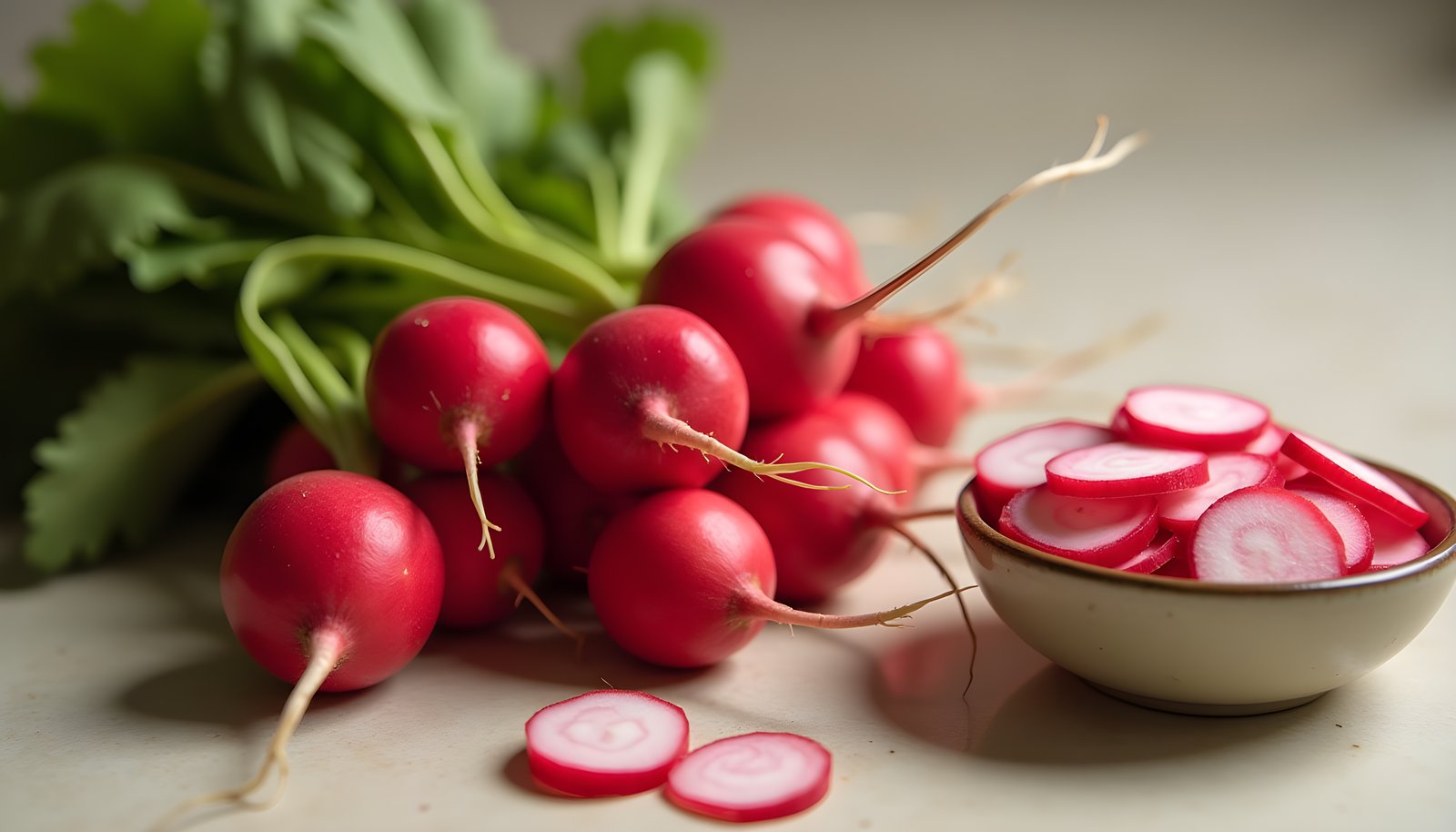
These are the small, round, red-skinned radishes most people picture. They’re crisp and peppery raw, and they turn mild and juicy when roasted. USDA lists them at 16 calories and 1.6 grams of fiber per 100 grams.
Daikon
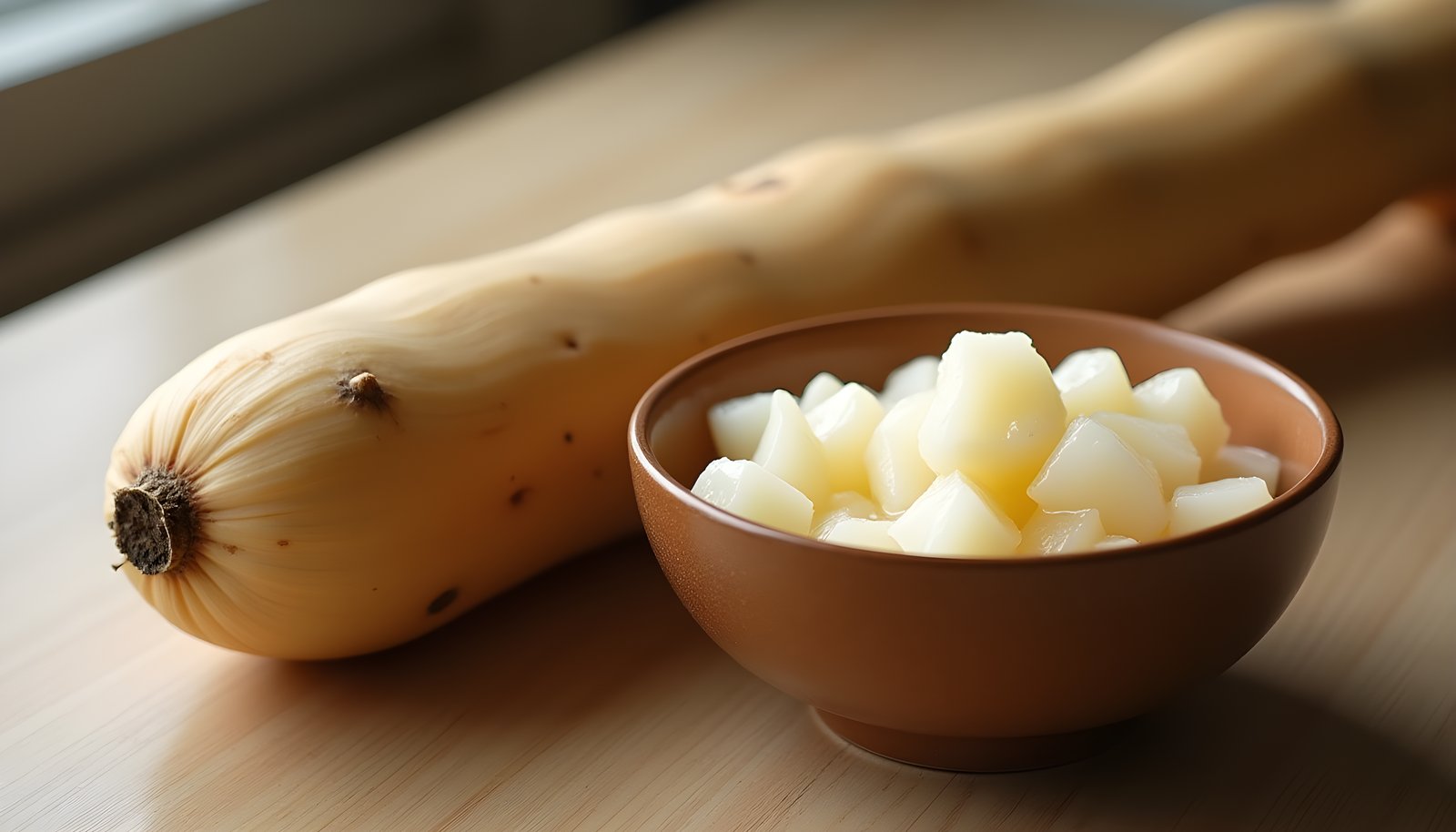
Daikon is a long, white radish common in East and South Asian cooking. It’s milder than red radishes, slightly higher in vitamin C, and holds its shape well in soups and braises. Raw daikon lists 18 calories and 1.6 grams of fiber per 100 grams.
White icicle radishes
These slender white radishes taste similar to red ones and are even lighter, at about 14 calories per 100 grams in USDA’s records. Use them anywhere you’d use red radishes.
Whichever you pick, the fiber math works out about the same. Choose based on flavor and how you plan to cook them.
Radishes on a low carb plate
Radishes are a favorite on low carb plans, and the numbers explain why. A cup of sliced raw radishes has about 4 grams of carbohydrate, and close to 2 grams of that is fiber.
Subtract the fiber and you’re left with roughly 2 grams of net carbs per cup, the portion your body actually digests. Roasted radishes are often used as a lower carb stand-in for roasted potatoes for exactly this reason.
The swap won’t match potatoes on fiber, since the Dietary Guidelines list a medium baked potato at 3.9 grams and 161 calories, but it keeps the plate far lighter. A cup of boiled daikon, with about 5 grams of carbohydrate and 2.4 grams of fiber, works the same way in soups and stews.
What radish fiber does for your digestion
The fiber in radishes works like fiber from any vegetable. Mayo Clinic explains that fiber adds weight and size to stool and softens it, making it easier to pass and lowering the chance of constipation.
Mayo Clinic also notes that fiber rich foods tend to be more filling. Radishes add that sense of volume with very few calories, which helps when you want a satisfying snack or salad that stays light.
Radishes have a sharp, peppery bite that mellows when they’re cooked. If raw radishes taste too sharp for you, roasting or braising them softens both the flavor and the texture.
If you’re working on a gentler digestive routine, our gut health guides walk you through adding fiber step by step.
A radish snack plate, counted
Say you put together an afternoon snack plate: a cup of sliced radishes, a cup of jicama sticks and a cup of raw red bell pepper strips. Based on the figures above, that’s about 10.9 grams of fiber for roughly 104 calories.
That single plate covers close to half of a 21 to 25 gram daily target for women, and you get a mix of crunch, sweetness and peppery bite. The radishes contribute the least fiber of the three, but they add the most bulk for the calories.
Swap the bell pepper for a cup of raw carrots and the plate lands at about 11.4 grams of fiber and 117 calories, still a light snack by any measure.
Add a few tablespoons of hummus for dipping and the fiber climbs a little more. The volume of three full cups also makes the plate feel generous.
Easy ways to eat more radishes
Radishes work in more dishes than most people realize:
- Slice them thin into salads, grain bowls and tacos
- Roast halved radishes with olive oil until tender and slightly sweet
- Quick pickle sliced radishes in vinegar for sandwiches and bowls
- Add grated daikon to stir fries, soups and noodle dishes
- Serve whole radishes with a little butter and salt as a simple snack
- Toss daikon cubes into braises, where they soak up the sauce
Want more ideas for crunchy, high fiber meals? Our recipe eBooks are full of simple dishes built around vegetables.
When to reach for radishes
A simple rule helps you decide how radishes fit your plate:
- If you want crunch for almost no calories, slice raw radishes into salads and snack plates
- If you want more fiber from a crunchy raw vegetable, add jicama or carrots alongside them
- If you want a cooked side with a mild flavor, roast red radishes or braise daikon
- If you want a concentrated fiber boost, use a small amount of dried daikon in soups or simmered dishes
- If fiber is your main goal for the meal, build around beans, lentils or whole grains and use radishes as the supporting act
Questions about radishes and fiber
How much fiber is in a cup of radishes?
About 1.9 grams in a cup of sliced raw radishes, according to USDA, with only about 19 calories.
Are radishes a good source of fiber?
They’re a small source. A cup covers about 7% of the Daily Value, but radishes are so low in calories that they deliver about 10 grams of fiber per 100 calories.
Does daikon have more fiber than red radishes?
They’re about the same per gram. USDA lists both at 1.6 grams of fiber per 100 grams of raw radish.
Do cooked radishes still have fiber?
Yes. Boiled daikon keeps 1.6 grams of fiber per 100 grams, and a cup of cooked slices has about 2.4 grams.
What vitamins are in radishes?
Radishes are best known for vitamin C. A cup of raw red radish slices has about 17 mg, roughly 19% of the Daily Value.
Are radishes good for weight loss?
They can help you eat more volume for fewer calories. A cup has about 19 calories, and Mayo Clinic notes that fiber rich foods tend to be more filling.
How much fiber is in dried daikon radish?
A lot by weight. USDA lists dried daikon at 23.9 grams of fiber per 100 grams, though it’s usually eaten in small amounts.
Sources
- USDA Agricultural Research Service. FoodData Central: SR Legacy Radishes, raw (169276); Radishes, oriental, raw (168451); Radishes, oriental, cooked, boiled, drained, without salt (168452); Radishes, oriental, dried (168453). 2019. fdc.nal.usda.gov
- U.S. Department of Agriculture and U.S. Department of Health and Human Services. “Food Sources of Dietary Fiber.” Dietary Guidelines for Americans, 2020 to 2025. dietaryguidelines.gov
- U.S. Food and Drug Administration. “Daily Value on the Nutrition and Supplement Facts Labels.” 2024. fda.gov
- Mayo Clinic Staff. “Dietary fiber: Essential for a healthy diet.” Mayo Clinic. 2025. mayoclinic.org